


The short answer: the difference between men's and women's incontinence underwear comes down to three things — cut, where the absorbent padding sits, and fit. The fabric and the leakproof layers are usually the same stuff. What changes is the shape, because men and women tend to leak in different places.

That matters more than most people expect. A pair shaped for someone else will still absorb. It just won't sit where you need it. And a pad that sits half an inch off ends up doing half the job, no matter how good the material is.
What's the difference between men's and women's incontinence underwear?
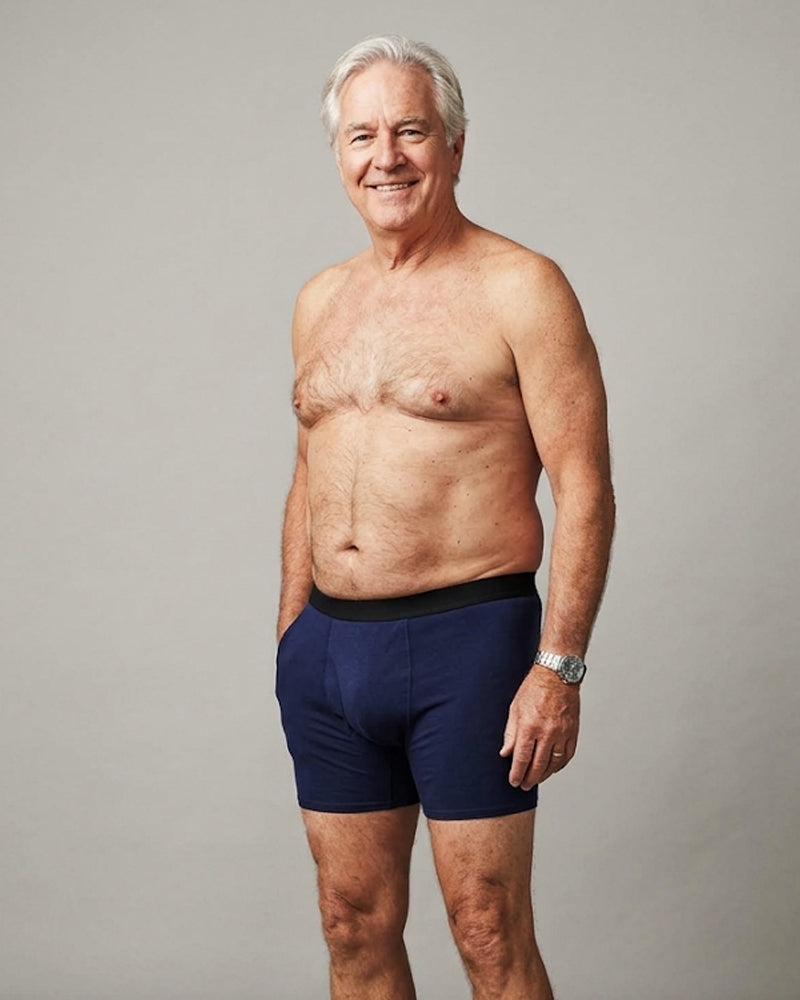
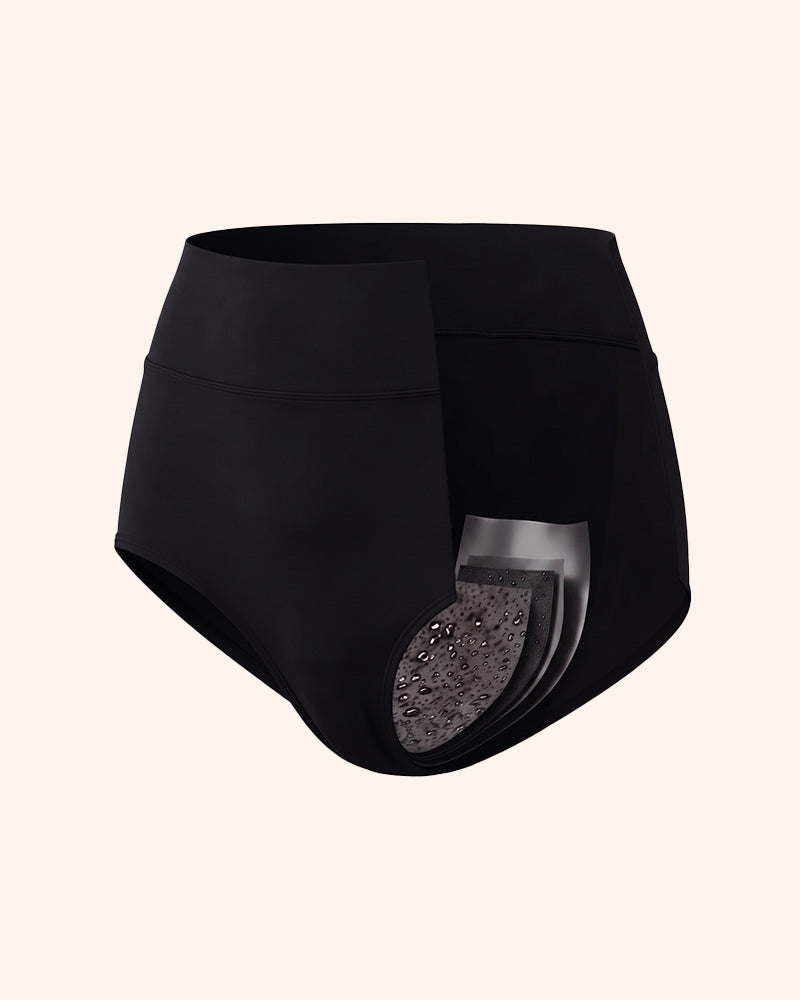
Start with the cut. Men's incontinence underwear is usually shaped like a boxer brief: a straighter waistband, room at the front, and a longer leg. Women's pairs are shaped more like a regular high-waisted brief, curving around the hips with a narrower fit through the leg.
Then there's the padding. In men's pairs, the absorbent zone is concentrated toward the front, because that's where most men's leaks start. In women's pairs, it sits more centrally and runs a bit further back, which covers leaks that happen while sitting or lying down as well as standing.
The small details follow the same logic. Some men's styles include a fly opening, though plenty don't — you just pull them down like regular underwear. Women's styles skip the fly and put the extra coverage where it's needed instead.
| Feature | Men's | Women's |
|---|---|---|
| Cut | Boxer-brief shape, room at the front | High-waisted brief shape, curved for hips |
| Absorbent zone | Concentrated toward the front | Centered, running further toward the back |
| Fly opening | Sometimes, varies by style | No |
| Waistband | Straighter, sits at the natural waist | Often higher, shaped to stay put under clothes |
| Leg openings | Longer leg, looser around the thigh | Shorter leg, snugger fit to prevent gaps |
Does the padding placement really make a difference?
Yes, and it's easiest to see with a real day. Say a man leaks mostly when he stands up after an hour in the car — that's a front-loaded leak, and a front-loaded pad catches it before it travels. Now picture a woman who leaks when she laughs on the sofa or shifts in bed at 2 a.m. — the leak spreads differently, and a centered pad with rear coverage handles both positions.
None of this means the other shape "doesn't work." It means the right shape wastes less of the pad. You get more use out of the same absorbency level, and fewer surprises at the edges.
Can you wear the other one in a pinch?
Sure. If you're traveling, ran out, or grabbed the wrong pair from the drawer, wear it. One day won't hurt anything.
Watch for three fit problems, though. Gaps at the leg openings let leaks escape sideways. A waistband built for a different hip shape rolls or digs in after a few hours. And a pad sitting in the wrong spot bunches up when you walk — that's the first sign the pair isn't shaped for you. If any of those show up regularly, switch to the matching cut.
What about unisex pairs?
Unisex styles exist, and they're a reasonable middle ground: a straight cut with a wide, centered pad. For light leaks — a few drops when you sneeze, a small dribble after you pee — they do fine, and plenty of people stick with them.
For heavier or more frequent leaks, the gendered cut earns its keep. The closer the pad hugs your actual leak pattern, the less you think about it during the day. That's the whole point.
How do you pick the right pair?
Four steps, in order:
1. Notice where you leak. Front, center, or all over? One week of paying attention beats any size chart. If you're not sure, our guide to choosing incontinence underwear walks through absorbency, fit, and everyday use.
2. Match the absorbency to your worst day, not your average one. A pair that handles Tuesday's dribble but not Saturday's coughing fit isn't the right pair. Light, moderate, and heavy levels exist in both men's and women's styles.
3. Measure before you order. Waist and hip measurements, checked against the size chart — not your usual jeans size. Our fit and sizing guide covers exactly where to measure.
4. Buy one pair first. Wear it through a normal day: the commute, a walk, a few hours sitting. Wash it once — see our washing guide — and check how it holds up. Then stock up. Most people land on 5 to 7 pairs once they've found their fit, enough to rotate through laundry without running short.
If you leak more at night than during the day, that's a separate decision — see our guide to day vs. night pairs before you buy a full set.
For the pairs themselves: Rooces men's styles are built around that front-loaded, boxer-brief cut — see the men's Stay Discreet underwear, or the version with a removable absorbent pad if you want to boost capacity on heavy days (the spare pads swap in easily). The women's Stay Discreet underwear uses the centered, high-waisted cut. And if you're out and about, the waterproof carry pouch and mesh laundry bag keep spares discreet and washing simple.
Frequently asked questions
What's the difference between men's and women's incontinence underwear?
Cut, padding placement, and fit. Men's pairs are boxer-brief shaped with absorbency toward the front; women's pairs are high-waisted briefs with centered padding that runs further back. The materials and leakproof layers are much the same.
Can women wear men's incontinence underwear?
Yes, and some do — especially women who prefer a longer leg or a looser fit. Just expect the front-loaded pad to sit differently than a centered one, and check for gaps at the legs before you commit to a full pack.
Do men's incontinence underwear have a fly?
Some do, some don't. It varies by style, and it matters less than you'd think — most people just pull them down like regular underwear. Fit and padding placement affect your day far more than a fly does.
Are women's incontinence underwear the same as period underwear?
Not quite. Period underwear is built for menstrual flow, which starts centrally and runs backward, and it tops out at a lower capacity. Incontinence underwear handles larger, faster leaks and, in men's styles, a different leak pattern entirely. We compared the two in detail in our guide to using period underwear for bladder leaks.
How do I know the fit is wrong?
Three giveaways: gaps at the leg openings, a waistband that rolls down or digs in after an hour, and a pad that bunches when you walk. Any one of those means the cut isn't matching your shape — try a different size or the other cut before you write the product off.
Is one more absorbent than the other?
No. The difference between men's and women's incontinence underwear isn't absorbency — light, moderate, and heavy levels exist across both styles. Compare the capacity rating, not the label on the waistband.
One last thing: buy a single pair before you stock the drawer. A 20-minute fitting session at home — walk around, sit down, cough twice — tells you more than any product page can.

Share:
Why Do I Still Feel Like I Need to Pee After I Just Went? Incomplete Emptying Explained
What Tests Will a Doctor Do for Bladder Leaks? A Plain-English Guide to Your First Workup