

The short answer: if you keep getting a sudden, hard-to-ignore urge to pee — and you go more than eight times a day, wake up twice or more at night, or sometimes leak before you reach a toilet — you may have an overactive bladder. How do I know if I have overactive bladder? Look at the pattern, not one bad day. It usually means the bladder muscle is squeezing when it shouldn't, and that signal is arriving too early and too loudly.

You might have brushed it off for months. You tell yourself you just drank too much water, or you're getting older, or it's stress. Then one day you're in the checkout line, basket in hand, and the urge hits so fast you have to abandon the basket and walk — no, half-run — to the restroom. That's the moment most people start Googling.
How do I know if I have overactive bladder?
Doctors don't diagnose it with one test. They look at a pattern. Four signs show up again and again:
- Urgency. A sudden urge that feels difficult to hold back, not the slow "I should go soon" feeling.
- Frequency. Going to the bathroom more than eight times in 24 hours, even when you haven't drunk unusually large amounts.
- Nighttime trips. Waking up two or more times a night to pee, night after night — not just after a late glass of water.
- Leaks before you get there. Sometimes called urge incontinence: you leak on the way to the bathroom, or when you hear running water, or the second you put your key in the front door.
You don't need all four. Urgency on its own, happening often, is enough reason to bring it up with a doctor. Keep a simple note for three days — what time you went, what you drank, and when an urge caught you off guard. That little log turns a vague "I go a lot" into something a clinician can actually work with. Our guide to keeping a bladder diary walks through exactly what to track.
What's actually happening inside?
Think of your bladder as a balloon with a muscle wall. Normally, that muscle stays relaxed while the balloon fills, and your brain gets a gentle heads-up as it stretches. With an overactive bladder, the muscle contracts too early. Your brain gets the signal at half-full, or less, and reads it as urgent.
Plenty of things can nudge it in that direction. Getting older changes bladder capacity a bit. Nerve signals can get scrambled after childbirth, prostate surgery, or conditions that affect the nervous system. Some medicines — including certain diuretics — make you produce more urine. And some everyday habits irritate the bladder lining, which makes the whole system twitchier. None of this is your fault, and none of it means you've done something wrong.
Is it the same as a UTI or stress incontinence?
No, and mixing them up is common. A quick comparison helps:
| What you're dealing with | What it usually feels like | What tends to trigger it |
|---|---|---|
| Overactive bladder | Sudden urge, frequent trips, sometimes leaking on the way | A partly full bladder, running water, arriving home |
| Stress incontinence | Small leaks during a cough, sneeze, laugh, or lift | Pressure on the bladder, not urgency |
| Urinary tract infection (UTI) | Burning when you pee, cloudy or strong-smelling urine, pelvic ache | Bacteria in the urinary tract — it usually comes on fast |
If you have burning, fever, blood in your urine, or pain that started suddenly, don't wait it out. That's a prompt to call a doctor the same day, not a "manage it at home" situation. Our UTI vs. incontinence guide goes deeper on the differences.
What triggers an overactive bladder day?
Triggers aren't the same for everyone. Still, a few show up so often they're worth testing one at a time:
- Caffeine. Coffee, strong tea, and energy drinks can rev up urgency for hours. Try cutting back by one cup — not quitting cold turkey at 7 a.m. on a Monday — and see what changes. More on this in our caffeine guide.
- Alcohol and fizzy drinks. Both can irritate the bladder and increase urine output.
- Spicy food and citrus. Some people notice a flare after tomato sauce, chili, or a big glass of orange juice.
- Constipation. A full bowel presses on the bladder. Sorting out constipation sometimes eases urgency more than any bladder trick does.
- Drinking patterns. Gulping a litre in one sitting, or drinking very little all day and then a lot at night, both tend to make urgency worse. Sipping steadily usually works better — see how much water to drink with bladder leaks.
What can you actually do about it?
Start with the habits that cost nothing.
Bladder training. When the urge hits, pause. Breathe. Wait five minutes if you can, then go. Over weeks, you stretch that wait a little longer, and the bladder learns that "urgent" doesn't always mean "right now." Our bladder training guide lays out a slow, realistic schedule for this.
Timed bathroom trips. Go every two to three hours on a schedule, even if the urge hasn't arrived yet. It stops the bladder from getting into a panic cycle.
Pelvic floor work. A quick squeeze-and-hold can sometimes calm an urge in the moment — a "freeze and squeeze" you can do standing in line at the pharmacy. Done regularly, pelvic floor exercises support the whole system.
Night tweaks. Move most of your fluids earlier in the day, skip the 9 p.m. cup of tea, and go once right before bed. If you're still up at 2 a.m. and again at 4 a.m., that pattern is worth mentioning to a doctor rather than just accepting it.
If habits alone don't move the needle after a few weeks, a doctor can talk through medication options and check for other causes. That's not failure. That's the next step.
What about leaks while you're working on it?
Here's the practical part nobody should be embarrassed about: while you're retraining your bladder, you still have to live your life. Go to work. Go to dinner. Take the walk.
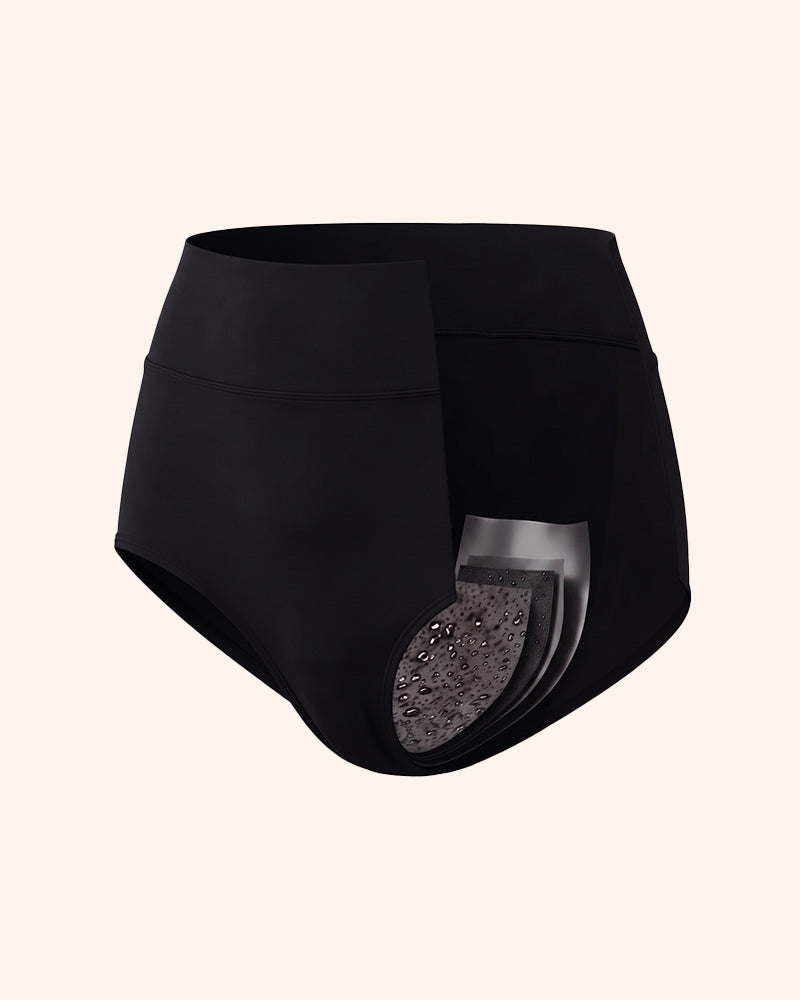
Washable leakproof underwear exists for exactly this in-between stage — and for the long haul, if that's what you need. It looks like ordinary underwear and washes with your normal laundry. For everyday urgency leaks, the women's Stay Discreet underwear and men's Stay Discreet underwear are the usual starting points. On heavier days, or if you want extra backup, a reusable absorbent pad adds capacity without changing how you look in your clothes. Tuck a spare pair and a waterproof carry pouch in your bag, and a bad day becomes a quick change in a restroom stall instead of a ruined afternoon.
One more thing. If you've started skipping outings, turning down invitations, or mapping every route by its bathrooms, that's not just a bladder issue anymore — it's a life issue. And it's a good reason to get help sooner rather than later.
FAQ
How do I know if I have overactive bladder or just a small bladder?
A truly small bladder is rare. If you're going more than eight times a day, waking up repeatedly at night, or leaking when urgency hits, that pattern points toward overactive bladder rather than size. A three-day bladder diary gives you and your doctor real numbers to go on.
How do I know if I have overactive bladder if I don't leak?
Leaking isn't required. Many people have urgency and frequency without ever leaking a drop — they just live near bathrooms. The urge itself, if it's sudden and hard to hold, counts.
Can overactive bladder go away on its own?
Sometimes it settles once you remove a trigger, like excess caffeine or constipation. Often it needs steady habit changes — bladder training, timed trips, pelvic floor work — and sometimes medication. Waiting silently for months rarely helps. Tracking it for a few weeks and then talking to a doctor is the faster route.
What foods and drinks make overactive bladder worse?
Caffeine, alcohol, carbonated drinks, spicy foods, citrus, and tomato-based sauces are the usual suspects, but triggers vary person to person. Test one at a time for a week instead of overhauling your whole diet at once — see our guide to bladder irritants for the full list.
Does drinking less water help overactive bladder?
Usually the opposite. Drinking too little concentrates your urine, which irritates the bladder and can make urgency worse. Steady sipping through the day, with less fluid in the last two hours before bed, tends to work better than rationing.
When should I see a doctor about overactive bladder?
Book an appointment if urgency or frequency is disrupting your sleep, work, or social life, or if you notice blood in your urine, burning when you pee, fever, or a sudden change in symptoms. Those last few are same-day reasons to call, not wait-and-see ones.


Share:
How Much Water Should You Drink If You Have Bladder Leaks?
Why Am I Leaking Urine in My 20s or 30s? Causes in Young Adults and What Can Help