

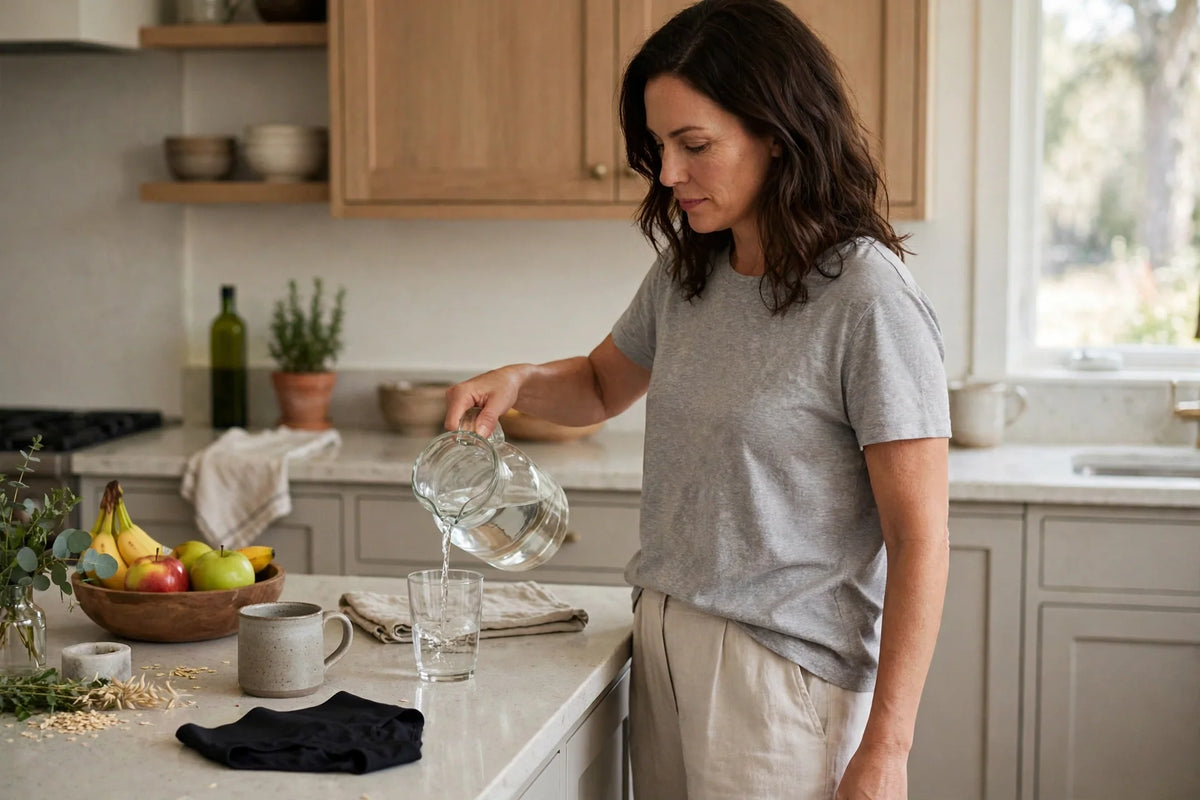
The short answer: for most adults, cutting your drinks way down does not stop leaks — it often makes your bladder twitchier. If you're asking how much water should I drink with incontinence, start with a normal, steady amount spread through the day, then adjust the timing, not the total, until your nights and your outings feel manageable.
You've probably tried the other way. A long drive, a 3 p.m. meeting — so you skip water from lunch onward. Your mouth goes dry, you get a headache by 5 p.m., and you still leak. That's your bladder reacting to concentrated urine, which can irritate it more than plain water does.
How Much Water Should I Drink With Incontinence?
There's no single number that fits everyone, and anyone who gives you one without asking about your size, your medicines, and your day is guessing. As a starting point, many adults do well on roughly 1.5 to 2 litres of fluid a day from all sources — that's about 6 to 8 ordinary glasses — sipped across the day rather than knocked back in two big bursts.
That range is a test, not a target to hit perfectly. Try it for a week, kept boringly regular. Then look at what changed: fewer sudden urges? Fewer night trips? Or just more trips to a bathroom you hate?
Pale straw-coloured urine and a mouth that doesn't feel parched are decent signs you're in the right zone. Dark, strong-smelling urine plus a dry mouth usually means you went too low.
Why Drinking Less Usually Backfires
Drink half a glass at breakfast, nothing until dinner, then a big glass because you're thirsty. Your urine gets concentrated, and a concentrated bladder can feel full sooner and contract harder. So you get urgency from a half-full bladder — the worst of both worlds.
Skipping drinks can also constipate you, and a full bowel presses on the bladder. One reader fixed her 2 a.m. trips not by drinking less, but by drinking a glass with breakfast and eating an apple at lunch. Small changes. They worked because they stopped the squeeze from both sides.
Sipping, Gulping, or Skipping: What Actually Happens
The pattern matters more than any single glass:
| Habit | What it feels like | What to try instead |
|---|---|---|
| Sipping through the day | Steadier bladder, fewer panic urges | Keep this as your default |
| Gulping a litre at once | A sudden full bladder and a dash for the toilet | Split that litre into three or four smaller drinks |
| Skipping drinks for hours | Dry mouth, concentrated urine, then urgency | A small glass every couple of hours, even on busy days |
It's not the water at 11 a.m. after a huge bottle at 10:30 — it's the speed. Slow it down and the same amount feels different.
A Day Plan You Can Actually Stick To
Use anchors you already have.
Start with a glass when you get up — after 7 or 8 hours without fluid, it often helps you pee properly before you leave the house. Have a glass with each meal, not a jug. Keep a bottle where you actually sit: desk, kitchen counter, car cup holder.
On a workday: glass at 7 a.m., glass with breakfast, bottle sipped to lunch, glass with lunch, bottle sipped to 5 p.m., glass with dinner. If you have a long meeting at 2 p.m., pee just before it and sip after it.
What Counts Toward Your Total?
Water is the easiest choice, but soup, milk, herbal tea, and the water in fruit and vegetables all count too.
Caffeine and alcohol are different. They can nudge a sensitive bladder. If your second coffee at 10 a.m. is reliably followed by three urgent trips before noon, try one coffee instead of two for a week, or switch the second to decaf. Don't ban everything at once — you'll never know which one was doing it. See Can Caffeine Cause Bladder Leaks? and What Are Bladder Irritants?
Fizzy drinks and very sweet juices bother some people too. Plain water is the least likely to cause a fuss — keep it as your baseline, then test one other drink at a time.
Evening Drinks and Night Trips
Nights are where most people want to cut back, and a small timing shift often helps more than a big cut. Move most evening fluid earlier: a glass with dinner, then just sips after 8 p.m. if you're thirsty. Don't set a hard "nothing after 6 p.m." rule and lie awake with a dry mouth at 11 p.m.
Test it for three or four nights, not one. One bad night could be the salty takeaway or the late coffee. If you still wake twice, check the whole day: did you drink almost nothing until 7 p.m., then catch up all at once? That late catch-up is a classic cause of a 2 a.m. trip. For night-specific tips, see Why Do You Wake Up to Pee at Night?
How to Tell If You're Drinking About Right
Use three checks. Urine colour: pale straw most of the day is good; dark amber usually means drink a bit more. Frequency: most adults pee roughly 6 to 8 times in 24 hours, but a sudden change from your own baseline matters more than the number. How you feel: headaches and constipation after a low-fluid day are worth noting too.
Keep a rough note for a week: "Mon: 6 glasses, 2 night trips, one urgent dash at work." By Sunday you'll see the pattern — and that note makes a doctor's appointment far more useful. See How Often Should You Pee? and Bladder Training: How to Reduce Urgency and Frequent Bathroom Trips for a next step beyond drinks.
Hot weather and exercise change the maths. A sweaty 45-minute walk in July needs more fluid than a quiet desk day in November, and you'll pee less of it because some leaves as sweat.
When to Ask a Clinician
Get checked promptly for blood in your urine, pain when you pee, fever, an inability to pee, sudden leg swelling, or leaks that start abruptly after a new medicine. If you're on fluid-restricted treatment for heart or kidney problems, your doctor's limit overrides any general guide, including this one.
Bring your week's note. "I drink about six glasses, I wake twice, and I leak most on days I skip lunch drinks" gives a clinician something to work with.
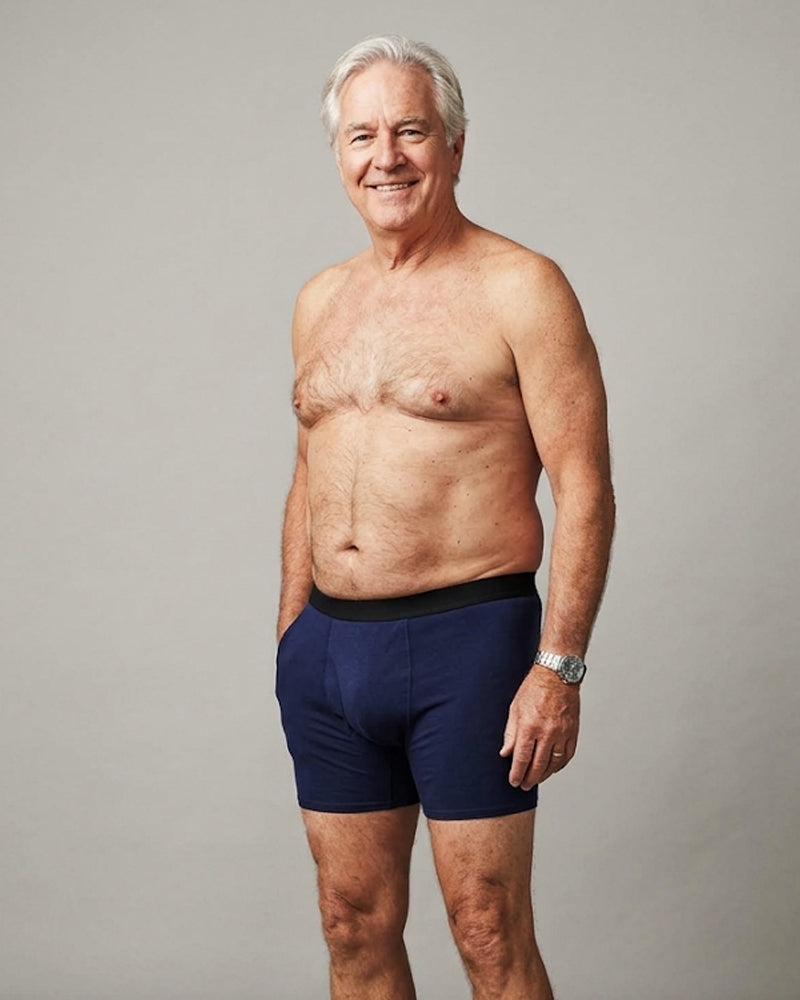
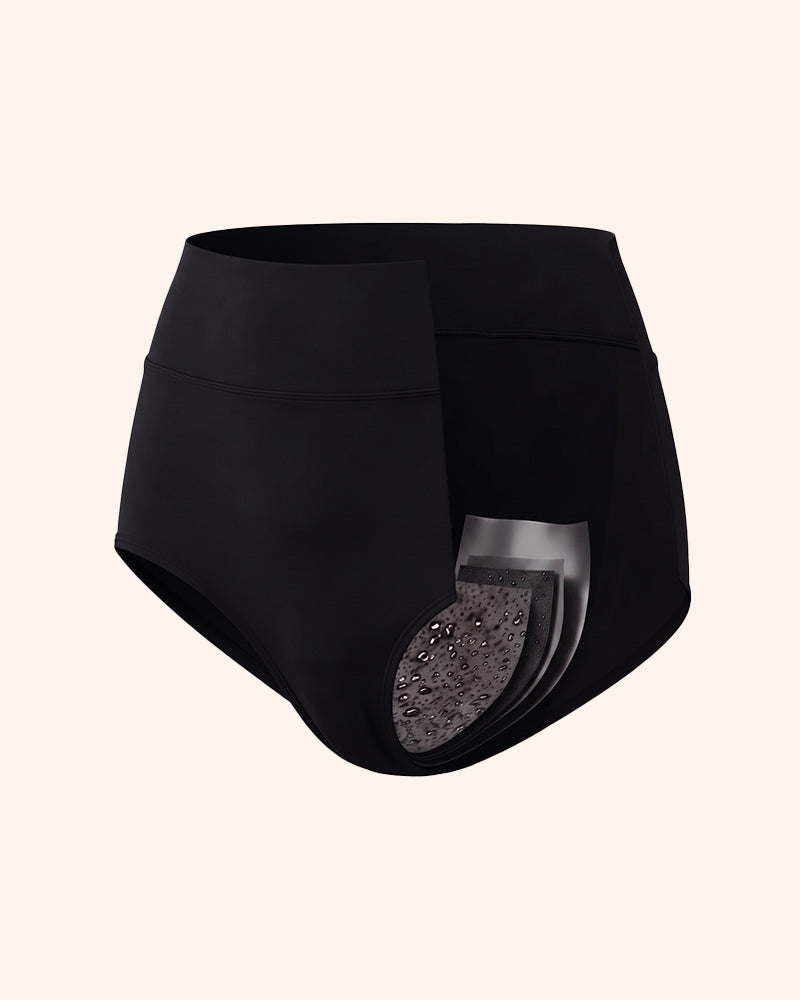
And keep a backup that takes the pressure off while you experiment. Our women's washable incontinence underwear and men's washable incontinence underwear look like regular underwear, so testing a new drink routine doesn't mean risking a visible accident. A waterproof carry pouch holds a spare pair on long days, and a machine-wash laundry bag keeps used pairs separate until wash day.

You don't need to earn water by staying dry first. Drink steadily, watch the timing, and let a week of ordinary days — not one panicky afternoon — decide what works for you.
Frequently Asked Questions
How much water should I drink with incontinence?
Start with about 1.5 to 2 litres of fluid a day from all sources, sipped steadily rather than gulped. Track your urges, night trips, and urine colour for a week, then shift the timing — earlier in the evening, smaller sips before long outings — before you change the total.
Should I drink less water to leak less?
Usually, no. Drinking far less concentrates your urine, which can irritate the bladder and trigger more urgency, not less. It can also cause constipation and headaches. A steady, moderate amount tends to calm things down more than rationing does.
How much water should I drink with incontinence at night?
Keep most of your fluid in the daytime and early evening. Have a glass with dinner, then small sips after 8 p.m. only if you're thirsty. Test that pattern for three or four nights before deciding it isn't working — one night proves very little.
Does coffee count toward how much water I drink with incontinence?
Yes, coffee counts as fluid, but caffeine can irritate a sensitive bladder even when the fluid itself is fine. If coffee reliably brings on urgency, cut the amount or switch one cup to decaf for a week and compare, rather than cutting all fluids.
What if I exercise or it's a hot day?
Drink more, and drink it before and after — not all during — the activity. Sweat takes fluid that would otherwise become urine, so a hot-day total above your usual range is normal. Sip steadily and pee before you start, so you don't begin a run with a full bladder.
Can changing when I drink help with urge incontinence?
Often, yes. Spreading drinks out, peeing before long meetings or car rides, and moving evening drinks earlier can cut panic urges without cutting your total. If urgency stays severe despite steady hydration, pair this with bladder training and a clinician check — drinks alone may not be the whole story.

Share:
What Is Functional Incontinence? When Getting to the Bathroom in Time Is the Hard Part
How Do I Know If I Have Overactive Bladder? Signs, Triggers, and What Helps