


The short answer: "Why do I leak urine when I bend over?" — because bending or lifting raises the pressure inside your belly, and if your pelvic floor can't push back fast enough, a little urine escapes. It's usually stress incontinence, it's common, and there are fixes that work the same day you try them.
You know the moment. You reach down to tie your shoe at 7 a.m., or you hoist a grocery bag out of the trunk, and there's that small, warm dampness. Just enough to make you stop and think, did that really just happen? It did.

Why does bending over squeeze urine out?
Think of your bladder like a water balloon sitting in a bowl. Your pelvic floor muscles are the bowl. When you bend forward, squat, or lift something heavy, the muscles in your belly tighten and press down on that balloon. A strong bowl holds its shape; a tired one flexes — and a few drops slip past the valve, the small ring of muscle that keeps the bladder closed. That valve leans on the pelvic floor, which has to brace a split second before the pressure hits. When the brace comes late, or the muscles are weak, the pressure wins.
What weakens that brace? Childbirth is the big one — pregnancy and a vaginal delivery stretch the pelvic floor, and the effects can show up years later. Menopause plays a part too: lower estrogen thins the tissues around the urethra. For men, prostate surgery is a common trigger. Years of heavy lifting, a chronic cough, or extra weight around the middle add up the same way.
None of that means the muscles are broken. Weak and broken aren't the same thing.
Is it the same as leaking when you sneeze or cough?
Mostly, yes — same mechanism, different trigger. But the fix for one doesn't always fit the other.
| Trigger | What happens | What usually helps most |
|---|---|---|
| Bending over or squatting | Slow, sustained pressure while folded forward | Exhale as you bend; squat instead of folding |
| Lifting something heavy | A sharp pressure spike, often while holding your breath | Exhale on the lift, brace your pelvic floor first |
| Sneezing or coughing | A sudden, explosive pressure spike | The "knack": a quick squeeze right before the sneeze |
| A sudden urge to pee | The bladder muscle squeezes before you reach a bathroom | Urge suppression techniques, bladder training, timing fluids |
If your leaks come with a sudden, hard-to-ignore urge instead — fine one second, desperate the next — that's a different pattern. See our guide to stress vs. urge incontinence. Many people have a bit of both.
Why do I leak urine when I bend over but not when I walk?
Walking is gentle on your pelvic floor. Your belly pressure stays low, your posture stays upright, and your muscles get a steady rhythm to work with. Bending over changes the angle. Folded forward, your belly contents press straight down onto the bladder, and the pelvic floor is stretched at the same time it's being asked to hold. More pressure, less leverage.
Lifting adds a second problem. Most of us hold our breath when we pick up something heavy — a 20-pound bag of dog food, a toddler, a suitcase. That held breath spikes the pressure inside your belly. Exhale instead, and the spike drops.
Some days are worse than others, and that inconsistency drives people mad. A bad night's sleep, a cold that has you coughing, a full bladder at the wrong moment — any of these can tip a borderline pelvic floor over the edge. If your leaks come and go, that doesn't mean you're imagining it.
What actually helps — starting tonight
You don't need a six-week program before anything changes. Some of this helps the very next time you bend down.
Breathe out on the effort. Before you lift the bag or bend to the bottom shelf, take a breath in, then breathe out slowly as you move. The exhale keeps belly pressure down. It feels strange for the first few tries. By the third load of laundry, it's automatic.
Bend your knees, not your waist. Squat to the low shelf instead of folding at the hips — your thighs do the work and your pelvic floor keeps its leverage. A quick squat beats a deep bend every time.
Squeeze first, then move. This is the "knack," and it's the single most useful trick for stress leaks. Right before you bend or lift, do a quick pelvic floor lift — the same muscles you'd use to stop the flow of urine — hold it through the movement, then let go. Practice it on the easy lifts first, like a carton of milk.
Build the muscles back up. The knack is a tactic; pelvic floor exercises are the long game. A few minutes a day, done consistently, rebuilds the strength that childbirth, menopause, or surgery took away. Our beginner's guide to pelvic floor exercises for bladder control shows how to find the right muscles — and when squeezing more can backfire.
Dress for the bend, not the mirror. Tight waistbands press on the bladder and make leaks more likely when you fold forward. If your jeans dig in when you sit, they're digging in when you bend too. Our guide to what to wear with bladder leaks covers fits that stay comfortable all day.
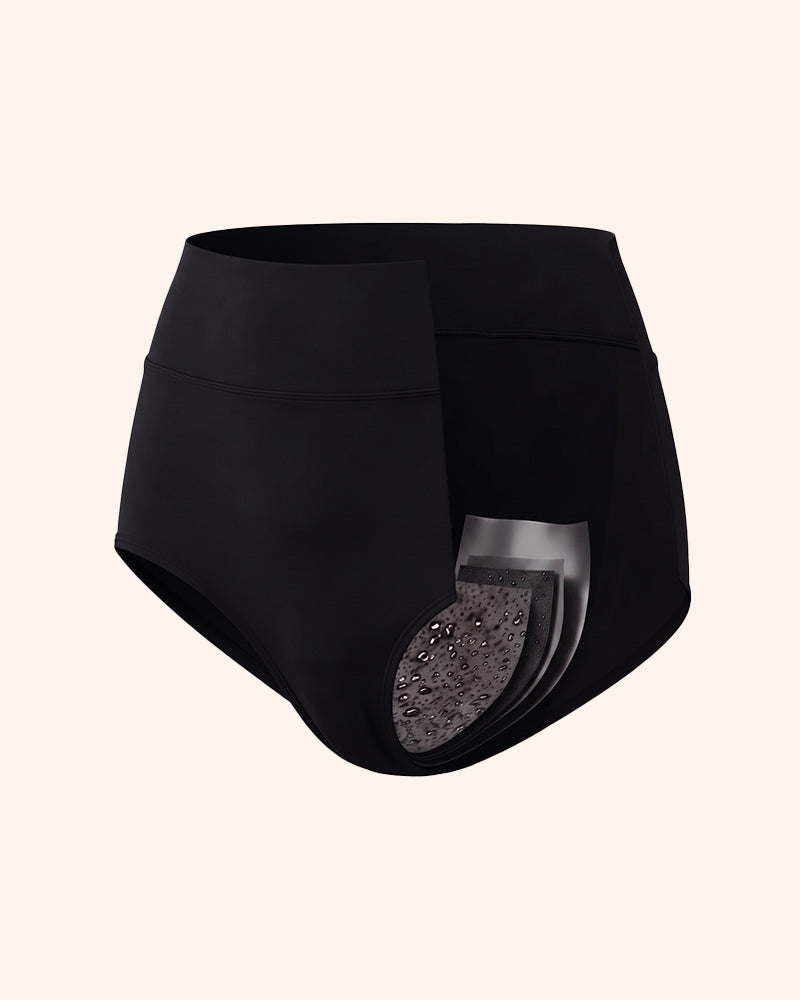
Wear protection that lets you stop thinking about it. On lifting, gardening, or cleaning days, washable leakproof underwear takes the worry out of every bend. It looks and feels like regular underwear, and it catches the few drops before they reach your clothes. Our women's leakproof underwear and men's leakproof underwear both have a built-in absorbent layer, so there's nothing extra to stick on or adjust. They wash with the rest of your laundry — a mesh laundry bag keeps them in good shape — and a waterproof carry pouch holds a spare pair when you're out.
Don't stop bending and lifting. Avoiding the movement doesn't fix the muscles — it just shrinks your life, one grocery bag at a time. Change how you move, not whether you move.
When should you get it checked?
Leaking when you bend over is common, but "common" and "ignore it" aren't the same thing. Book an appointment if the leaks are new and getting worse over weeks rather than months, if you leak even when you're standing still, if you see blood in your urine, or if it burns to pee. Those are signs a doctor should hear about, not symptoms to wait out.
A pelvic floor physical therapist is often the most useful first stop: they can test whether your muscles are weak, tight, or just badly timed — each needs a different fix. Bring notes: when it happens, what you were doing, how much leaks. Three days of scribbled notes beats a vague "sometimes."
FAQ
Why do I leak urine when I bend over to tie my shoes?
That's exactly why you leak urine when you bend over to tie your shoes: you're folded forward, which presses your belly onto your bladder, and you're holding still in that position while your pelvic floor is stretched. Try sitting down to tie them, or brace your pelvic floor and breathe out as you bend. If it still happens most mornings, mention it to your doctor.
Does bending over cause bladder leaks in men too?
Yes. Men leak when they bend over for the same reason women do — pressure beats a tired pelvic floor. It's most common after prostate surgery, but heavy lifting at work, a chronic cough, and extra belly weight can do it too. The fixes are the same: exhale on the effort, squat instead of folding, and strengthen the pelvic floor.
Will pelvic floor exercises stop leaks when I lift things?
For most people with stress leaks, yes — with consistency. Pelvic floor training shows real improvement in weeks when done daily. The catch is doing them right: squeezing your belly or thighs instead of the pelvic floor doesn't help, and squeezing a pelvic floor that's already too tight can make things worse. One session with a pelvic floor therapist to check your technique is money well spent.
Can I still lift groceries if I leak when I bend over?
Absolutely — just change how you lift. Squat to the bag instead of bending at the waist, exhale as you stand up, and brace your pelvic floor first. Split heavy loads into two trips. And wear leakproof underwear on shopping days so the few drops that slip when you bend over don't decide your plans for you.
Is leaking when you bend over a sign of something serious?
Usually not — in most cases it's a mechanical problem: pressure, posture, and a pelvic floor that needs training. But if the leaking started suddenly, is getting worse quickly, or comes with pain, blood, or trouble emptying your bladder, get it checked promptly.


Teilen:
How to Manage Bladder Leaks at a Concert or Sporting Event: A Practical Guide to Enjoying the Show
How to Get Urine Smell Out of a Mattress After a Bladder Leak: A Step-by-Step Cleanup Guide