


The short answer: will bladder leaks go away on their own? Sometimes, yes. Sometimes, no — and the difference usually comes down to why you're leaking in the first place. Leaks tied to a short-term cause, like a urinary tract infection or the weeks right after childbirth, often fade as your body recovers. Leaks tied to a lasting change, like lower estrogen after menopause or nerve damage after surgery, tend to stick around unless you do something about them.

That split matters. If you're three weeks postpartum and still leaking when you laugh, waiting a bit longer makes sense. If you've been leaking for two years and it's slowly getting worse, waiting another year probably won't change the story.
Why do some bladder leaks fade on their own?
Think about what pushed your bladder off balance — if that push was temporary, the leaks often ease once it's gone.
Childbirth is the clearest example. Pregnancy stretches the pelvic floor, and delivery can bruise those muscles further. For many new mothers, leaks are worst in the first few weeks, then improve steadily as tissues heal. Six weeks is a common checkpoint, not a deadline — some people feel mostly back to normal by then, others need three to six months.
Infections work the same way. A urinary tract infection irritates the bladder lining, so it squeezes when it shouldn't. You might rush to the bathroom every 20 minutes and still not make it. Treat the infection, and that urgency usually settles within days.
Short-term triggers count too. A nasty cough that lasts three weeks can leave you leaking every time you sneeze — once the cough goes, the leaks often go with it. Same with a new medication that irritates the bladder, or constipation putting extra pressure on your pelvic floor.
Gentle pelvic floor work and regular bathroom habits help recovery along. But when the cause is temporary, time is part of the treatment.
Which bladder leaks are less likely to just disappear?
Some causes don't reverse themselves.
Menopause is a big one. As estrogen drops, the tissues around the urethra and bladder get thinner and less elastic, and that change doesn't bounce back on its own. Leaks that start in your early 50s and creep upward year by year usually need active management — pelvic floor therapy, a doctor conversation about estrogen options, or simply better protection day to day.
After prostate surgery, the picture is similar but slower. Many men leak right after a prostatectomy because the sphincter muscle needs time to recover, and improvement often continues for 12 months. But if you're still leaking heavily at the one-year mark, the odds of it vanishing without help drop a lot — that's the point to ask about pelvic floor rehab, not to keep waiting silently.
Long-standing urge problems also tend to persist. An overactive bladder that has misfired for years — the sudden "go now" feeling, the dash to the bathroom at 2 a.m. — rarely retrains itself without bladder training or treatment.
Structural issues — a prolapse pressing on the bladder, nerve damage, or a bladder that doesn't empty fully — don't fix themselves either. They can often be managed well, but "managed" is the honest word, not "cured by waiting."
| Common cause | Often improves on its own? | Rough timeline to judge |
|---|---|---|
| After childbirth | Often, yes | Noticeable improvement by 6–12 weeks; continued gains up to 6 months |
| Urinary tract infection | Usually, once treated | Days after treatment finishes |
| Bad cough or cold | Often | Within a few weeks of the cough clearing |
| Menopause-related changes | Unlikely without help | If it's worsening over months, don't wait it out |
| After prostate surgery | Often, gradually | Improvement up to 12 months; reassess at a year |
| Long-term overactive bladder | Unlikely without retraining | 3 months of consistent bladder training is a fair test |
How long should you wait before getting help?
A few rough rules help.
Give a new, clearly temporary cause a fair window: weeks to months after childbirth, days after an infection, a few weeks past the last coughing fit. Watch the trend, not one bad day. Leaks getting less frequent or smaller is a good sign, even if you're not dry yet.
Set a checkpoint in advance, because "I'll wait and see" can quietly stretch into two years. If nothing has improved after three months of steady pelvic floor work and sensible bladder habits, book an appointment. Three months is long enough to see real change if it's coming.
Don't wait at all if you spot red flags: blood in your urine, pain when you pee, fever with urgency, trouble starting to urinate, or a bladder that never feels empty. Neither is a sudden change after years of stability. Our guide on when to see a doctor about bladder leaks covers the warning signs.
What can you do while you're waiting?
Waiting doesn't have to mean doing nothing.
First, don't cut back on water. Concentrated urine irritates the bladder more, which can make urgency worse. Sip steadily through the day instead of gulping a liter at 9 p.m. and paying for it at 2 a.m.
Second, work your pelvic floor, but work it right. Daily squeezes beat 100 once a week and then forgetting them for a month. If you're not sure you're squeezing the right muscles — lots of people aren't — a pelvic floor physiotherapist can check in a single session. Our piece on whether Kegels help or hurt explains when they backfire.
Third, retrain the urge instead of obeying it instantly. When the "go now" feeling hits and your bladder isn't actually full, pause for five minutes, do a few quick squeezes, and walk calmly instead of running. Over weeks, that pause stretches. Our bladder training guide lays out the steps.
Fourth, deal with constipation. Straining puts pressure on the same muscles you're trying to strengthen. More fiber, enough water, and not rushing all help more than people expect.
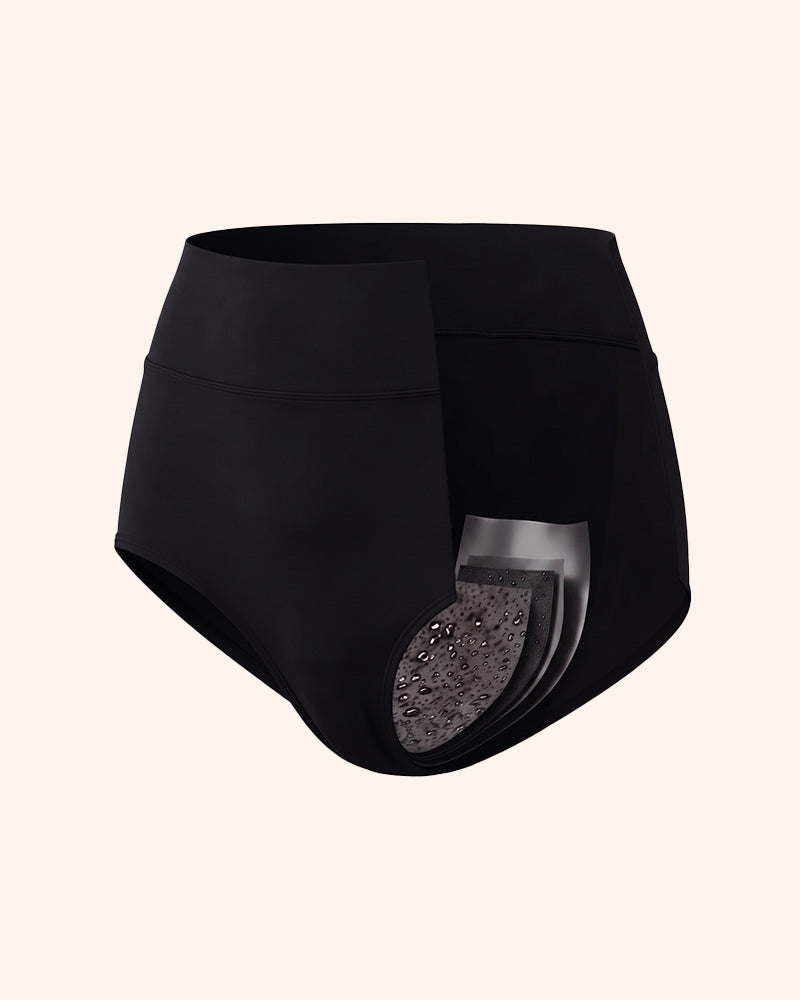
While you're in that in-between phase, decent protection makes waiting far less stressful. Washable leakproof underwear for women and leakproof underwear for men look and feel like regular underwear, so a leak on a long drive or in a meeting doesn't derail your day. A waterproof carry pouch keeps a spare pair discreet in your bag, and a laundry bag makes wash day simple.
Can bladder leaks come back after they stop?
Yes, and that's normal enough that it shouldn't panic you. Leaks that cleared up after childbirth can return around menopause. A bladder that behaved for years can flare during a bad cold or a stressful month. The habits that helped the first time — pelvic floor work, steady fluids, not ignoring constipation — usually help again.
What deserves attention is a return that's worse than before, or a new pattern: leaking at night when you never did, or pain that wasn't there last time. That's a fresh conversation with your doctor.
So, will bladder leaks go away on their own? For some people, yes — give it time, watch the trend, and help it along with the basics. For others, they improve with help, not with waiting alone. Our guide to fixing bladder leaks without surgery covers the non-surgical paths that help.
Frequently asked questions
Will bladder leaks go away on their own after having a baby?
Often, yes, at least partly. Most new mothers notice steady improvement over the first 6 to 12 weeks as tissues heal, and gentle pelvic floor exercises, once your provider clears you, speed recovery. If leaks are unchanged after three to six months, ask for a pelvic floor assessment.
Will bladder leaks go away on their own after prostate surgery?
Many men improve gradually over the first year after surgery. Pelvic floor rehab during that year helps. If leaking is still heavy at 12 months, it's less likely to resolve without further treatment — talk through next steps with your surgeon then.
Can Kegels alone make bladder leaks go away?
They can help a lot, especially for stress leaks — when you cough, laugh, or lift. But Kegels aren't a cure-all. If your pelvic floor is too tight rather than too weak, or urgency is your main problem, Kegels alone may not do much. A quick check with a physiotherapist sorts out which camp you're in.
Do bladder leaks get worse with age if you ignore them?
Not always, but they often do — slowly. Muscle strength, estrogen, and bladder capacity all shift with age, so a small leak at 55 can become a bigger one at 65 if nothing changes. People who keep up pelvic floor work tend to hold their ground much better.
When should I stop waiting and see a doctor about bladder leaks?
Book one if leaks haven't improved after about three months of consistent self-care, if they're getting worse, or right away if you notice blood in your urine, pain, fever, or trouble emptying your bladder. A first appointment is usually just a conversation and a few simple tests.


Share:
How to Stop Urge Incontinence When You Can't Get to a Bathroom in Time
Why Am I Leaking Urine After a Hysterectomy? What Changes and What Can Help