

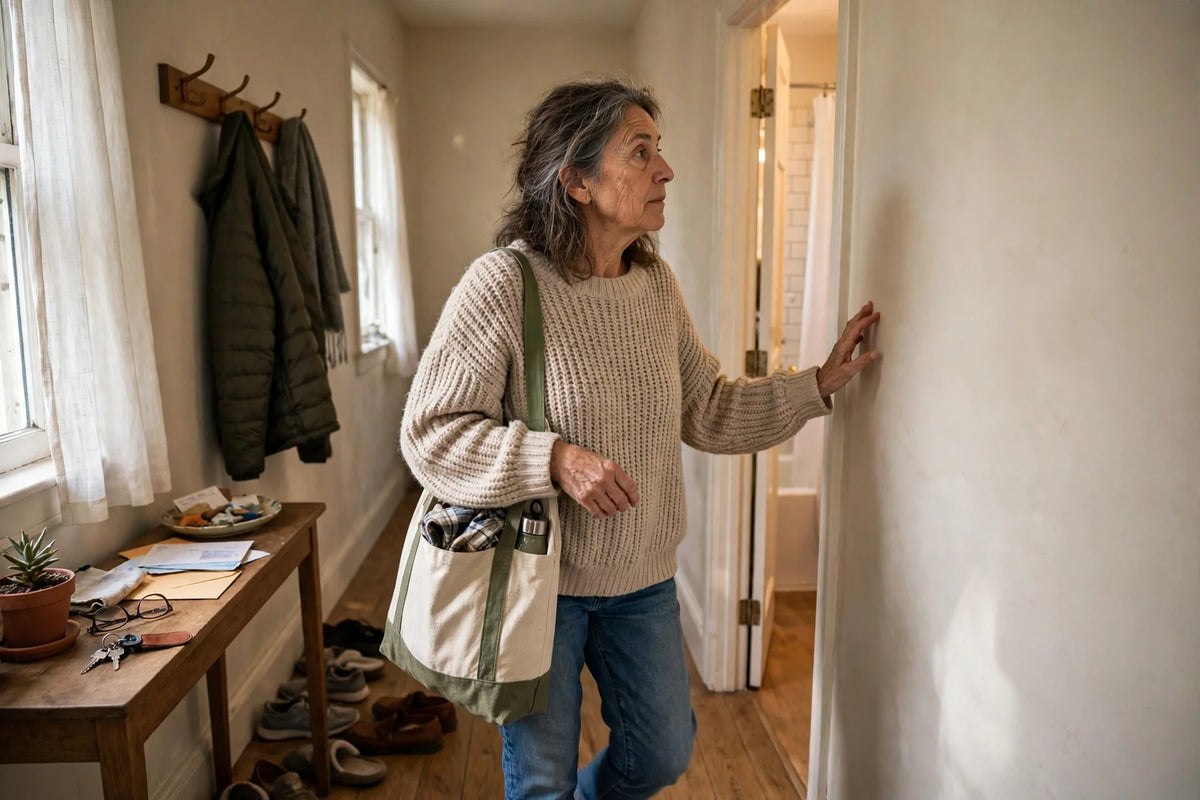
The short answer: if you want to know how to stop urge incontinence when you can't get to a bathroom, start by stopping still, doing a few quick pelvic floor squeezes, and giving your brain something else to focus on for 60 seconds. Rushing and panicking tend to make the urge stronger, not weaker. The urge usually peaks, then eases a little — and that easing is often enough to get you to a bathroom dry.
Most people who live with urge incontinence know this exact moment. You're in the checkout line, stuck in traffic two exits from home, or standing in a hallway with your keys already in your hand. The bathroom is close, but not close enough.
Why does the urge spike when a bathroom isn't close?
Your bladder talks to your brain all day. When it stretches, it sends a "getting full" message, and your brain decides whether now is a good time to go. With an overactive bladder, that messaging gets jumpy — the signal can fire early, fire hard, or fire at the worst possible moment.
Distance makes it worse because your brain starts counting down. The closer you get to a bathroom you can't yet use, the more your attention locks onto the urge. Running water, jingling keys, cold air when you step outside — all can turn a mild "I could go" into a loud "I have to go right now."
Stress piles on top. If you've leaked before in a similar spot, your body remembers, and that memory alone can push the urge higher.
What do you do in the first 30 seconds?
Try this sequence next time the urge hits and the bathroom is still a few minutes away. Practice it at home first, when the stakes are low.
1. Stop moving. Rushing or jogging to the bathroom shakes everything loose and tells your bladder you're about to go. Standing still for 20 to 30 seconds works better than a sprint down the aisle.
2. Do five quick flicks. Squeeze your pelvic floor muscles quickly five times, then hold one longer squeeze for about five seconds. Think of it as tapping the brakes — these contractions send a "not yet" message back to the bladder, and for a lot of people they take the edge off within seconds.
3. Breathe out slowly. Breathe in through your nose, then out through pursed lips like you're cooling a hot drink. Holding your breath and clenching everything does the opposite of helping.
4. Give your brain a job. Count backwards from 100 by threes. Name every street you drove down to get here. Urgency feeds on attention — the moment your mind is busy elsewhere, the signal often drops a notch.
Then walk, don't run, toward the bathroom. If the urge surges again, stop and repeat the flicks.
What helps in the moment, and what makes it worse?
| Try this | Skip this |
|---|---|
| Stop and stand still for 20–30 seconds | Running or speed-walking to the bathroom |
| Five quick pelvic floor flicks, then one longer hold | Bouncing, jumping, or jiggling your legs |
| Slow breathing out through pursed lips | Holding your breath and tensing everything |
| Distracting yourself — counting, listing, noticing details | Staring at the bathroom door and counting seconds |
| Walking slowly once the surge eases | Coughing, laughing hard, or lifting something heavy mid-surge |
| Crossing your legs or sitting down if that helps you | Hovering over a seat you haven't reached yet |
Crossing your legs can help some people feel more secure for a minute or two while standing in line. If it helps you, use it. If it doesn't, drop it.
How do you buy yourself a few more minutes?
The 30-second routine handles one surge. But what about the drive home, the 15-minute wait at the pharmacy, or a school pickup line that isn't moving?
First, sit down if you can. Sitting takes pressure off the pelvic floor compared with standing and shifting from foot to foot. In the car, keep your feet flat and breathe; wiggling in the seat just adds pressure.
Second, don't "just in case" pee every 20 minutes. Going every time you feel a twinge trains your bladder to signal at smaller and smaller volumes. The goal in the moment is to stretch that gap, not keep resetting it to zero. (Our guide to bladder training walks through this over time.)
Third, plan the boring stuff. Go before you leave, even if you don't feel desperate. Note where the rest stops are. On a shopping trip, walk past the bathrooms first so you know exactly where they are — hunting for a sign while the urge is peaking is a recipe for a bad five minutes. Our travel tips for bladder leaks cover this scouting in more detail.
And don't cut fluids to almost nothing before you go out. Thick, concentrated urine irritates the bladder and can make urgency worse. Sip normally, and ease off caffeine and fizzy drinks on days when you'll be far from a bathroom — read why in our piece on caffeine and bladder leaks.
What if you leak anyway?
Sometimes the routine doesn't hold. You did everything right and still leaked a little in the checkout line at 6 p.m. on a Tuesday. That doesn't mean the techniques are useless — it means this one surge was stronger than the tools you had that day.
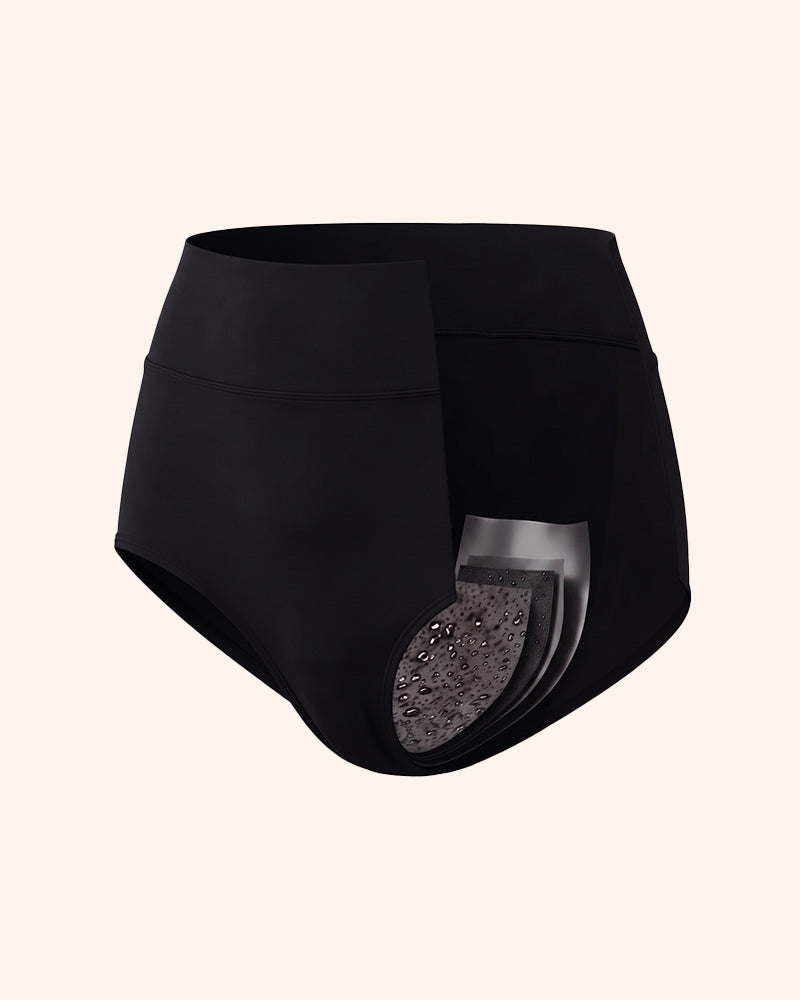
This is where backup stops being a nice idea and becomes the thing that lets you keep living normally. Leakproof underwear that looks and feels like regular underwear means a small leak stays a private annoyance instead of a visible disaster. Women's Stay Discreet washable underwear and men's Stay Discreet washable underwear are built for everyday wear, not just emergencies. A waterproof carry pouch holds a spare pair without announcing itself, and our guide to what to pack in your bag for bladder leaks lists the rest of a discreet kit.
After a leak, change when you can and move on. Don't sit in damp clothing for hours because you're embarrassed to use a public restroom — damp skin gets irritated fast. Our guide to changing discreetly in a public restroom covers the practical side.

When should you stop trying to manage it alone?
In-the-moment tricks help a lot of people, but they're not a substitute for a checkup when something changes. Book an appointment if you notice blood in your urine, pain or burning when you pee, a sudden inability to pee at all, fever with urinary symptoms, or leaks that started abruptly after an illness, injury, or new medication. Also worth a visit: urgency so frequent it's shrinking your life — skipping outings or planning every day around bathroom locations.
If embarrassment is what's keeping you from booking, writing down when leaks happen, what you drank, and what you were doing makes the appointment much easier — you can hand over notes instead of explaining it all from memory. Our guide on talking to your doctor about incontinence has a script for that first conversation.
Frequently asked questions
Can you train yourself to hold it longer?
Yes, gradually. Bladder training slowly stretches the time between bathroom visits — say, from every hour to every hour and 15 minutes over a couple of weeks — using the same pause-and-distract routine above. Many people find their "warning window" gets noticeably longer within a month.
Does crossing your legs really help stop urge incontinence?
For some people, yes, for a minute or two. It adds gentle pressure and a sense of security, which can calm the panic part of the urge. It won't retrain your bladder on its own, or hold back a full bladder for long. Think of it as a bridge to the bathroom, not a fix.
What should you do when the urge hits in a checkout line?
Stop shifting your weight, do your quick flicks, and pick a distraction — count the items in the cart ahead of you, read labels on the shelf, anything. Leave your groceries and walk to the bathroom if you have to; a cart can be reclaimed.
Does drinking less water help you hold it longer?
Usually the opposite. Drinking too little makes urine concentrated, and concentrated urine irritates the bladder and can trigger more urgency. Drink normally, sip rather than gulp large amounts at once, and time your last big drink before a long outing.
Can leakproof underwear help with urge incontinence?
It can't stop the urge signal, but it can change what a leak costs you. Knowing a small leak won't soak through your jeans takes pressure off the moment — and less panic often means a weaker surge. A washable laundry bag makes cleanup simple when you get home.
The urge will probably still catch you off guard sometimes. But the next time it hits two minutes from a bathroom, you don't have to sprint or panic. Stop, flick, breathe, distract — and give yourself the minute you need.


Share:
Why Do You Wake Up to Pee at Night? Nocturia Causes and What Can Help
Will Bladder Leaks Go Away on Their Own? What Gets Better, What Doesn't, and When to Get Help