


The short answer: Learning how to manage bladder leaks when you live alone comes down to a small, repeatable routine — the right protection for your leak level, a laundry rhythm you don't have to think about, a calm nighttime setup, and a backup plan for the days that don't go smoothly. You don't need a perfect system. You need one that holds up on a tired Tuesday.

What actually changes when there's no one else in the house?
Living alone doesn't change your bladder. It changes the logistics around it. There's no one to run a load of laundry while you're in the shower, and no one to grab a spare from the dryer. That can feel heavier than the leak itself.
Here's the flip side: you also get full control. No negotiating bathroom schedules, no explaining yourself to a roommate. Use that control well, and the practical side fades into the background.
One honest note first: this covers everyday management, not diagnosis. If leaks are new, suddenly worse, painful, or come with fever, blood in your urine, or trouble passing urine, book a doctor's appointment. "I'm leaking urine and it's new" is enough to get you seen.
How do you manage bladder leaks when you live alone?
Start with the morning, because mornings set the tone. Pick one spot — a drawer, a basket, a shelf by the bathroom — and keep your clean pairs there, and only there. When you get up, you dress from that spot. No hunting.
Then give the dirty ones a home, too. A small lidded bin or a mesh laundry bag in the bathroom beats a pile on the floor, and it keeps odor from settling into the room. Rinse first if that's your habit, then drop them in the bag. When the bag is full, it goes in the wash. That's the whole system.
Washing every two to three days works for most people, or whenever the bag fills up. With only three or four pairs, you'll be washing constantly, and that gets old fast. Our guide on how many pairs of incontinence underwear you need walks through the numbers, but seven to ten pairs gives you breathing room.
Keep one spare pair in your bag, always. Tuck it into a waterproof carry pouch with a couple of wipes, and that pouch lives in your everyday bag. It turns a leak at the grocery store from a crisis into a two-minute detour — in the checkout line with a full cart, you just walk to the restroom, change, and come back.
What about nights?
Nights feel most different alone, because there's no one to help change the sheets at 2 a.m. So set the night up before you get tired.
First, think about protection level, not just day versus night. Some people leak a little during the day and more overnight. If you wake up damp, you may need a higher-absorbency pair at night, or a reusable pad tucked in for extra coverage — not a whole new system, just one step up.
Second, make the bed easy to fix. A washable mattress protector means a leak costs one sheet change, not a mattress scrub. Keep a clean sheet and pair within arm's reach — on a chair, in the top drawer, wherever your half-asleep hand can find them. See also how to sleep through the night with bladder leaks.
Third, don't cut fluids to "solve" the night. It usually backfires: concentrated urine can irritate the bladder and make urgency worse, and you'll wake up thirsty. A steadier approach is to drink most of your fluids earlier in the day, sip in the evening, and empty your bladder right before bed.
How do you keep laundry from taking over?
When you live alone, laundry is entirely yours, so it needs a system instead of willpower. Washable underwear saves money and waste over disposables, but only if washing them doesn't become a chore you dread.
Use a machine-wash laundry bag so pairs don't tangle or stretch, wash cool or warm with a mild detergent, and skip fabric softener — it coats the absorbent layers and dulls them over time. Line-dry when you can; if you use a dryer, keep the heat low. See our guide to washing reusable bladder leak underwear for details.
One trick that helps: wash on fixed days, like Sunday and Wednesday, rather than "when it feels like too much." The third load of laundry this week feels like a lot. Two scheduled loads feel like nothing. Away overnight, the same mesh bag goes in your suitcase — used pairs in, clean pairs out, nothing smelling up the hotel room.
What if you leak while you're out?
Before you leave, run a quick mental check: spare pair? Wipes? Roughly where the restrooms are? That's it. You don't need a spreadsheet. You need a pouch and a habit.
If a leak happens in public, the fastest recovery is boring on purpose: restroom, change, bag the used pair, wash your hands, carry on. Most people around you will never know. If the worry itself is the hard part — the scanning for restrooms, the "what if" loop — our guide to feeling more prepared and less anxious about bladder leaks in public is a good next read.
You don't owe anyone an explanation. "I'm fine, just need a minute" is a complete sentence.
How do you choose protection that fits solo life?
Look for three things: absorbency that matches your heaviest leak, not your average one; a fit that stays put when you bend, sit, and walk; and fabric you actually like wearing all day. If a pair digs in or rides up, you won't wear it, and protection you don't wear protects no one.
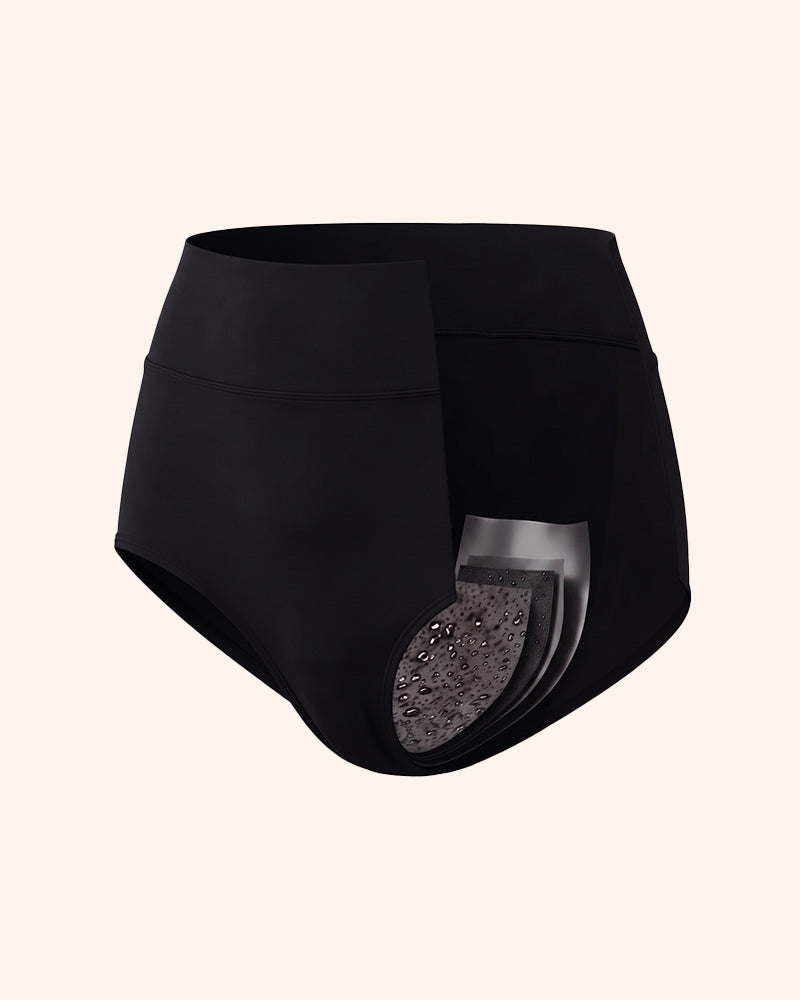
Our women's Stay Discreet leakproof underwear comes in a high-waist cut many people find comfortable all day, and the men's Stay Discreet washable underwear is built around a front absorbent zone. If you prefer a removable pad, the men's style with a removable absorbent pad lets you swap the pad without changing the whole pair.
Order one or two pairs first if you're trying a new style, and wear them on a normal day. Sit in them. Walk to the store in them. Then decide. A drawer full of pairs you hate is worse than three pairs you trust.
A weekly rhythm you can copy
Put it together: clean pairs in one drawer, dirty ones in a mesh bag, wash on Sunday and Wednesday, spare pouch in your bag, higher-absorbency pair and a spare sheet by the bed at night. Five habits, none taking more than a minute.
Living alone with bladder leaks isn't about being tougher than everyone else. It's about setting things up once, so you don't have to be brave about it every day. Get the routine right, and the leak stops running your schedule. You do.
FAQ
How do I manage bladder leaks when I live alone and work full time?
Learning how to manage bladder leaks when you live alone gets easier once work has a slot in the routine: dress from one drawer, keep the spare pouch in your work bag, and wash on two fixed evenings. If your job keeps you from a restroom for long stretches, plan a stop before long meetings, and keep a spare pair at your desk or in your car.
How many pairs of leakproof underwear should I keep if I live alone?
Seven to ten pairs is a good starting point. It covers two to three days between washes, with spares for nights and outings. Start with fewer if you're testing a style, then top up once you know which fit you reach for every morning.
What helps with bladder leaks at night when there's no one to help change the bed?
When you're figuring out how to manage bladder leaks when you live alone, nights are the place to plan ahead: a washable mattress protector, a higher-absorbency pair if you leak more overnight, and a clean sheet and pair within reach of the bed. A 2 a.m. change then takes minutes, not a laundry session.
How do I store incontinence underwear discreetly when I live alone?
You probably don't need to hide them — but a tidy drawer or lidded basket keeps things simple and private when visitors drop by. Clean pairs in one spot, used pairs in a closed mesh bag, spare pouch in your everyday bag, not out on a counter.
Is it normal to feel embarrassed about bladder leaks when you live alone?
Yes, completely. Privacy doesn't automatically mean peace of mind, and plenty of people feel more self-conscious precisely because there's no one to normalize it at home. A routine helps: when the practical side is handled, the worry usually shrinks, and if it doesn't, talking to your doctor or a pelvic health physiotherapist is reasonable, not an overreaction.


Share:
Why Switching From Disposable Pads to Washable Incontinence Underwear Feels Different
How to Manage Bladder Leaks When You Share a Bathroom: A Practical, Low-Stress Guide