

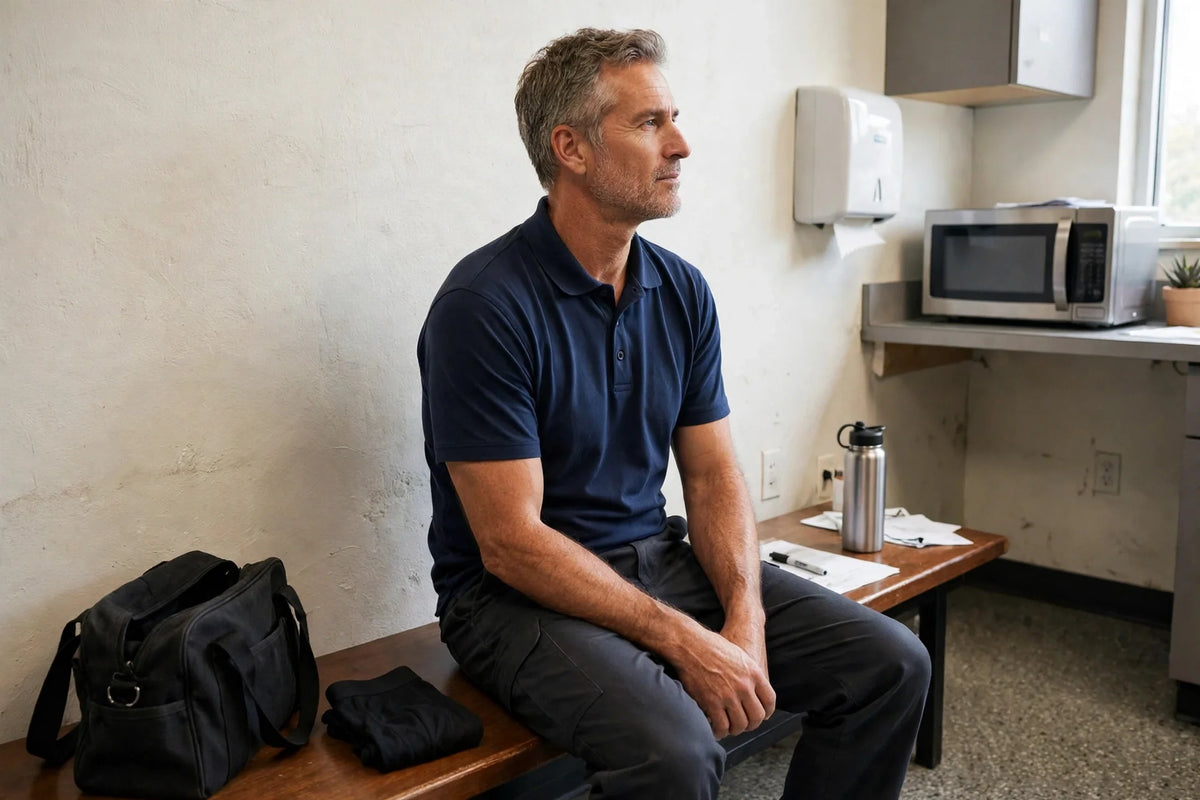
The short answer to how to manage bladder leaks during a long shift without bathroom breaks: plan the shift like you plan the job. Pick protection you can trust for hours, time your drinks, and pack a change you can swap in under two minutes. You can't always control when the bathroom is free. You can control what happens before you walk in.

Think of a nurse on a 12-hour ward shift, or a driver on a route with no depot for miles. Neither can slip away at 10:15 because their bladder says so. The usual advice — "just go more often" — isn't much help here.
How do you manage bladder leaks during a long shift without bathroom breaks?
Start the night before. Lay out tomorrow's protection, a spare pair, a small pouch, and a zip bag for anything damp. Don't leave it to 6 a.m., when you're already hunting for your keys. A spare tucked in your locker beats a spare sitting at home in a drawer.
On shift morning, drink normally. Skipping water all day sounds like a fix, and it backfires. A dry mouth, a headache by 2 p.m., darker urine that stings — that's your bladder getting more irritable, not less. Sip steadily through the morning instead of downing a large bottle right before your shift starts. If coffee sets you off, have one smaller cup early, not three before 9 a.m.
Use the bathroom right before you clock in, even if you don't feel desperate. Call it your reset. Then, when a gap does open — between patients, between classes, at a fuel stop — take it, even if the urge feels mild. Waiting for a strong urge on a long shift is how a small leak turns into a wet-through.
What should you wear for a 12-hour shift?
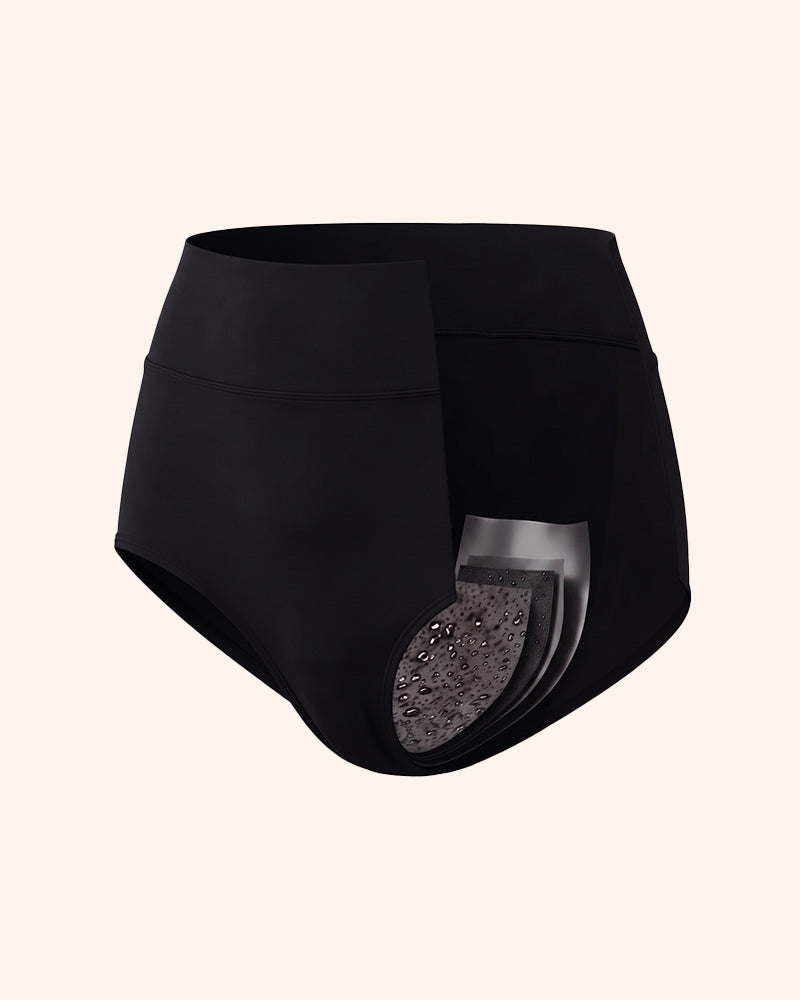
Wear something built to hold for hours, not something you hope will hold. For a full shift, most people do better in washable leakproof underwear or the women's version than in a thin pad that shifts when you bend, lift, or climb stairs. Pads have their place. On a 10- or 12-hour day with a lot of moving, a pair that stays put matters more than a pad that bunches by lunch.
Fit is half the protection. Waistband snug but not digging in. Leg openings that sit flat when you squat to lift a box or kneel beside a bed. If your underwear leaves deep red marks by midday, it's too tight — and tight gear can press on your bladder and make urgency worse. Try the pair on a normal day at home first. A shift is a bad time to test something new.
If you leak more at night or on very long days, read our guide on how often to change incontinence underwear and pick your absorbency for your worst hour, not your best one. A quiet desk morning and a busy ward afternoon are not the same shift.
What changes on a longer shift?
| Shift length | Change plan | What to pack |
|---|---|---|
| Up to 8 hours | One pair, plus one spare in your bag | Spare pair, one zip bag, wipes |
| 10 hours | Plan one change around mid-shift, even if you feel dry | Two spares, pouch, wipes, a fresh top layer if you run hot |
| 12 hours or more | Two planned changes — mid-shift and late shift | Two spares, pouch, two zip bags, wipes, and a small towel |
That mid-shift change is the trick people skip. You feel fine at noon, so you push through. By 4 p.m. the pair is damp, your skin is sore, and you're counting down the hours. Swap on schedule, not on disaster. It takes two minutes in a stall, and it resets the whole second half of your day.
How do you change discreetly at work?
Keep it boring and fast. A small waterproof pouch holds the spare and the wipes, and it looks like any other toiletry bag. Nobody in the restroom line knows what's inside, and nobody needs to.
Step into a stall, swap, drop the used pair into a zip bag, and seal it. Done. If your workplace has a single-stall restroom, even better. If it only has a shared locker room, time your change for a quiet gap — the first 10 minutes of a break, when most people are still heading to the canteen. Our step-by-step guide to changing in a public restroom walks through the same routine in more detail.
Back at home, toss the used pair in a mesh laundry bag and wash it with your normal load. Don't let a damp pair sit in a sealed plastic bag overnight. That's how odor builds, and it's rough on the fabric too.
What if urgency hits and you can't leave?
It happens. You're mid-task, the bathroom is a five-minute walk, and the urge spikes. Stop, plant your feet, and breathe out slowly. Cross your legs if you're standing, or sit and press your thighs together for a few seconds. It sounds too simple. It buys you time more often than you'd expect.
Then, the moment you can move, walk — don't run — to the nearest restroom. Running, coughing, and lifting all push pressure down at exactly the wrong moment. If urgency is your main problem, not just stress leaks, our bladder training guide covers the slow, practical version of this: stretching the gap between trips a little at a time, over weeks, not in one heroic shift.
Should you tell your manager?
You don't owe anyone a medical history. But if your job genuinely gives you no break for hours, a short, plain request helps more than suffering quietly. "I need a five-minute break every couple of hours for a health reason" is enough. You don't have to name the condition. Most managers hear "health reason" and sort the rota. If they push back, that's a conversation for your doctor's note, not a debate in the corridor.
One trusted colleague who can cover you for three minutes beats a perfect plan you can't execute alone.
Your shift kit, packed tonight
Keep it small enough that you'll actually carry it. For a long shift, this is the core: your worn pair, one or two spares, a waterproof pouch, two zip bags, a few wipes, and hand sanitizer.
A long shift is already hard on your feet, your back, and your patience. Your bladder shouldn't get to make it harder. Get the protection right, change on schedule, and let the rest of the day be about the work — not about the nearest bathroom.
Frequently Asked Questions
How do nurses manage bladder leaks on shift?
Mostly the same way: a pair they trust for hours, a planned mid-shift change, and a small pouch they can grab without thinking. The nurses who cope best tend to change on schedule, not when things feel wet, and they keep the spare in their locker or bag, not in their car.
Can you wear incontinence underwear for a 12-hour shift?
Yes, if the absorbency matches your leaks and you change at least once mid-shift. A single pair for 12 straight hours works for light leaks on some days, but for moderate leaks, a planned change keeps skin drier and cuts odor. Check our guide on wearing incontinence underwear every day for skin-care tips that matter on long days.
What do I do if I leak at work and can't change right away?
Stay calm, finish the task if you safely can, and change at the first real gap. A good leakproof pair should hold a small leak without showing through your trousers. If it soaked through, a spare top layer or a jacket tied around your waist buys cover until you reach a restroom. Don't skip drinking water for the rest of the shift to "make up for it" — that usually makes urgency worse later.
How can I manage bladder leaks at work without bathroom breaks?
Time your fluids, use the bathroom before your shift and at every genuine gap, wear protection rated for hours, and keep a discreet change kit in your bag. If gaps are truly hours apart, talk to your manager about a short scheduled break — you don't need to explain the details to ask for one.
How often should you change incontinence underwear on a long shift?
For an 8-hour shift, once or not at all if leaks are light. For 10 to 12 hours, plan one to two changes. Change sooner if the pair feels damp, smells, or your skin feels sore — comfort is a better signal than the clock.
Will drinking less water help me get through a shift without leaking?
Not really. Cutting fluids concentrates your urine, which can irritate your bladder and trigger more urgency, plus headaches and tiredness by late afternoon. Steady sips beat a dry day and a big gulp later.


Share:
Does Botox Help Overactive Bladder? What to Know Before You Ask Your Doctor
Does Sitting All Day Cause Bladder Leaks? What to Do About It at Your Desk