

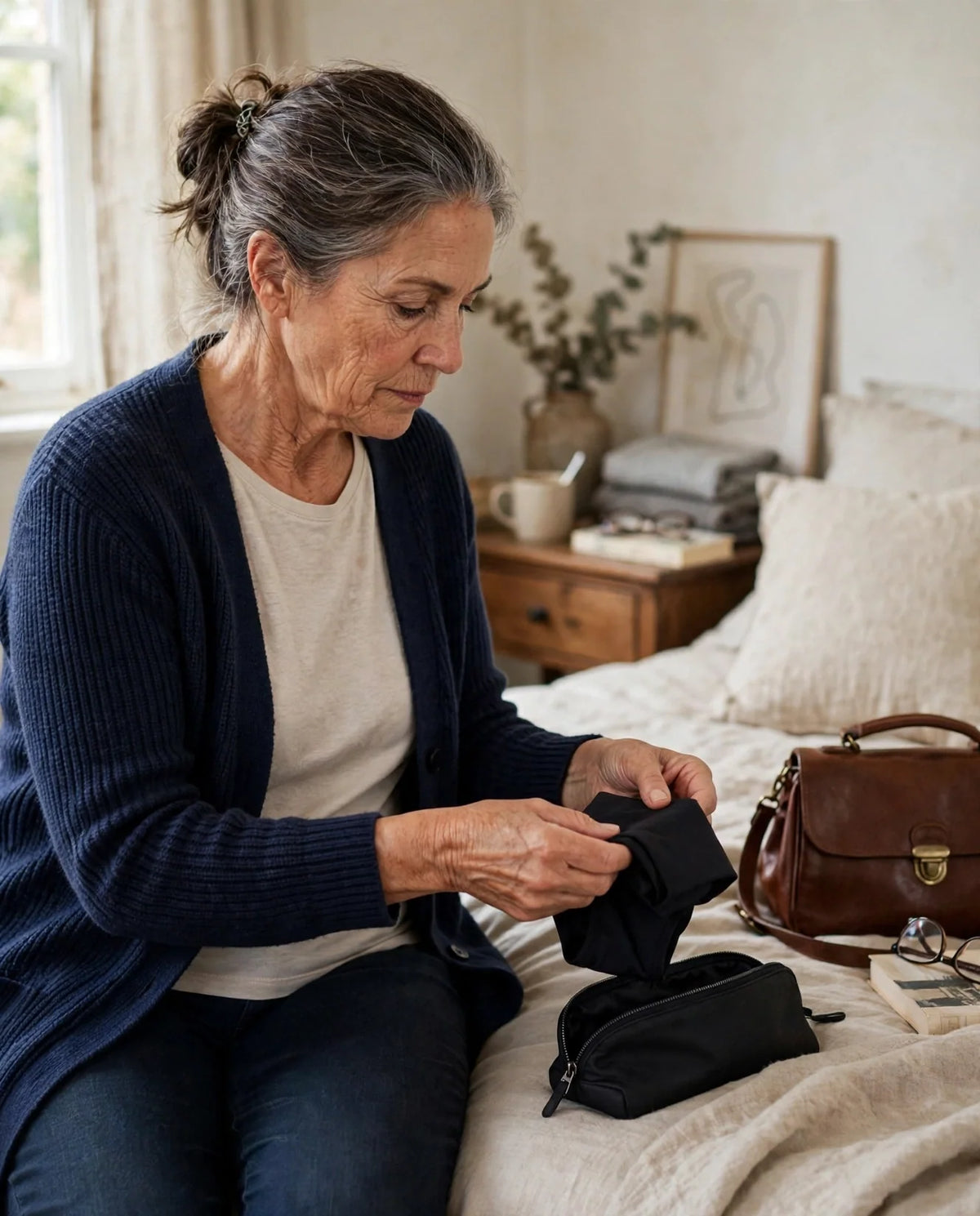
The short answer: yes — learning how to manage bladder leaks at the dentist mostly comes down to what you do in the 20 minutes before you leave the house. Put on leakproof underwear you trust, use the bathroom right before you sit down, and let the front desk know you might need a quick break if the appointment runs long. That's most of it. The rest is knowing what to ask for once you're lying back in the chair.
A dental visit is an odd kind of appointment: flat on your back, unable to talk, unable to just get up and walk out mid-filling. If your bladder has a mind of its own, that combination can feel like a trap. It isn't one — dentists see nervous patients all day, and someone who needs a bathroom break is the least surprising thing they'll deal with this week.

Why the dentist's chair feels like the worst place for a leak
It's not your imagination. A few things stack up at once.
First, you're lying flat. Gravity stops helping you, and the reclined position puts gentle pressure on your bladder — the same reason some people notice leaks when they lie down at night. Second, you can't move. A filling takes 20 to 40 minutes, a root canal can run over an hour, and during most of that time your mouth is open and someone else's hands are in it. Third, there's water. The spray, the rinsing, the sound of the suction — running water is a known urge trigger, and a dental chair is basically a running-water soundtrack.
Then there's the stress. Worry tightens everything up, and for a lot of people stress makes urgency worse, not better. So you sit in the waiting room already tense, already counting the minutes. That's normal — it doesn't mean anything is wrong with you beyond the leaks you already know about.
How to manage bladder leaks at the dentist, step by step
Before you leave the house
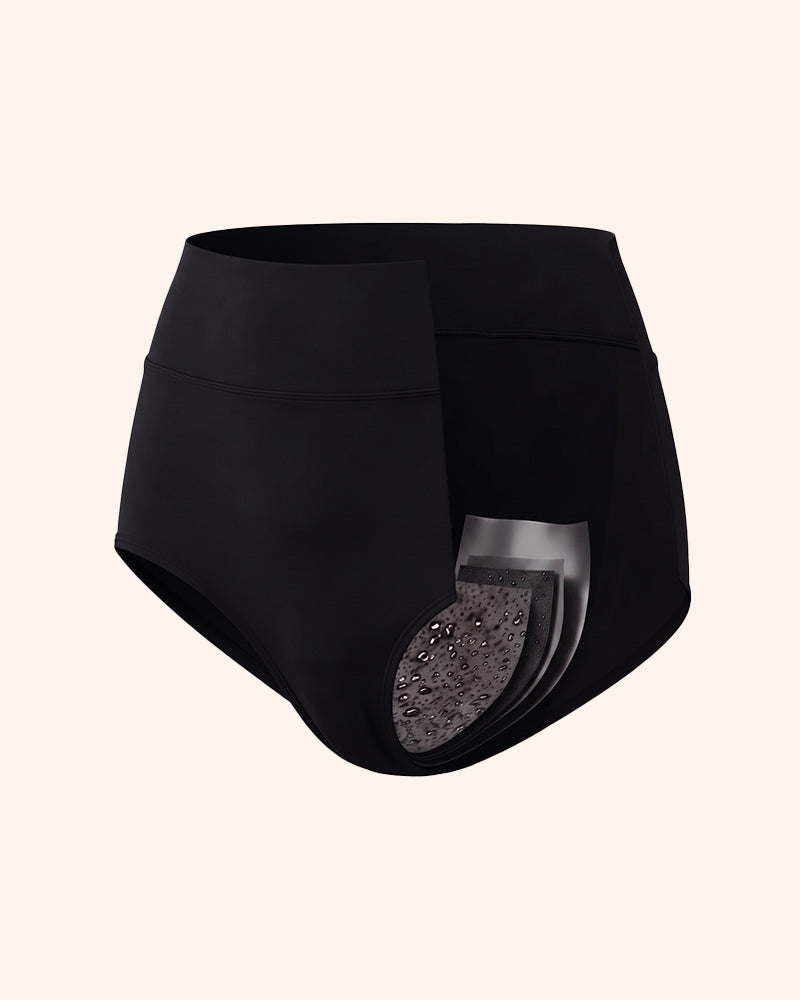
Start with what you're wearing. Put on a fresh pair of leakproof underwear — or the men's version — rather than a pad. Pads can bunch and shift when you lie flat for half an hour; underwear with a built-in absorbent layer stays where you put it. If you've ever wondered whether pads or underwear hold up better when you're horizontal, the short version is that underwear wins.
Pack a small kit. A waterproof pouch with one spare pair, two or three wipes, and a small plastic bag for anything damp takes up less room than your phone charger. Toss it in your bag and forget about it — knowing it's there takes the worry down a notch.
Wear darker trousers or a skirt if you can — not because anyone will notice, but because it takes one more "what if" off your mind. And skip the giant glass of water right before you leave: sip normally through the morning, since concentrated urine can irritate the bladder, but don't chug a pint at 9:40 for a 10:00 appointment.
One more thing: if mornings are your worst time of day, ask for an afternoon slot when you book. A 2 p.m. cleaning is the same cleaning, and your bladder might be calmer by then.
In the waiting room
Arrive ten minutes early. Not because the dentist needs you to — because you need the bathroom. Use it when you arrive, even if you went at home. An empty bladder buys you the whole appointment.
While you're checking in, say one quiet sentence to the receptionist: "If the appointment runs long, I may need a quick bathroom break." That's it. No explanation, no detail. They hear requests like this constantly, and they'll usually pass it along to the hygienist without a second thought. If you'd rather not say it out loud, write it on the intake form or mention it in a message when you confirm the appointment.
In the chair: what to say and what to ask
Before the bib goes on, agree on a signal with your hygienist or dentist. Raise your left hand, tap the armrest — whatever feels natural. Tell them, "If I raise my hand, I need a minute." They'll nod. They've done this a thousand times.
Ask for a pause between steps. A cleaning has natural breaks — after the scaling, before the polish. A filling has them too, between the drilling and the filling itself. Even a root canal pauses between stages; you just need the 90 seconds between one stage and the next.
If you feel pressure building, don't try to tough it out for another 20 minutes. Use the signal early — a two-minute break costs nobody anything, and sitting up for a moment often eases the urge on its own.
For a longer procedure — a crown or a root canal — ask at the start how long it will run and whether there's a planned break.
If a leak happens anyway
It happens. Here's the part nobody tells you: the dental bib, the chair, and your own clothes hide a lot. A small leak usually never reaches your clothes at all — that's what the absorbent layer is for. If it does, dark trousers and a quick trip to the bathroom sort it out.
After the appointment, change into your spare pair in the office bathroom, drop the used pair in the plastic bag inside your pouch, and wash it at home with the rest of your laundry. That's the whole cleanup. No drama, no explanation owed to anyone. If you'd like a refresher on changing discreetly away from home, this step-by-step guide walks through it.
Most of all: don't cancel your next appointment over it. One awkward visit is not a reason to skip a cleaning and end up with a toothache six months later. Your dentist has seen far worse than a damp patch.
After the appointment
When you get home, take 30 seconds to note what worked: did the spare pair stay in the bag, did the hand signal feel easy, did the afternoon slot help? Jot it in a note on your phone, and next time you'll walk in with a plan that already works. A short bladder diary for a week or two can show you which times of day are calmest for appointments.
And if leaks are getting in the way of everyday things beyond the dentist — work, travel, nights out — that's worth a conversation with your doctor. There are options, and guessing is a poor substitute for knowing. Here's how to bring it up without it feeling like a big deal.
Frequently asked questions
Can I wear incontinence underwear to the dentist?
Yes. It looks and feels like regular underwear under your clothes, nobody can tell, and it stays in place when you lie flat — which is exactly when a pad is most likely to shift. For most people, that's the simplest part of how to manage bladder leaks at the dentist: put on a fresh pair before you leave and you're covered for the whole visit.
What if I need to pee in the middle of a filling?
Raise the hand signal you agreed on before the procedure started. Your dentist will pause at the next natural break — between drilling and filling, for instance — and you can use the bathroom. A two-minute pause doesn't disrupt the appointment, and dentists expect it. That's how to manage bladder leaks at the dentist during longer procedures: agree on the signal first, then use it early.
Should I tell my dentist I have bladder leaks?
You don't have to share any detail you're not comfortable with. One sentence to the receptionist — "I may need a quick bathroom break during a long appointment" — is plenty. When people ask how to manage bladder leaks at the dentist, that one sentence is usually most of the answer. If you'd rather not say it at all, just book a shorter appointment or ask for a break partway through.
How do I change incontinence underwear at the dentist's office?
Bring a spare pair and a few wipes in a small waterproof pouch, and change in the office bathroom after your appointment. Fold the used pair into the pouch's plastic bag and wash it at home. The whole thing takes about two minutes, and it's the same routine you'd use in any public restroom.
Can I drink water before a dental appointment if I have bladder leaks?
Yes — sip normally. Don't dehydrate yourself on purpose, because concentrated urine can irritate the bladder and make urgency worse. Just avoid a large drink in the 30 minutes before your appointment, and use the bathroom when you arrive. That small bit of timing is a big part of how to manage bladder leaks at the dentist without overthinking it.


Share:
How to Help Your Husband With Incontinence After Prostate Surgery: A Partner's Practical Guide
How to Manage Bladder Leaks at the Movies: Sitting Through a Film Without the Worry