


The short answer: Not while the catheter is still in. The tube and the leg bag need room to sit flat and drain freely, and snug leakproof underwear gets in the way. But the day the catheter comes out, that's when incontinence underwear earns its place — most men leak for a while after prostate surgery. So can you wear incontinence underwear with a catheter? No — not yet. The real question is when to switch, and what to wear until then.
If your surgery is booked for next week, this is the part nobody walks you through at the pre-op appointment. The surgeon talks about the operation, the nurse hands you a leaflet about the catheter, and nobody mentions underwear. Then removal day arrives, you stand up from the clinic chair, and a few drops escape before you've reached the door. That's normal. A little planning turns it from a miserable surprise into a non-event.
Can you wear incontinence underwear with a catheter in place?
No — and the reason is mechanical. A catheter is a tube, a balloon holding it inside the bladder, and a bag, usually strapped to your thigh by day and hanging off the bed frame at night. Everything has to lie flat and drain downhill. The moment fabric presses on the tube, it can kink — and a kinked tube means urine backs up and a 2 a.m. call to the clinic.
Leakproof underwear is built to fit close to the body — a snug leg opening is what keeps a leak inside the gusset instead of on your trousers. With a catheter, that snugness works against you: the waistband sits where the tube exits, the leg opening presses on the bag's connector, and pulling the pair on and off tugs the tube every time.
While the catheter is in, loose is the rule. The hospital will usually send you home in stretchy mesh pants — the kind that look like a fishing net and feel like nothing at all. Wear those, or boxer shorts a size bigger than usual, with the leg bag tucked under a loose trouser leg.
What should you wear while the catheter is still in?
You don't need absorbency yet — the catheter is doing the bladder's job. What you need is clothing that leaves the tube alone and lets you empty the bag without a wrestling match.
- Loose boxer shorts, one size up. Front-opening styles are easiest. Skip anything with a tight elastic leg.
- Dark, loose trousers with a drawstring waist. Sweatpants or tracksuit bottoms that don't press on the thigh strap.
- A dressing gown or long shirt at home. It covers the bag when someone drops by.
At night, the day bag swaps for a bigger night bag on the bed frame. Sleep in the mesh pants or loose shorts, tube running down between your legs, bag below the bladder.

What happens on the day the catheter comes out?
Removal takes about ten seconds. The nurse deflates the balloon and slides the tube out. It stings for a moment, then it's over. Then comes the part nobody warns you about: the first trip to the bathroom.
Your bladder has been on holiday for a week or two, and surgery has bruised the area around it. So the first time you stand up, or cough, or laugh at something the nurse says, a few drops get out before you can stop them. This is the normal starting point, not a sign that something went wrong.
| Catheter still in | Catheter out | |
|---|---|---|
| What you wear | Loose boxers or hospital mesh pants | Leakproof underwear, moderate absorbency |
| What handles the urine | The bag — nothing needed from you | The gusset, plus a pad if you use one |
Bring your first pair of leakproof underwear that morning, and change into it in the clinic bathroom after the removal.
How do you pick the first pair after catheter removal?
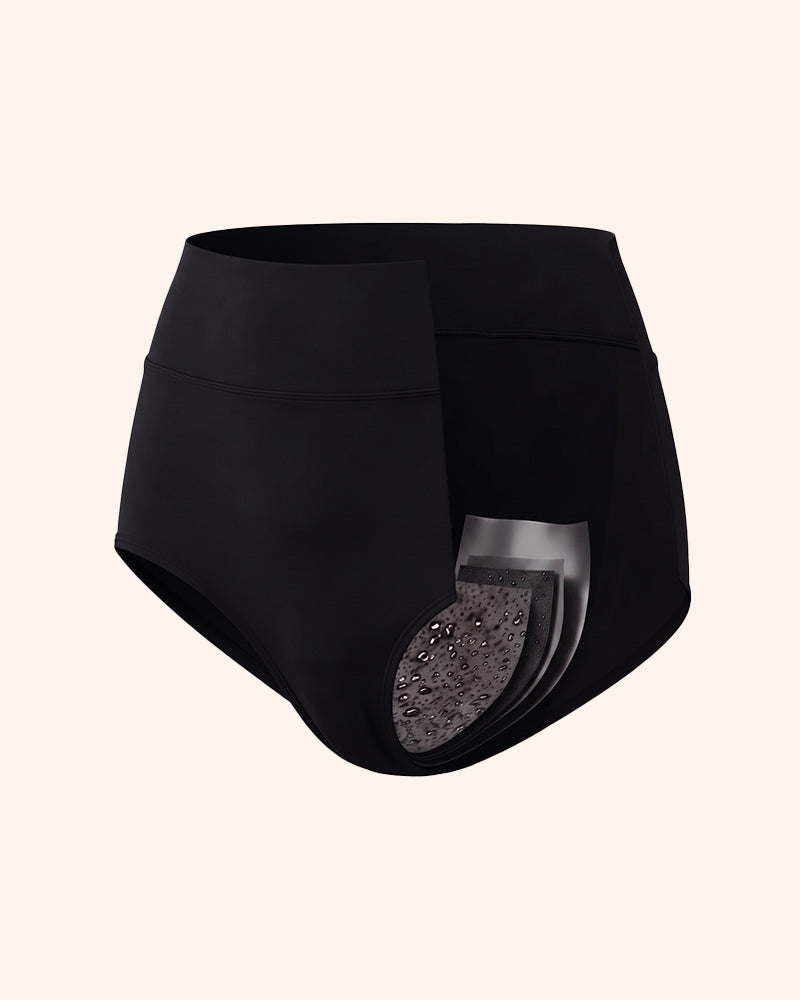
Start one absorbency level higher than you think you'll need — the first week is the leakiest, and a moderate pair buys you confidence while your pelvic floor wakes up. The men's leakproof underwear comes in light and moderate absorbency, and moderate is the right starting point for most men in that first fortnight.
Fit matters more than absorbency. The leg openings should sit flat against your skin with no gaps — a gap is a leak route. Walk to the kitchen and back, sit down, stand up — if the pair stays put through that, it'll stay put through a trip to the shops.
One style worth knowing about: underwear with a removable pad. The men's style with a removable absorbent pad lets you swap just the pad mid-day instead of changing the whole pair — less laundry and less fuss in the first week.
How long will you need leakproof underwear?
Weeks to months, and the honest range is wide. Some men are dry within a fortnight, most take a few months, a small number longer still. Don't fix on a date. Track it week by week: how many pairs did you change today?
Pelvic floor exercises help, but only if you do them right. Some men squeeze too hard and end up with a pelvic floor that's too tight to relax. If you haven't been shown how, ask for a referral to a pelvic floor physiotherapist at your follow-up — one session to check your technique beats a hundred guessed Kegels. Our guide to male urinary leakage after prostate surgery covers the recovery timeline in more detail.
Call your clinic the same day if you can't pass urine at all after the catheter comes out, if burning gets worse over a few days, if you develop a fever, or if you see blood clots.
What to pack for catheter removal day
Pack the bag the night before.
- Two or three pairs of leakproof underwear. One to change into at the clinic, and a spare for the way home.
- A waterproof pouch. For the wet pair. Keeps the rest of the bag dry.
- A few wipes or damp tissues. Clinic bathrooms don't always have what you need.
- Dark, loose trousers. The ones you've been wearing all week with the catheter — they still work, and they're already broken in.
When you get home, start the laundry routine straight away. Rinse the used pair in cold water first, then wash on a normal cycle — no fabric softener, no bleach. A mesh laundry bag keeps pairs from tangling with the rest of the wash. If you're wondering how many to buy, our guide to how many pairs you need works through the numbers.
The catheter weeks are the hard part — the tube, the bag, sleeping awkwardly so nothing kinks. Getting it out is a milestone, even if the leaks that follow feel like a step backwards. They're not. They're the first week of your bladder learning to work again. For more on recovery week by week, see what's normal after prostate surgery and how to manage bladder leaks in hospital.
Frequently asked questions
Can you wear incontinence underwear with a catheter?
No — not while the catheter is in place. Snug underwear presses on the tube and the leg bag, which can kink the tube and block drainage. Wear loose boxer shorts or the hospital's mesh pants until the catheter is removed, then switch to leakproof underwear the same day. In short, can you wear incontinence underwear with a catheter? Only after it's out.
What underwear should I wear after my catheter is removed?
Once the catheter is out, the answer to can you wear incontinence underwear with a catheter becomes yes. Start with a moderate-absorbency pair that fits snugly at the legs with no gaps. A style with a removable pad is handy in the first week, when you may want to change the pad rather than the whole pair.
How long after prostate surgery will I need leakproof underwear?
It varies a lot: a couple of weeks for some men, a few months for most, and longer for a small number. Measure progress week by week, not by a date.
Can I wear regular underwear after prostate surgery?
Yes, once the leaks stop. Regular underwear is fine on dry days, and many men switch back and forth — regular underwear at home, leakproof underwear for a long drive or a day out.
Do I need pads as well as leakproof underwear?
Not necessarily. A moderate-absorbency pair handles most post-surgery leaks on its own, and the removable-pad style gives you a middle ground: extra absorbency when you need it, and a quick pad swap instead of a full change.
Related reading: Male Urinary Leakage After Prostate Surgery · How to Manage Bladder Leaks in Hospital · Can You Wear Incontinence Underwear Every Day?


Share:
How to Manage Bladder Leaks While Shopping: Fitting Rooms, Checkout Lines, and Long Trips to the Mall
What Are Booster Pads for Incontinence? Do They Work With Leakproof Underwear?