

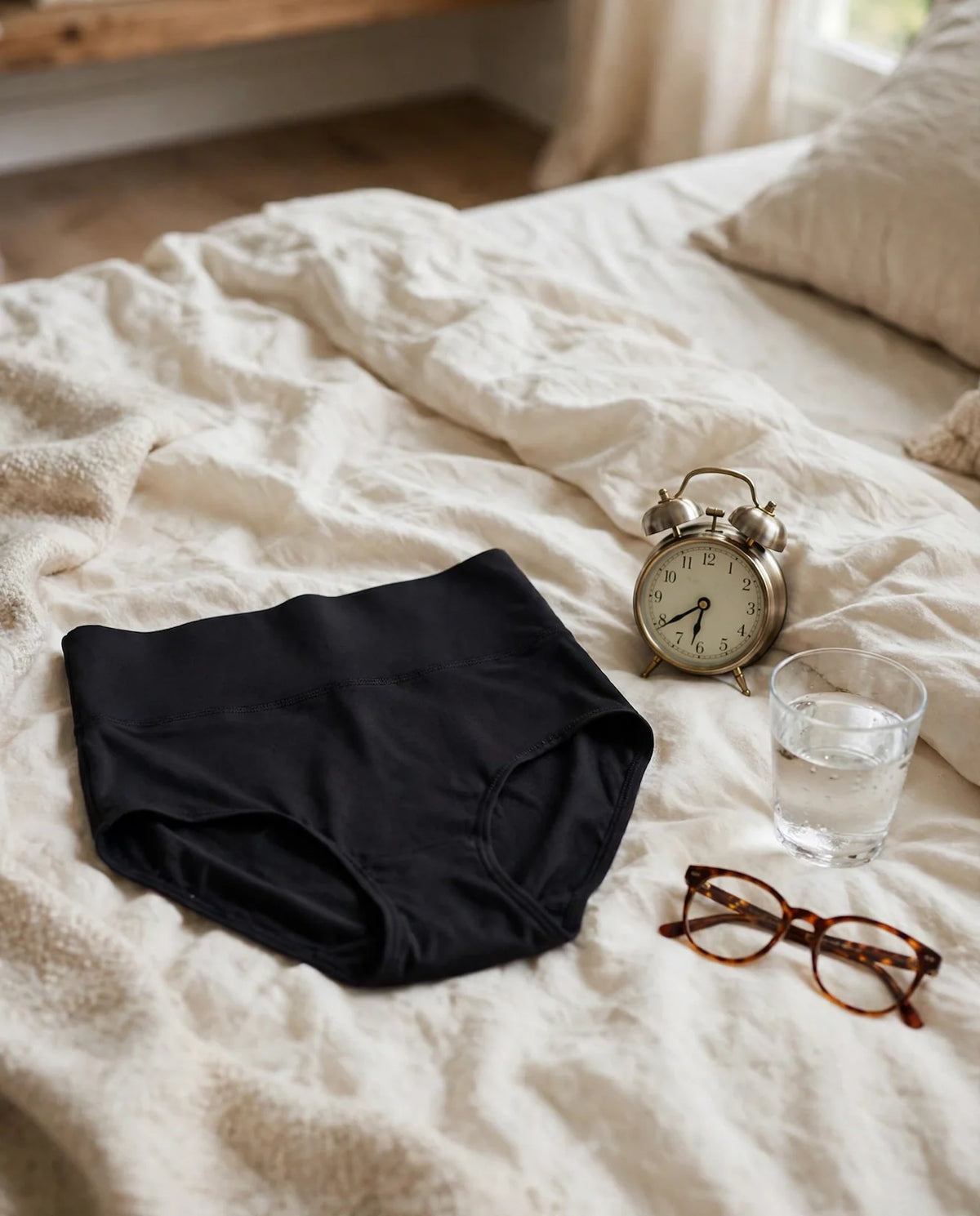
The short answer: mornings stack the deck against your bladder. You've gone six to eight hours without emptying it, you stand up after lying flat all night, and then you rush — to the bathroom, to the kettle, to get the kids moving. Why do I leak urine more in the morning? Usually it's that combination: a full bladder, a sudden change in position, and a body that wakes up faster than your pelvic floor does. For most people, it's common. And there are a few small changes that make the first hour of the day a lot less tense.
Picture it. The alarm goes off at 6:40. Your feet hit the cold floor, you sit up, swing your legs over the side — and there it is. Not a flood. Just enough to make you freeze mid-step: is this damp, or is it wet? You make it to the bathroom, change, and spend the next ten minutes pretending it didn't happen. If that sounds familiar, you're not the only one doing that math before breakfast.
Why mornings hit harder than the rest of the day
Your bladder doesn't sleep. It keeps filling all night while you do nothing about it. By morning it's holding the most urine it will hold all day — and a full bladder is a twitchy bladder. The muscle in its wall, the detrusor, gets more irritable the fuller it gets. So the signal hits harder and faster at 7 a.m. than it does at 3 p.m.
Then there's the position change. You've been horizontal for hours. Standing up shifts everything — gravity, pressure on the pelvic floor, the angle of the bladder neck. For a lot of people the leak happens in that first minute upright, before they've even reached the bathroom door. Add a morning cough or a sneeze, and the pressure spikes again. If you also wake once or twice to pee during the night, the causes of waking up to pee at night overlap with this a lot.
Why do I leak urine more in the morning — is it the coffee?
Sometimes, yes — but coffee gets blamed for more than it deserves. Caffeine can irritate the bladder and sharpen urgency, and that first cup hits a bladder that's already full. If your worst leak lands about twenty minutes after the kettle boils, try one glass of water before the coffee for a week and see if the morning rush softens.
What matters more than coffee is how much you drank late the night before. A big glass of water at 10 p.m., a cup of tea while you watch one more episode — that fluid is still on its way through by morning. It doesn't mean you should stop drinking water at night. It means the last drink of the day is worth noticing, the same way the first drink of the morning is.
What your morning leak looks like — and what it points to
| What happens | Likely what's going on | Try this first |
|---|---|---|
| A sudden, strong urge the second you wake up, hard to hold | Urge-type leak — a full bladder sends a loud signal | Sit up slowly, pause, walk — don't run — to the bathroom |
| A few drops when you stand up, cough, or laugh | Stress-type leak — pressure beats the pelvic floor | Pelvic floor exercises and backup underwear for the morning |
| You wake up already damp | Overnight overflow or a bladder that filled past its limit | Nighttime protection, and check evening fluid timing |
| Leaks only on mornings after a late drink or a cold | Trigger-driven — fluid timing or a cough | Note the pattern for two weeks before changing anything |
Most morning leaks are one of the first two rows, and the fixes differ — telling stress leaks from urge leaks is the fastest way to stop guessing.
The first ten minutes: a routine that actually helps
Here's the thing about mornings: rushing makes it worse. The sprint to the bathroom tightens everything up and the urgency spikes. Slow beats fast.
- Sit up before you stand up. Dangle your legs off the bed for thirty seconds. Sounds silly. Works anyway — it gives your pelvic floor a moment to wake up with you.
- Don't run. Walk. Tighten your pelvic floor once, like you're picking up a blueberry with it — yes, that's the image pelvic floor therapists actually use — and keep walking.
- Pee, wait, pee again. Sit for an extra thirty seconds after the first flow stops, lean forward slightly, and try once more. A lot of people leave the bathroom with a bladder that's only half empty, then leak ten minutes later while brushing their teeth.
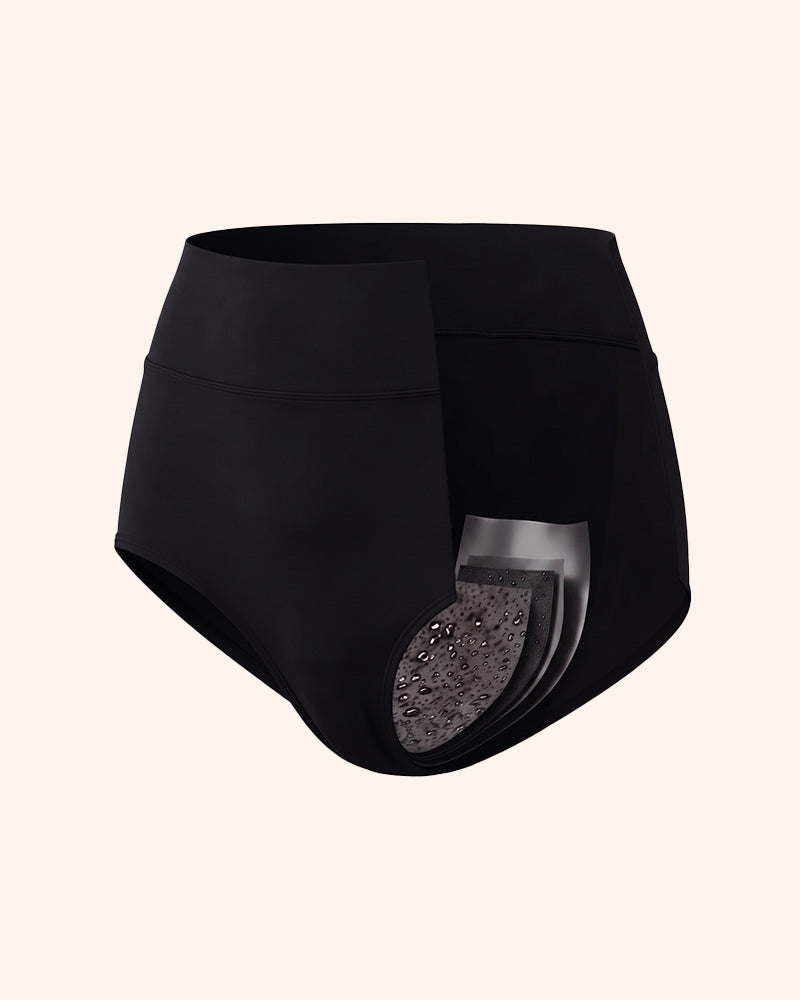
- Put the backup on before the day starts. Washable leakproof underwear handles light to moderate morning leaks and looks like regular underwear under jeans or work clothes. The women's high-waisted style and the men's boxer brief style both come in absorbency levels, so you match the pair to your mornings, not someone else's.
- Keep a spare pair where the morning actually happens. Top drawer of the dresser, not buried in the laundry room. The spare you never use is still doing its job.
One thing that doesn't help: "just in case" peeing every twenty minutes all morning. It teaches your bladder to signal earlier and earlier. Bladder training — stretching the gaps between trips a little at a time — is the slow fix that actually sticks.
What to wear to bed when mornings are the problem
If the leak happens before you even wake up, morning protection starts the night before. Some people wear their leakproof underwear to bed and change into a fresh pair in the morning — day and night pairs serve different jobs.
A reusable absorbent pad adds a layer on the nights you need it, and a mesh laundry bag keeps the used pair separate from the rest of the wash. None of this is glamorous. That's the point. It folds into the routine until you stop thinking about it.
When morning leaks are worth a doctor's visit
Most morning leaks are a nuisance, not an emergency. But a few patterns deserve an appointment rather than a new routine. Book one if the leaks started suddenly and are getting worse fast, if there's blood in your urine, pain or burning when you pee, trouble starting the flow, or a fever with it. Also go if you're waking up soaked most nights, or if leaks have started stopping you from doing things — skipping the morning walk, turning down the breakfast invite. Two weeks of notes in a simple bladder diary helps the doctor most, so bring the page — and check the warning signs that mean "book the appointment" before you go.

Questions people ask next
Why do I leak urine more in the morning than during the day?
Because your bladder is at its fullest first thing, and the shift from lying down to standing adds pressure right when the signal is strongest. Why do I leak urine more in the morning is one of the most common questions people type into a search bar at 7 a.m. — and the answer is usually that overnight fill plus the morning rush, not a sudden new problem.
Is it normal to leak a little when I first get out of bed?
Yes, it's common, especially after 50 or after childbirth — the pelvic floor is at its weakest right after hours of lying still, and the bladder is full. "Common" isn't the same as "just live with it," though. If it happens most mornings, the sit-up-slowly routine and a pair of leakproof underwear usually take the stress out of it fast.
Does drinking water before bed make morning leaks worse?
It can. Fluid you drink in the last hour or two before bed is still being processed while you sleep, so the bladder wakes up fuller. Try moving your last big drink a little earlier — an hour or two before bed, rather than right at lights-out — and see if the morning changes. Don't cut water altogether; dehydration makes urgency worse, not better.
Can bladder training help with morning urgency?
Yes, over a few weeks. When the morning urge hits, pause, do a few pelvic floor squeezes, and wait for the wave to pass before you walk to the bathroom. It won't fix day one — but after two or three weeks most people find the urge less frantic, and the dash across the hallway stops feeling like a race.
Should I wear incontinence underwear to bed?
If you wake up damp, or if the first hour of the day is your worst leak window, yes — that's exactly what it's for. A nighttime pair with higher absorbency handles the overnight fill, and you switch to your daytime pair after the first bathroom trip. Washable pairs go straight in the laundry bag with the rest of the wash.


Teilen:
Was man bei Blasenschwäche tragen kann: Outfits, Stoffe und kleine Tricks, die Ihnen helfen, sich selbstbewusst zu kleiden
Can Other People Smell Your Bladder Leaks? The Honest Answer and What Actually Helps