

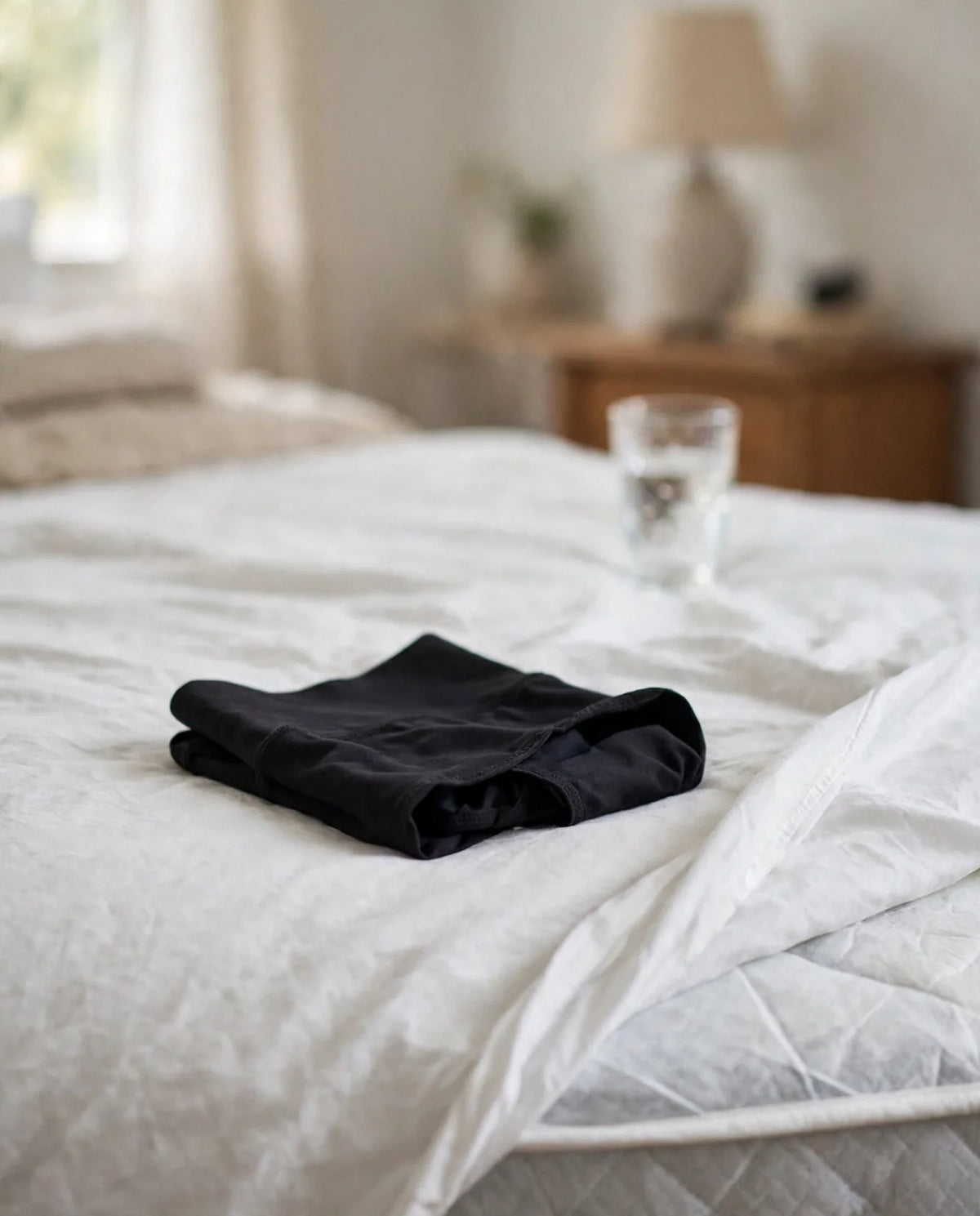
The short answer: to protect your mattress from bladder leaks, layer your bed — a waterproof mattress protector under the fitted sheet, a washable absorbent pad on top, and leakproof underwear on you. If urine reaches your mattress, that means you were relying on one line of defense. Three thin layers beat one thick one, every single night.
A mattress is not like clothing — you can't toss it in the wash. One bad night can leave a stain and a smell that lingers for years, and a decent mattress costs several hundred dollars to replace. The good news? With the right layers, a nighttime leak becomes a ten-minute sheet swap, not a disaster.
Why does urine ruin a mattress so fast?
Mattress foam is basically a sponge. Urine soaks past the ticking in minutes, and once it's inside, you can't fully rinse it out. Moisture feeds the bacteria behind that sour, stale bedroom smell — and your body heat gives them a comfortable home all night.
Even small leaks add up: a teaspoon of urine reaching the core every few nights builds up into those yellow patches you've seen on old mattresses — drip by drip.
How to protect your mattress from bladder leaks: the 3-layer method
Stop thinking about one product and start thinking about layers. Each layer has one job, and together they cover for each other:
Layer 1 — the waterproof mattress protector. This goes directly on the mattress, under your fitted sheet. Get a quiet one (the crinkly vinyl kind will keep you up; modern TPU-laminate protectors are silent and breathable). This is your insurance policy. It shouldn't see action often, but when it does, you'll be glad it's there.
Layer 2 — a washable absorbent pad on top of the sheet. This is the workhorse: a washable underpad placed where your hips rest, catching leaks before they reach the sheet. Morning routine: pad goes in the laundry, bed underneath untouched. Keep two pads so one is always clean.
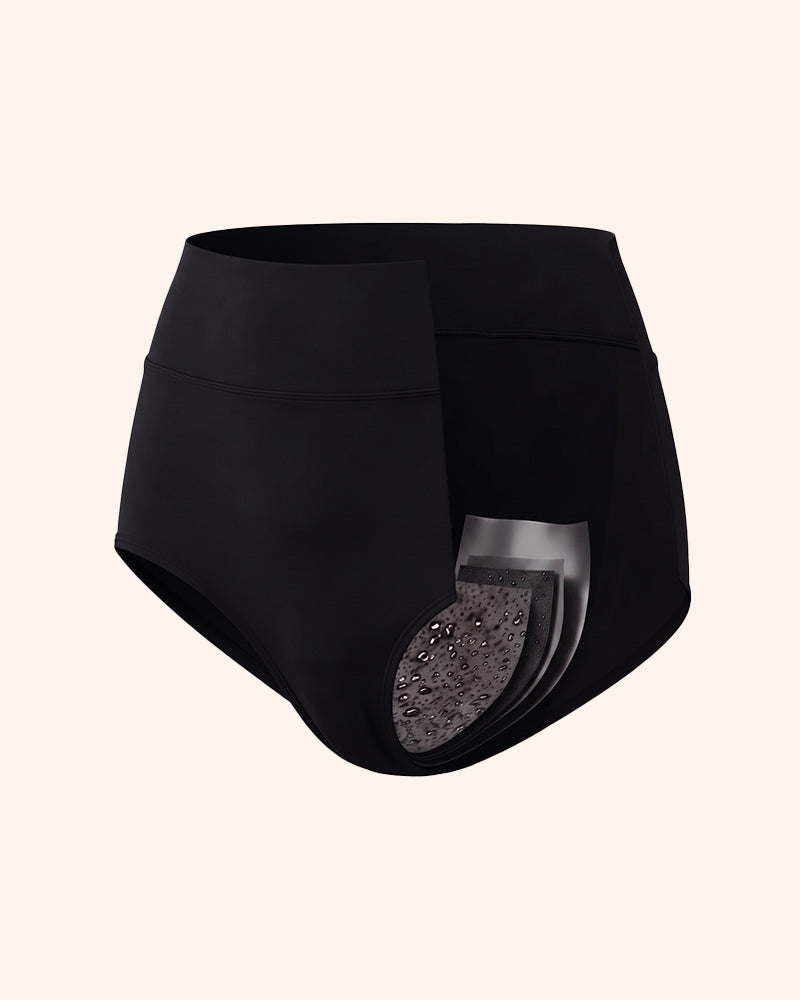
Layer 3 — leakproof underwear. This is your first and most comfortable line of defense: washable incontinence underwear that looks and feels like regular underwear, absorbing leaks at the source so layers 1 and 2 rarely get tested. Rooces women's leakproof underwear and the men's version both use an absorbent core hidden inside a normal-looking design — nothing about your bedtime routine has to change.
Protector vs. pad vs. underpad: which do you actually need?
The options overlap, and the marketing doesn't help. Here's the honest breakdown:
| Option | What it does | Pros | Cons |
|---|---|---|---|
| Waterproof mattress protector | Seals the mattress surface; goes under the sheet | Protects the mattress itself; quiet modern versions exist | Doesn't absorb — liquid pools; cheap ones feel plasticky |
| Washable underpad (on top of sheet) | Absorbs leaks at the body level; machine-washable | Catches leaks before the sheet; easy morning swap | Covers only one area; can shift during sleep |
| Layered sheeting ("sandwich" method) | Pad + flat sheet stacked twice, so you peel a layer at 3 a.m. | No laundry scramble mid-night; popular with caregivers | Bulky to set up; uses more laundry |
| Leakproof underwear | Absorbs at the source before anything else is involved | Most comfortable; nothing on the bed changes; travel-friendly | Needs the right absorbency level for your leaks (see our absorbency guide) |
The right answer for most people is all four — underwear plus the bed layers. That's the point. Redundancy is the whole strategy.

How to set it up: your five-minute evening routine
Do this once and it becomes automatic:
1. Start with a breathable waterproof protector. Wash it before first use — it softens the fabric and the waterproofing works better after one cycle. Replace protectors every one to two years; the waterproof membrane wears out before the fabric does. If water no longer beads on it, it's done.
2. Add your normal fitted sheet. Cotton or bamboo breathes better than polyester blends, and you'll sleep cooler — which matters, because overheating makes restless sleep (and leaks) worse.
3. Lay the washable underpad across the middle of the bed. Hip-width, tucked slightly under your pillow. If you toss and turn, get one with tuck-in wings or non-slip backing. This pad takes the hit so your sheet doesn't have to.
4. Put on leakproof underwear for the night. Choose a higher-absorbency option for sleep if your daytime pair is light. Nighttime leaks tend to be larger because you're lying down for seven or eight hours. If you're unsure about sizing, our fit and sizing guide walks through it.
5. Keep a spare setup within reach. A folded underpad and a spare pair of underwear in the nightstand drawer. If something goes wrong at 2 a.m., you swap in the dark in under a minute and deal with laundry in the morning. No stripping the whole bed half-asleep.
What if a leak still gets through? Cleaning a mattress
It happens — a pad shifts, the protector was overdue for replacement, you fell asleep on the couch. Act fast and you'll save the mattress:
Blot (don't rub) with clean towels until no more moisture transfers. Then mix a solution of equal parts white vinegar and water in a spray bottle, mist the area lightly, and blot again — vinegar neutralizes the ammonia smell. Follow with a generous sprinkle of baking soda, let it sit for at least 8 hours (overnight works), then vacuum it up. The baking soda pulls out both moisture and odor.
For stubborn stains, an enzyme-based cleaner made for pet stains works on human urine too — the enzymes break down the uric-acid crystals that cause lingering smell.
Skip the steam cleaner on memory foam — heat sets urine stains permanently, and soaking foam creates a hidden mold risk.
Two small habits that make a big difference
Double up your bathroom trips before bed — pee, brush your teeth, then try once more. That second trip usually isn't empty, and it buys you a drier first half of the night. And if you're reading our guide on why leaks happen while sleeping, you'll see that limiting fluids in the last two hours before bed helps too — just don't cut back so much that you wake up thirsty at midnight.
A mesh laundry bag by the bed makes the morning routine painless: underpads and leakproof underwear go straight in, and the whole bag goes in the machine. No sorting, no touching yesterday's laundry more than you have to.
FAQ
Do waterproof mattress protectors actually work for bladder leaks?
Yes — a good one blocks liquid completely. The catch is that protectors don't absorb, so urine pools on the surface and can run off the edges. That's why they're backup, not the whole plan: no single product fully protects your mattress from bladder leaks on its own — the layers have to work together.
How do you get urine out of a mattress?
Blot up moisture, spray with a 1:1 white vinegar and water solution, blot again, cover with baking soda for 8+ hours, then vacuum. For old or strong-smelling stains, use an enzyme-based cleaner. Start the same day — the longer urine sits, the harder the odor is to remove.
Will a waterproof mattress protector make me sweat at night?
Cheap vinyl ones will — they trap heat. Look for a protector with a TPU (thermoplastic polyurethane) membrane and a cotton or bamboo top. These are breathable, silent, and won't turn your bed into a sauna. If you sleep hot, skip the all-polyester "cooling" marketing and go for natural fibers on top.
What's the best thing to put on the bed for incontinence at night?
A washable absorbent underpad placed on top of your fitted sheet, over a waterproof mattress protector. The pad catches leaks where they happen, the protector guards the mattress itself, and both are easy to wash. Pair them with leakproof underwear and most leaks never reach the bed at all. That's how you protect your mattress from bladder leaks night after night — not with one hero product, but with layers.
Should I wear incontinence underwear to bed, or just use bed pads?
Underwear first. It absorbs at the source, moves with you, and keeps your skin drier — which matters for comfort and skin health over a full night. Bed pads are the safety net. If your leaks are light and you change position a lot, underwear alone with a protector underneath the sheet is often enough.
How do I protect a mattress when sleeping away from home?
Pack a foldable washable underpad and wear leakproof underwear — that covers you in hotels, guest rooms, and on couches. A waterproof carry pouch keeps a used pair discreet in your bag until you can wash it. Hotel mattresses are expensive to damage, so the underpad is non-negotiable.


Teilen:
So gehen Sie trotz Harninkontinenz zelten: Zelte, Toiletten am Campingplatz und so bleiben Sie frisch
Umgang mit Blasenschwäche auf einer Hochzeit: Ein praktischer Leitfaden für Gäste