


The short answer: Learning how to manage bladder leaks while driving comes down to three things: plan your route around bathrooms, keep a small kit in the car, and wear leakproof underwear you trust. Then driving stops being something you dread. Most of the stress isn't the leak itself. It's the not-knowing — where the next bathroom is, whether the seat will show it, whether you can hold on through one more red light.
Driving is one of those everyday things that gets quietly harder with bladder leaks. You're strapped in, you can't just stand up and walk to a bathroom, and a bump in the road or a hard brake can set off a leak at the worst moment.
The good news: a bit of planning and a small kit covers most of it.

Why does driving make leaks harder to deal with?
It's the combination of sitting still and having no exit. At your desk you can get up; at home you can walk to the bathroom the second you feel the urge. In a car you're belted in, traffic all around you, and the nearest bathroom might be twelve miles down the highway.
Then there's the physics of it. Sitting puts pressure on your bladder, bumps and sudden stops jolt it, and the twist of climbing out of a low seat is exactly the kind of movement that triggers a stress leak. Add a large drive-through coffee and that's the full set.
None of this means you should stop driving. It just means driving deserves a little of the planning you'd give any other outing — five minutes before you leave beats twenty minutes of worry on the road.
How to manage bladder leaks while driving on a regular commute
Your daily drive is the easiest to fix — same route every day, and you already know it. You just haven't looked at it through a bathroom lens yet.
First, map your stops. Pick two or three reliable bathrooms along your route — a gas station you trust, a grocery store, a fast-food place. You don't need to use them every day. Knowing they're there is most of the job — half of urgency is anxiety about not making it.
Second, use the bathroom right before you leave, even if you don't feel like you need to. Five minutes at home beats a white-knuckle twenty in traffic.
Third, think about what you drink before a drive. Don't dehydrate yourself — concentrated urine irritates your bladder. But a big mug of coffee right before a forty-minute commute is asking for trouble. Sip water through the morning instead, and save the second coffee for when you arrive.
What should you keep in the car?
A small kit that lives in the car permanently — in the glove box or the door pocket, not your bag, so it's there on the days you forget everything else.
- A spare pair of leakproof underwear, folded flat in a zip bag. One spare covers almost every situation a commute can throw at you.
- A waterproof pouch for the damp pair, so a change doesn't mean a wet bag or a smell in the car. Our waterproof carry pouch seals shut and fits in a glove box.
- A few wipes and a small towel — for a quick freshen-up at a rest stop, and for the seat if anything gets through.
- A dark towel or washable seat pad, draped over the driver's seat. It protects the upholstery and, just as important, it means you stop thinking about the seat. One less thing to worry about at 8:15 a.m., stuck behind a school bus.
Check the kit once a week — Sunday night works. Swap out anything used, the same way you'd check fuel for Monday.
What if the urge hits and you're stuck in traffic?
It will happen. You'll be three lanes from the exit, the traffic isn't moving, and the urge shows up like it owns the place. Here's what actually helps.
Don't panic. Easier said than done, I know — but rushing makes it worse. Jerking across lanes toward an exit you can't reach, tensing every muscle, counting the seconds. Sit back. Breathe slowly. Plant both feet flat and press your heels gently into the floor; the slight change in posture can take the edge off.
Distract yourself, on purpose. Put on a podcast you've been meaning to hear, or sing along to the radio. It sounds silly, but urgency feeds on attention — the more you focus on it, the louder it gets.
And if you do leak? That's what the underwear is for. It holds, you keep driving, you change at the next stop. No drama — the bad moment becomes a two-minute pit stop instead of a ruined day.
What about long road trips?
Long drives just need the same plan, stretched out. Build bathroom stops into the route like fuel stops — every ninety minutes to two hours is a good rhythm. Stretch your legs, use the restroom, top up the water bottle.
Set your satnav to show rest areas, and say it out loud: "I need a stop in about an hour." Nobody will mind — most people want one by then anyway.
Pack for the trip, not just the drive: two spare pairs instead of one, and a mesh laundry bag to keep used pairs separate from clean ones. Staying overnight? Our guide to managing bladder leaks at a hotel covers the rest.
What to wear behind the wheel
Fit matters more in a car than anywhere else — you're sitting on a seam for an hour. Look for leakproof underwear that's snug at the leg without digging in, with a waistband that stays flat under a seatbelt. If it bunches when you sit, it'll bother you the whole drive — try a size up or a different cut.
Dark colours help your peace of mind. Black or navy won't show a damp patch the way light grey will. That alone is worth choosing for driving days, even if you wear lighter colours at home.
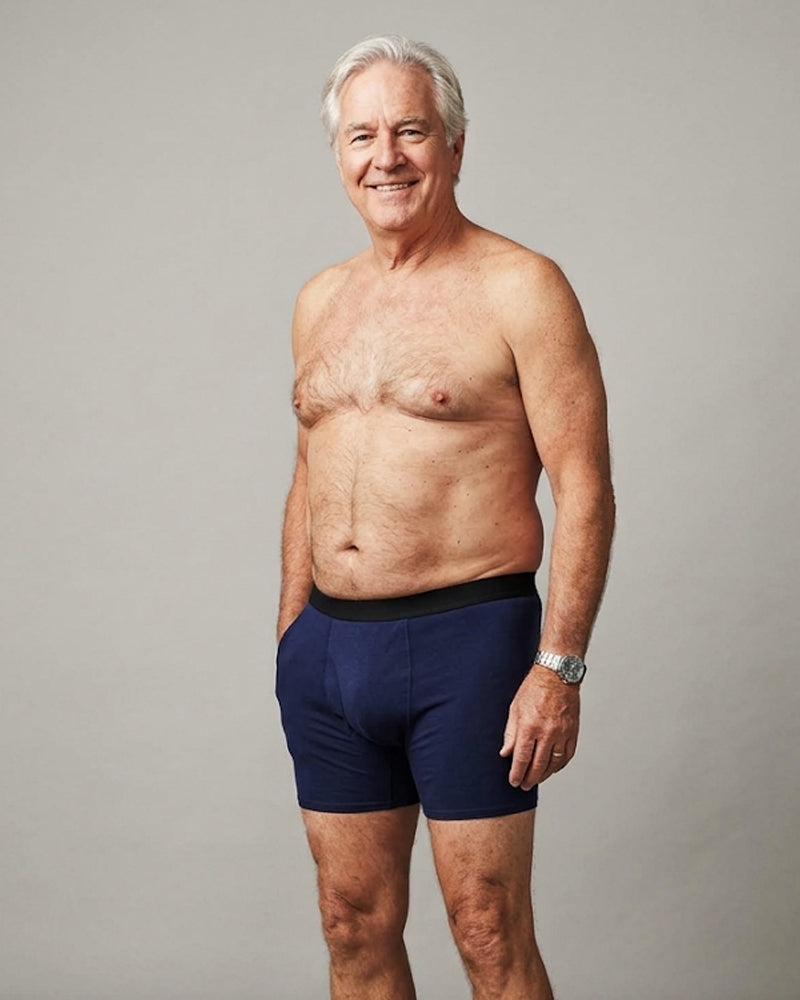
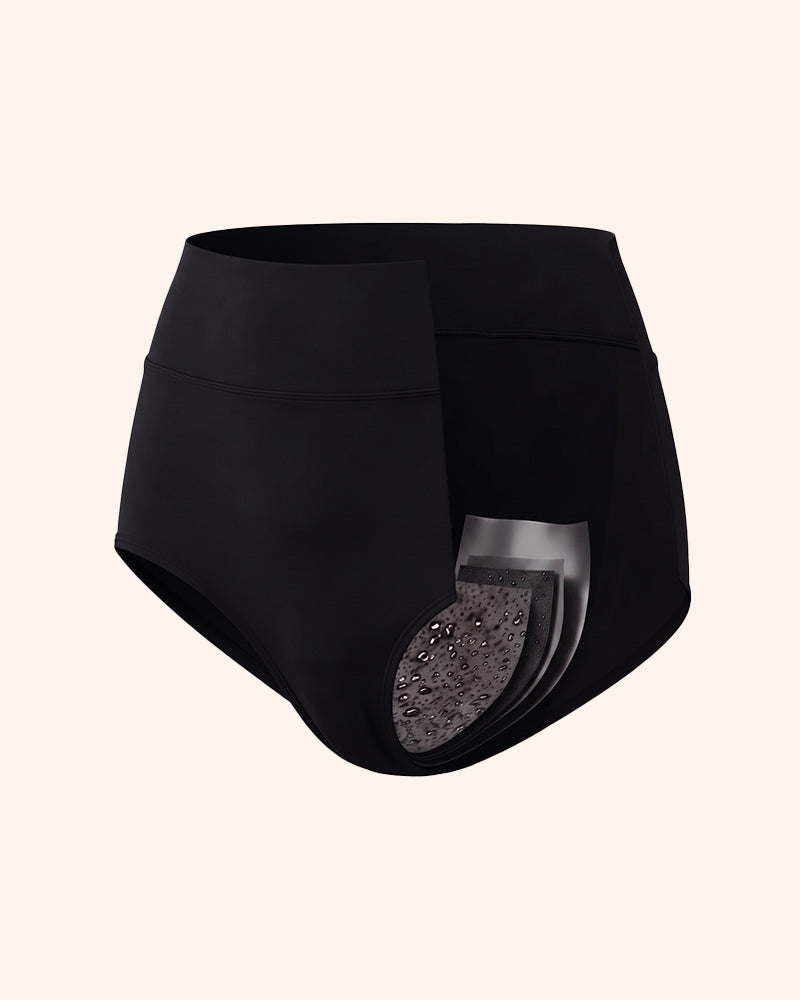
For men, our leakproof boxer briefs look and feel like regular underwear — no crinkle, no bulk. For women, the high-waisted briefs stay put through a long sit without riding up. Both are washable, so a driving day costs you nothing extra — they go in with the week's laundry.
One thing to skip: a waistband that's too tight — it presses on your bladder and can make urgency worse on a long drive. Comfortable beats compressive here.
Frequently asked questions
Can you drive with urinary incontinence?
Yes — most people with bladder leaks drive every day without any problem. It only becomes an issue when urgency distracts you. If you feel a strong urge, pull over when it's safe rather than rushing. Planned stops and protection you trust take care of the rest.
How do I protect my car seat from bladder leaks?
A washable seat pad or a dark towel over the driver's seat does the job for most people, and it's one of the simplest parts of learning how to manage bladder leaks while driving. Waterproof covers exist too, but a simple pad is easier to wash and less obvious. Leakproof underwear is your first line of defence — the seat cover is just backup.
Is it safe to drive when you really need to pee?
A full bladder is a distraction, and distracted driving is risky driving. If the urge is strong, pull over somewhere safe — a gas station, a parking lot, anywhere legal. Don't speed to the next exit; arriving five minutes late beats arriving in a panic.
What should I do if I leak urine while driving?
Keep your eyes on the road — that's the priority. Knowing how to manage bladder leaks while driving means trusting the underwear to hold the leak, so there's nothing urgent to fix while you're moving. At the next safe stop, change into your spare pair, seal the damp one in your pouch, and carry on — that's what the kit in your glove box is for.
How can I stop needing to pee so often on long drives?
You can't always stop it, but you can shrink it. Ease off caffeine and fizzy drinks before a long drive, sip water instead of gulping it, use the bathroom before you leave, and schedule stops every couple of hours. Stopping every thirty minutes on every trip is worth a chat with your doctor — it may be something that needs a look, not just a driving problem.
Driving with bladder leaks comes down to this: a plan, a kit, and underwear you don't have to think about. Once those three are in place, the car is just a car again. If you travel a lot for work, our guides to traveling with incontinence and managing leaks at work pick up where this one leaves off.

Teilen:
Ab wann gilt es offiziell als Inkontinenz? Wenn Tropfen zum Problem werden und was als Nächstes zu tun ist
Was man bei Blasenschwäche tragen kann: Outfits, Stoffe und kleine Tricks, die Ihnen helfen, sich selbstbewusst zu kleiden