


The short answer: Learning how to manage bladder leaks on public transport comes down to three things: the right protection before you leave, a small backup kit in your bag, and knowing where the bathrooms sit along your route. Get those three right and a 45-minute commute feels like any other errand.
Picture 7:40 on a Tuesday. You're wedged between a backpack and a pole, the bus lurches over a pothole, and your bladder picks that exact second to remind you it exists. No bathroom, no pull-over lane, nowhere to go until your stop, nine minutes away. If that scene makes your stomach tighten, you're not alone — and you're not stuck with it.

What makes public transport tricky for bladder leaks?
It's not the ride itself. It's the lack of an exit. In a car you can pull into a gas station; at the office you know which floor has the quiet bathroom. On a bus or a subway car, you're on someone else's schedule, and the doors only open where they open.
Three things pile up at once. Standing and swaying presses on your pelvic floor, the same way a long queue at the grocery store does. Every bump and sudden stop is a small jolt — a classic trigger for stress leaks. And then there's the worry itself: once you start watching the clock and counting stops, urgency tends to show up right on cue.
Driving gives you a gas station to pull into; public transport gives you a timetable and a crowd — the two trips need different plans.
How to manage bladder leaks on public transport before you leave home
Most of the work happens at home, ten minutes before you walk out the door.
Start with the bathroom, not the bus stop. Empty your bladder right before you leave, even if you went 20 minutes ago — a half-full bladder sloshes around a lot more than an empty one, and on a standing-room-only train you'll feel it. Then put on protection that matches the ride, not the lightest pair you own. A 30-minute hop is one thing; a 90-minute commute with two transfers is another. If you're not sure which absorbency fits your day, this absorbency guide walks through the choice in plain terms.
Drink normally. Skipping water backfires — concentrated urine irritates the bladder and can make urgency worse. Sip your usual glass with breakfast, then slow down once you're out the door. And if coffee is part of your morning, drink it at home, not on the platform: caffeine is a known bladder irritant, and a travel mug on a crowded train is one spill away from a bad morning.
What should you pack for the ride?
Keep it small — everything below fits in a zip pouch the size of a paperback:
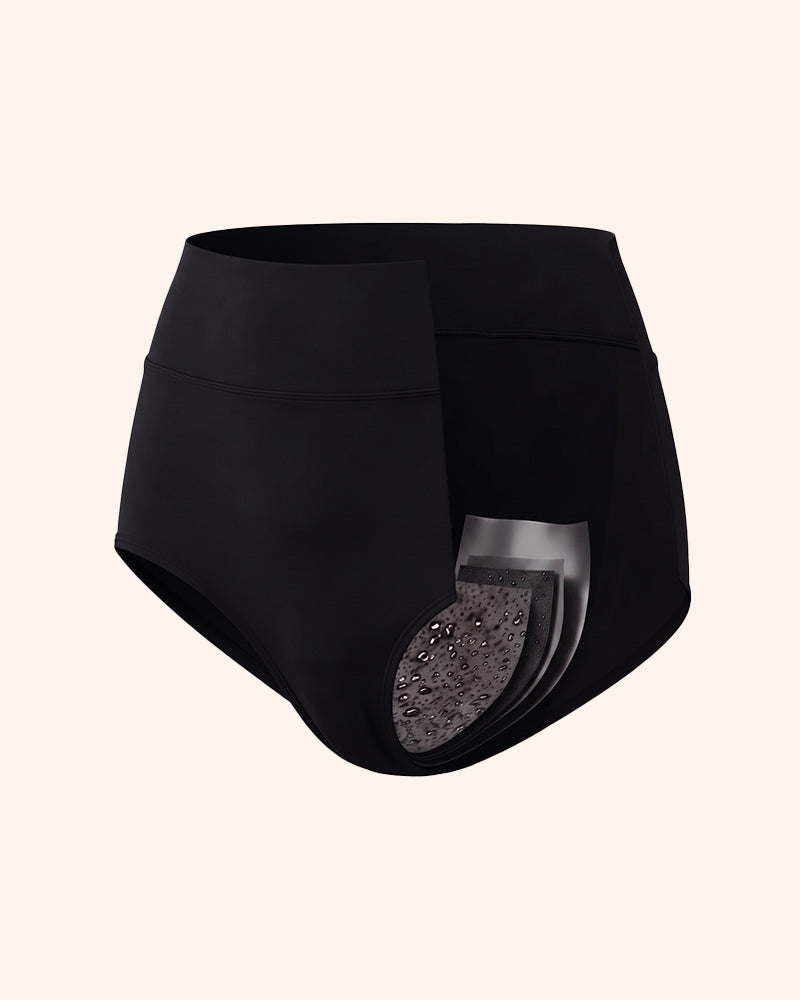
- One spare pair. Folded flat, not balled up. A spare you never use is still worth carrying. Men's leakproof underwear and women's leakproof underwear both fold down small enough to disappear into a jacket pocket.
- A waterproof pouch. A used pair goes in here, not loose in your bag. A small waterproof carry pouch keeps everything else dry.
- Three or four wipes. Individually wrapped, unscented — enough for a quick change in a station bathroom.
- A small plastic bag. For the used wipes, if there's no bin in the stall.
That's the whole kit. For longer days out, here's the full everyday carry list.
Bus vs. train vs. subway: what's actually different?
Not all rides are equal. The vehicle changes what you can and can't do:
| Mode | Bathroom access | Biggest challenge | What helps most |
|---|---|---|---|
| City bus | None on board | Bumps, sudden stops, standing room only | Sit near the front, where the ride is smoothest |
| Commuter train | Often one on board | Long stretches between stations | Pick a car near the onboard restroom |
| Subway / metro | None on board | No exits between stops, crowded platforms | Learn which stations on your line have open restrooms |
| Long-distance coach | Usually one on board | Hours without a real stop | Book a seat near the restroom |
The pattern is simple: the longer the gap between exits, the more your pre-ride routine matters. A 12-minute subway hop barely needs a plan. A 75-minute train with a transfer deserves one.
What if you leak mid-ride?
First: nothing visible has happened. Leakproof underwear is built for exactly this moment — a small leak gets absorbed where it belongs, and nobody around you can tell. Take a breath.
If it's a small leak, you don't have to do anything — ride it out and change when you get there. If it's bigger, get off at the next station and find a restroom. Large stations usually have one near the platforms; smaller stops often have one inside a nearby café or shopping arcade. Changing in a public restroom takes about three minutes once you've done it twice.
How do you handle the ride home when you're tired?
The evening commute is the harder one. By 6 p.m. your pelvic floor has been working all day, and your bladder is less forgiving than it was at 8 a.m. A ride that felt fine in the morning can feel long on the way back.
So plan the return trip like a separate ride. Use the bathroom before you leave the office — don't wait for the station. If your morning pair has done a full day's work, swap in a fresh one before you head out; a dry pair at 6 p.m. holds up far better than one that's been on since breakfast. If your route has a station with a reliable restroom halfway home, treat it as a planned stop — getting off for two minutes and catching the next train costs you almost nothing.
If the evening ride is regularly a problem and the morning one isn't, that's useful information — it usually means the day's fluid and bathroom timing needs a tweak. But if leaks suddenly get much worse, or you notice pain, blood, or trouble starting to pee, talk to your doctor. These warning signs are worth knowing.
What about long commutes and transfers?
A commute with a transfer is two short rides, not one long one — and that gap is your friend. The three minutes between trains at a big station are enough for a bathroom stop if you know where it is. Walk the route once on a calm day and note the restrooms; after that, the transfer feels like a built-in break.
For rides over an hour, pack a second spare pair. Two spares sounds like a lot until the day you need the second one. How many pairs you need in total comes down to your laundry rhythm too — most people settle on five to seven pairs for a full week of commuting, washed in rotation. Toss the used ones in a mesh laundry bag when you get home.
FAQ
Can I wear leakproof underwear on a long train ride?
Yes — and honestly, this is the heart of how to manage bladder leaks on public transport. Choose an absorbency that matches the length of the ride — light for a 20-minute hop, moderate or higher for anything over an hour — and carry one spare. A fresh pair before boarding makes a long ride feel uneventful.
How do I change incontinence underwear on a bus or train?
You don't change on the vehicle — you change at a station. Get off at the next stop, use the station restroom, and put the used pair in your waterproof pouch. If your line has no station restrooms, a café or shopping center near your stop usually does.
What if there's no bathroom at my station?
Part of knowing how to manage bladder leaks on public transport is knowing your stations before you need them. Check your regular stations once — many have restrooms that just aren't well signed. If yours truly has none, plan around the stations that do, and don't board with a full bladder. A spare pair covers the gap on the rare day plans fall apart.
How many pairs should I pack for a full day of commuting?
One spare for a normal day, two if your commute runs over an hour each way or involves transfers. Most days the spares come home unused, and that's fine — you're packing for peace of mind.
Do bladder leaks get worse on bumpy bus rides?
They can feel worse, yes. Bumps and sudden stops add pressure in short bursts — the same mechanism behind leaks when you cough or lift something heavy. Sitting near the front of the bus, where the ride is smoothest, usually takes care of it.
Public transport doesn't have to shrink your world. A little prep, a small kit, a route you know by heart — and the ride goes back to being the dull part of your day.


Teilen:
Can a Tight Pelvic Floor Cause Bladder Leaks? Why Relaxing Matters More Than Squeezing
Why Does Running Water Make You Need to Pee? Bladder Triggers Explained