

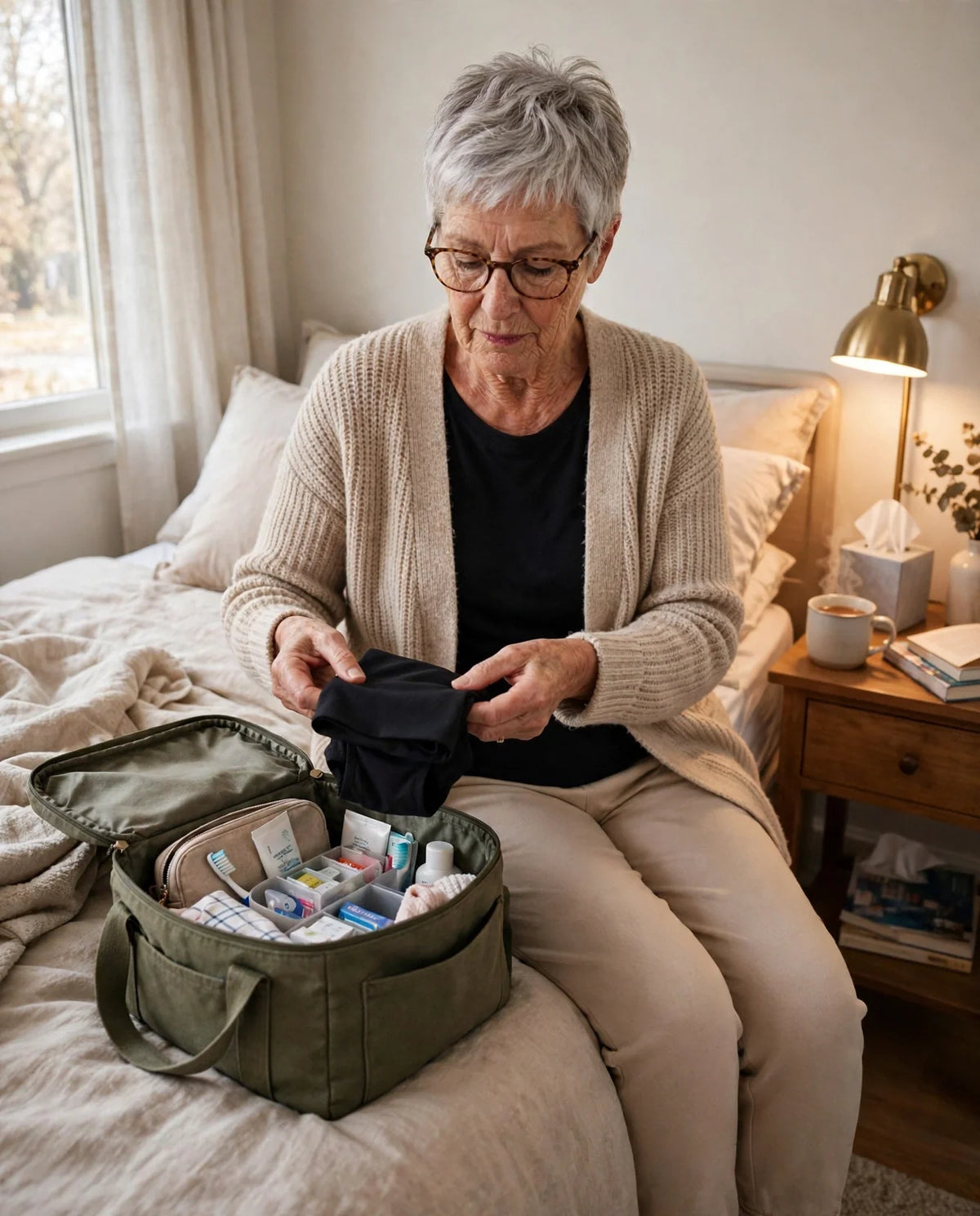
The short answer: How to manage bladder leaks in hospital comes down to two things: pack right, and tell one nurse on day one. Bring three or four pairs of your own leakproof underwear, a small waterproof pouch, and a laundry bag. The ward stocks pads and bedding protection, but your own underwear fits better and feels normal. And that one sentence to the nurse — "I sometimes leak, just so you know" — takes about five seconds.

Nobody plans a hospital stay around their bladder. A planned operation, a sudden admission, a few nights of observation — the bladder stuff just comes along for the ride. The good news: hospitals deal with this every single day. You're not the first person on that ward to leak.
What should I pack for bladder leaks in hospital?
Pack light, but pack for your bladder specifically — a small zip pouch inside your overnight bag keeps everything in one place.
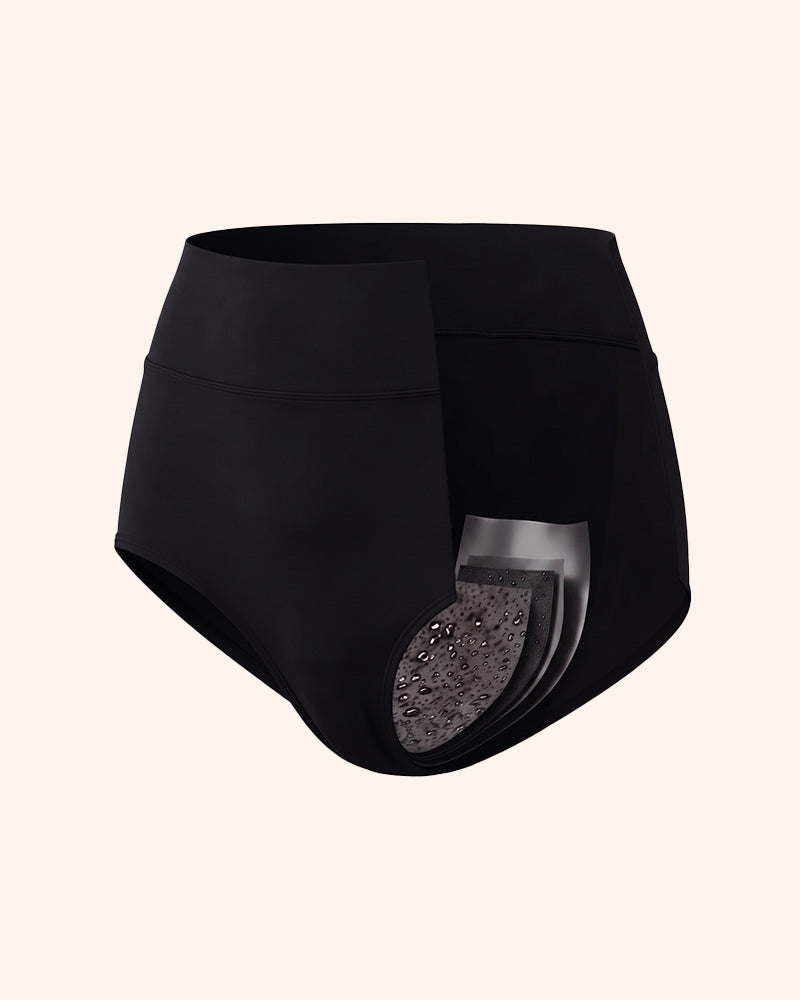
- Three to four pairs of leakproof underwear. One on, one spare in the drawer, one or two in the bag. One night, two pairs can do it. For three nights or more, take four — you might change twice on a bad day, and laundry isn't always same-day.
- A waterproof pouch for clean spares. It keeps a fresh pair dry and separate from everything else in the drawer. A waterproof carry pouch does the job, or any small zip bag you already own.
- A laundry bag for used pairs. Toss them in a mesh laundry bag and they stay contained, don't smell up your drawer, and go straight into the machine when you're home.
- A spare pair of dark bottoms. Dark trousers or a dark skirt, just in case. Not because anyone will notice. Because you'll stop worrying about it.
- Your usual pads, if you use them. The ward has its own, but yours fit the way you're used to — if you wear a reusable pad inside your underwear at home, bring a couple.
That's the whole list — no separate suitcase needed. Packing for a parent or a partner? The same list works; our guide on helping an aging parent with bladder leaks covers the gentle way to bring it up.
What does the hospital provide — and what should I bring myself?
Hospitals are well stocked. They just stock the generic version of everything.
| Item | What the hospital provides | What to bring yourself |
|---|---|---|
| Absorbent pads | Yes — standard sizes, free | Your preferred brand, if you have one |
| Bed protection | Yes — waterproof sheets and pads | Nothing needed |
| Underwear | Disposable mesh pants, sometimes | Your own leakproof underwear |
| Laundry | No | A laundry bag; a family member can take it home |
| Privacy | Curtains, call bell, bedside commode | A robe or long cardigan for hallway trips |
The mesh pants are fine in a pinch. They're just not comfortable for a three-night stay, and they don't feel like yours. That's the real reason to bring your own women's leakproof underwear or men's leakproof underwear — not because the hospital's option fails, but because yours feels like a normal pair of underwear. When everything else feels strange, that small bit of normal helps.
How do I tell the nurse without it feeling awkward?
Short and factual. That's the whole trick.
"I sometimes leak urine. I've brought my own underwear and a spare." That's it. Say it at admission, or to the first nurse who does your observations. Don't wait until the first leak happens at 3 a.m., when you're half asleep and the ward is quiet.
Nurses hear this constantly — bladder leaks are one of the most common things on any adult ward. They'll note it on your chart, make sure a bed pad is under your sheet, and move on. They won't make a face. It's clinical information to them, like an allergy or a bad knee.
Also ask: "Where's the nearest toilet from my bed, and is there a commode if I can't make it?" Ask early, so you know the route before you need it.
How to manage bladder leaks in hospital at night
Shared bathrooms are the part people dread most. In practice, they work out fine.
Use the call bell — that's what it's for. If getting to the toilet takes you a while, ring early; don't wait until the urge is urgent. At night the ward is quieter and the toilets are free, which makes 3 a.m. easier.
Keep a spare pair and a small pouch in your bedside drawer. If you leak on the way to the bathroom, change in two minutes and drop the used pair in your laundry bag. Nobody's keeping score.
If walking is hard after surgery or treatment, say so before you need the toilet. A commode by the bed isn't a failure — it's the sensible option, and the nurses would much rather bring one than mop a floor.
How do I handle laundry and changing during a longer stay?
For stays longer than a couple of nights, you need a system — nothing fancy, just a loop that works.
Change on a schedule, not just when you leak: first thing in the morning, after lunch, before bed. That rhythm keeps you dry, and you never have to wonder whether a pair is "still okay." Our guide on how often to change incontinence underwear covers the timing in more detail.
Rinse used pairs in the ward sink if you're comfortable with that, then into the laundry bag. If rinsing feels like too much in a shared bathroom, skip it — just bag them and let them wait. A family member can take the bag home every day or two and bring back clean pairs. It gives visitors something genuinely useful to do.
Can't get laundry home? Disposables for the stay are the honest backup plan. Use the ward's pads, wear your own underwear over them, and go back to your usual routine when you're home. A hospital stay is not the moment to prove a point about reusables. You can wash reusable underwear properly once you're back in your own bathroom.
What if I'm going in for surgery?
Ask your surgical team before the day. Some operations involve a catheter for a day or two — leaks aren't the issue while one is in, and the team will tell you when it comes out and what to expect after. Others don't involve one at all, and your usual routine just carries on.
Ask this: "Will I have a catheter, and what should I bring for bladder leaks after it comes out?" Write the answer down — pre-surgery days blur together.
After surgery, leaks can be worse for a while. That's common, especially after pelvic or prostate operations, and it's better to know that beforehand than to discover it at 6 a.m. on the ward. If you're a man recovering from prostate surgery, our guide on what to expect during recovery walks through the timeline.
Frequently asked questions
Can I wear my own incontinence underwear in hospital?
Yes. When you're figuring out how to manage bladder leaks in hospital, your own leakproof underwear is the easiest place to start — it's more comfortable than the disposable mesh pants on the ward, and nurses are glad when patients bring what works for them. Just tell the admitting nurse so it's on your chart.
How many pairs should I pack for a hospital stay?
Two pairs for one night, three to four for a two-to-three-night stay. Plan on one change a day plus one spare for a leak, and add one more pair if your stay might run longer. If a family member can bring fresh laundry, you can pack lighter — over a longer stay, that handover is half of how to manage bladder leaks in hospital. The other half is telling the nurse on day one.
Will the nurses judge me for leaking?
No. Bladder leaks are routine on adult wards — nurses see them every shift. Telling them early makes their job easier — bed protection, a commode nearby, done before you need either.
What if I leak on the hospital bed?
It happens, and the bed is already protected — waterproof sheets and absorbent pads are standard. Ring the bell and a nurse will change the bedding. No need to apologize or explain; they're entirely used to it.
Do I need to tell the hospital about my bladder leaks before I arrive?
For a planned admission, yes — mention it on your pre-admission form or when the ward calls, so they can put you nearer a toilet if one's free. For an emergency admission, tell the first nurse you see. Either way, one sentence is enough.
A hospital stay is already a lot. Your bladder doesn't have to be the thing you lose sleep over. Pack the pouch, tell one nurse, and let the rest of it be the hospital's job.


Teilen:
First Time Wearing Incontinence Underwear? What to Expect and How to Feel Comfortable
What to Do If You Leak Urine Through Your Clothes in Public: A Calm, Step-by-Step Guide