

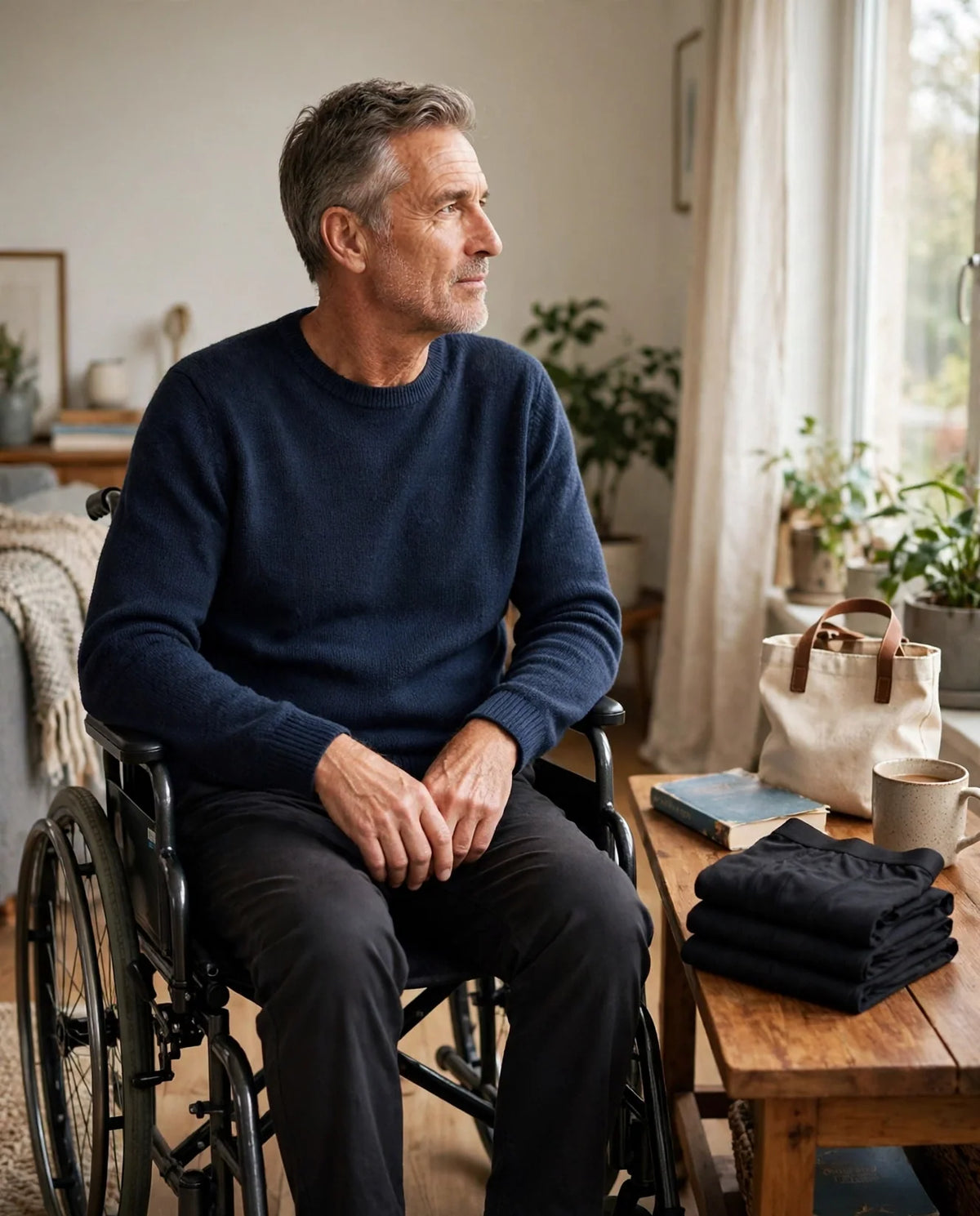
The short answer: how to manage bladder leaks in a wheelchair comes down to three things: protection that fits right while you're seated, a small kit you can reach without standing up, and a plan for the nearest accessible restroom before you leave the house. Get those three right and most days run a lot smoother than you'd expect.
Most leak advice assumes you can hop up and dash to the bathroom. If you use a wheelchair, that advice misses the point. Your day is planned around transfers, ramps, door widths, and restrooms that may or may not have a working accessible stall.

Why sitting all day changes the leak equation
When you sit for hours, pressure lands differently. The seat puts steady pressure on the perineum, and the bladder gets squeezed from below in a way it doesn't when you're standing and shifting around. That pressure can push a small leak out at moments you'd never predict — reaching for a shelf or bumping over a curb cut.
Then there's the transfer. Moving from chair to car seat, or chair to toilet, is the moment leaks love most. Your core braces, your arms take your weight, and your pelvic floor is doing three jobs at once. Plenty of wheelchair users say the transfer is when it happens, not the hours of sitting in between. And if sensation is reduced, the dampness might be the first thing you notice — not the urge. So the strategy shifts: instead of racing the urge, build a routine that doesn't rely on feeling it in time.
What actually works for protection when you're seated
Not every product behaves the same once you're sitting on it for six hours. Adhesive pads can bunch and shift with every wheel push. Washable leakproof underwear tends to hold up better in a chair because it moves with your body instead of against it — but fit matters more than brand.
Here's how the common options stack up for seated use:
| Option | Stays put while seated | Easy to change in a chair | Best for |
|---|---|---|---|
| Washable leakproof underwear | Yes — fits like regular underwear | Needs a restroom and a transfer | Daily wear, light to moderate leaks |
| Adhesive pads | Can bunch or fold at the seat | Quicker swap, still needs privacy | Light leaks, short outings |
| Pull-up style briefs | Good, if the waistband sits right | Tear-away sides help in a chair | Moderate leaks, longer days out |
| Reusable booster pads | Yes, inside leakproof underwear | Swap the pad, keep the underwear | Heavy days, long trips |
A few fit details make a real difference. Look for a waistband that sits flat when you're seated — one that digs in at the front when you lean forward will drive you mad by noon. A slightly higher rise at the back helps too, since seated posture pulls fabric down behind.
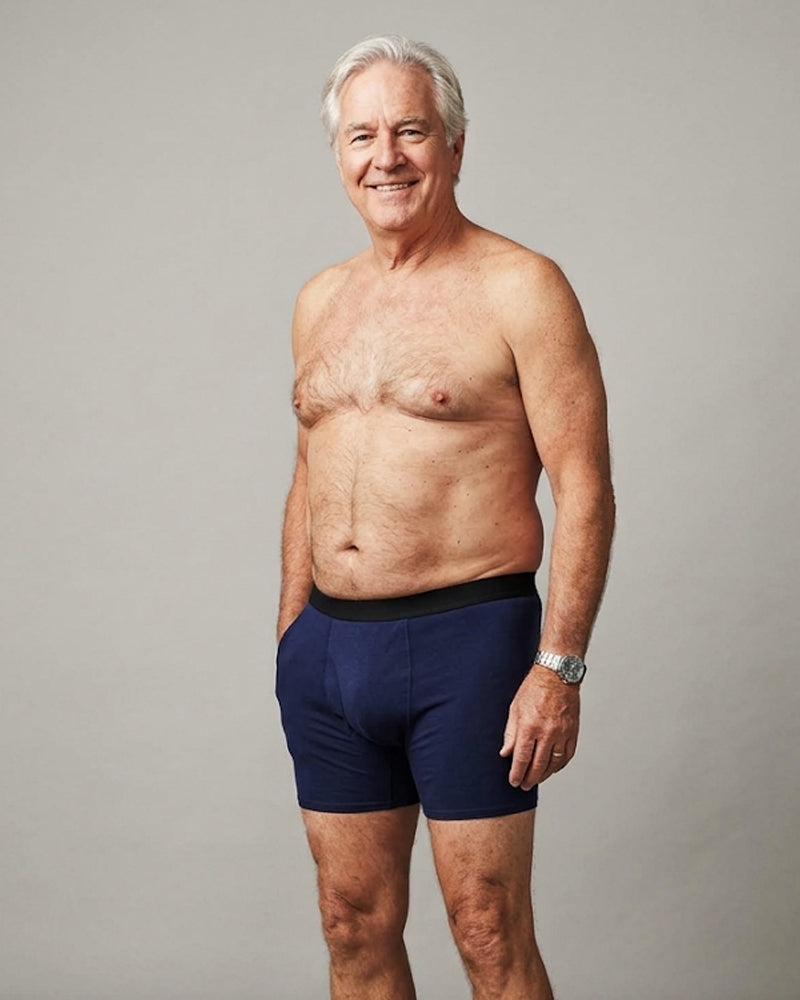
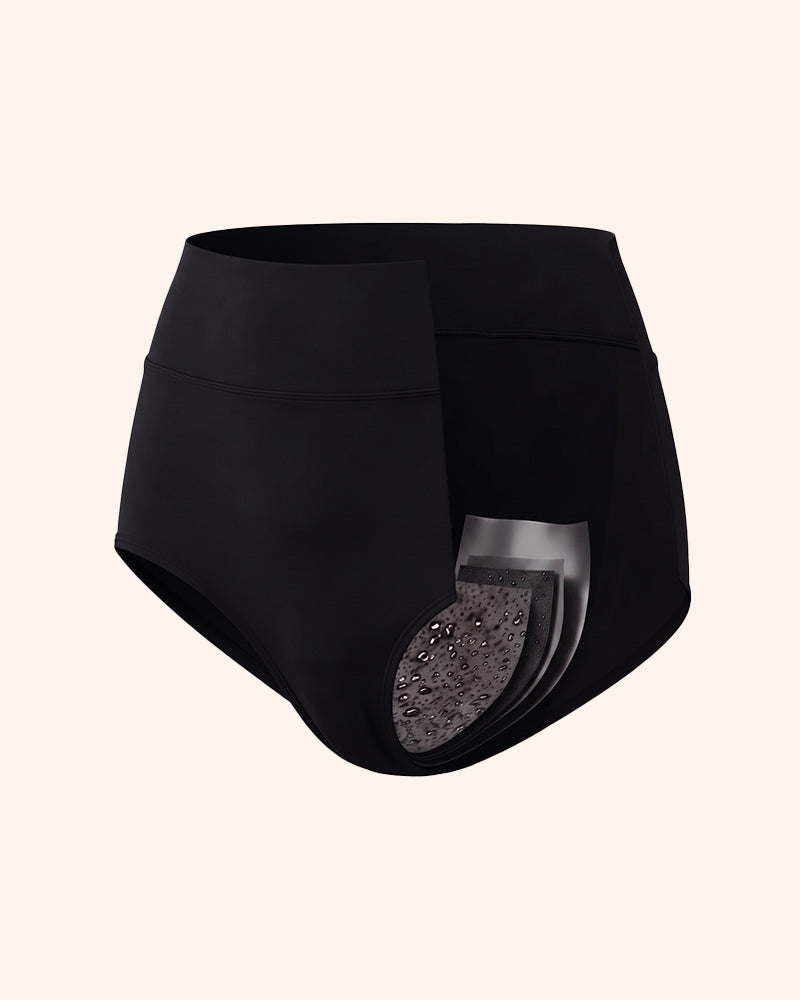
For men, a washable men's leakproof brief with a built-in absorbent panel keeps things simple — one garment, nothing to stick down. For women, the women's high-waist style covers the seated waistband problem well. On heavy days, a reusable booster pad adds capacity without a second garment to wrestle with.
How to manage bladder leaks in a wheelchair when you're out all day
Long days out are where the routine earns its keep. Start the night before: lay out two spare pairs — one in your bag, one in the car — and check that your waterproof carry pouch is empty and dry from last time.
Before you leave, look up the restroom situation at your destination. Not just "is there a restroom" — is there an accessible stall, and is it actually unlocked? Shopping malls and chain restaurants are usually fine. Older cafés, small museums, and friends' houses are where people get caught out.
Time your fluids instead of cutting them. Drinking less doesn't stop leaks — it just makes the urine more concentrated, which can irritate the bladder and make urgency worse. Sip steadily through the day, and ease off in the last hour before a long stretch without a restroom, like a two-hour train ride.
Our guide to managing bladder leaks on public transport covers the bus-and-train specifics.
How do you change in an accessible restroom without a fuss?
The accessible stall is bigger, but the change itself still takes planning. Roll in, lock the door, and get everything out of your bag before you start — spare underwear, a couple of wipes, a small plastic bag for the used pair.
A side-opening or tear-away style is worth its weight here. Anything you can get off without lifting your feet out of the footrests saves a whole awkward step. Used underwear goes straight into the waterproof pouch, zipped shut — no smell, no damp patch spreading through your bag. At home, the pouch empties into the mesh laundry bag and the whole lot goes in the machine. Our step-by-step for changing in a public restroom walks through the same routine in more detail.
What should go in your carry kit?
Keep it small enough to live in one spot — a side pocket, a bag hanging off the back of the chair — so you never have to dig for it. One spare pair of underwear. Two or three wipes in a resealable bag. A folded plastic bag for the used pair, or better, the waterproof pouch. That's it. The kit works because it's always in the same place.
What about skin care when you sit for hours?
Damp skin and hours of sitting are a bad combination. Moisture trapped against the skin softens it, and pressure does the rest — that's how sore spots start, especially around the seat bones. Change out of damp underwear as soon as you reasonably can, even if the leak was small. If you notice redness that doesn't fade after a night's sleep, bring it up with your doctor or seating clinic.
When is it worth talking to your doctor?
Most leaks in wheelchair users come down to mechanics and routine, and the tips above handle those. But a few changes are worth a conversation: leaks that suddenly get much worse over a week or two, burning when you pee, cloudy or strong-smelling urine, or blood in the urine. Urinary infections are more common when the bladder doesn't empty fully, and they make leaks worse — so don't sit on those symptoms.
Bring the practical details to the appointment: how often it happens, whether it's the transfer or the sitting that triggers it, what you've already tried. "I leak sometimes" doesn't give them much; "I leak on every car transfer since my cushion was changed" does.
Frequently asked questions
Can you wear leakproof underwear in a wheelchair all day?
Yes, as long as the fit works while you're seated — that's the first rule of how to manage bladder leaks in a wheelchair. Look for a flat waistband, enough rise at the back, and fabric that doesn't bunch under your seat bones. Change into a dry pair after any leak, even a small one — sitting in damp fabric for hours is what irritates skin.
How many pairs of incontinence underwear do you need if you use a wheelchair?
Most people land on seven to ten pairs: enough for a daily change, a spare in the bag, and a couple in the wash. Our guide to how many pairs of incontinence underwear you need breaks down the count by leak level and laundry routine.
Do wheelchair users leak more than other people?
Not necessarily more, but the pattern is different. Seated pressure and transfers trigger leaks that standing wouldn't, and reduced sensation can mean you notice dampness before you feel the urge. So the management looks different — more routine, less reacting — even when the total amount is similar.
What do you do if you leak and there's no accessible restroom nearby?
Stay calm and keep moving toward the nearest option — a department store, a hotel lobby, a fast-food place. If you carry a spare pair and wipes, you can change in the car or any private spot in a few minutes. The waterproof pouch keeps the used pair contained until you get home. Planning the restroom before you leave is how to manage bladder leaks in a wheelchair without this becoming a regular event.
Is a waterproof pouch worth carrying?
If you ever leave the house, yes. It weighs nothing, it kills the smell, and it means a leak never turns into a wet bag or a damp cushion.
If leaks have been quietly shrinking your radius — fewer outings, shorter trips — the fix is rarely one big change. It's a spare pair in the same pocket every day, a restroom checked before you leave, and underwear that fits the way you actually sit.

Teilen:
What to Do If You Leak Urine Through Your Clothes in Public: A Calm, Step-by-Step Guide
How to Manage Bladder Leaks at the Gym: A Practical Guide to Workouts Without Worry