

The short answer: learning how to manage bladder leaks at the movies mostly comes down to three things: an aisle seat, a bathroom trip right before the lights go down, and leakproof underwear you trust. Pick the seat, time the drink, know where the exit is. That's the whole plan. The rest is just watching the film.
Two hours in the dark, no pause button, and a seat you can't climb out of without stepping over six strangers. That's why the cinema can feel like a bigger deal than it is. But people with bladder leaks go to the movies all the time. They just go with a plan — and a plan for a 7:30 showing takes about five minutes to make.

Why a two-hour film feels like a long time for your bladder
It's not the film. It's the setup.
First, the clock. Trailers and ads run 15 to 20 minutes before the film even starts, so a "two-hour movie" is really two hours and twenty minutes in your seat — three and a half for a long epic, if you don't plan a break in the middle.
Then there's the drink. A large soda at the concession stand can hold 32 ounces — that's a litre of liquid, plus caffeine and fizz, both of which can nudge an already sensitive bladder. Caffeine speeds things up, and carbonation can irritate the bladder lining. So the drink you finish during the opening scene can start talking to you by the second act.
And then there's the laughing. Or the jump scare. A comedy that has you laughing hard, or a thriller that makes you flinch, can squeeze a small leak out at exactly the wrong moment — the same reflex that causes leaks when you sneeze or cough. It's not a sign of anything dramatic. It's just your pelvic floor doing what it does under sudden pressure.
A long stretch, a big drink, a sudden laugh — that's the whole test. And you can work around all of it.
How to manage bladder leaks at the movies, step by step
Before you leave the house
Start with what you're wearing. Put on a fresh pair of leakproof underwear — or the men's version — rather than a pad. Pads can bunch and shift when you sit still for two hours; underwear with a built-in absorbent layer stays put.
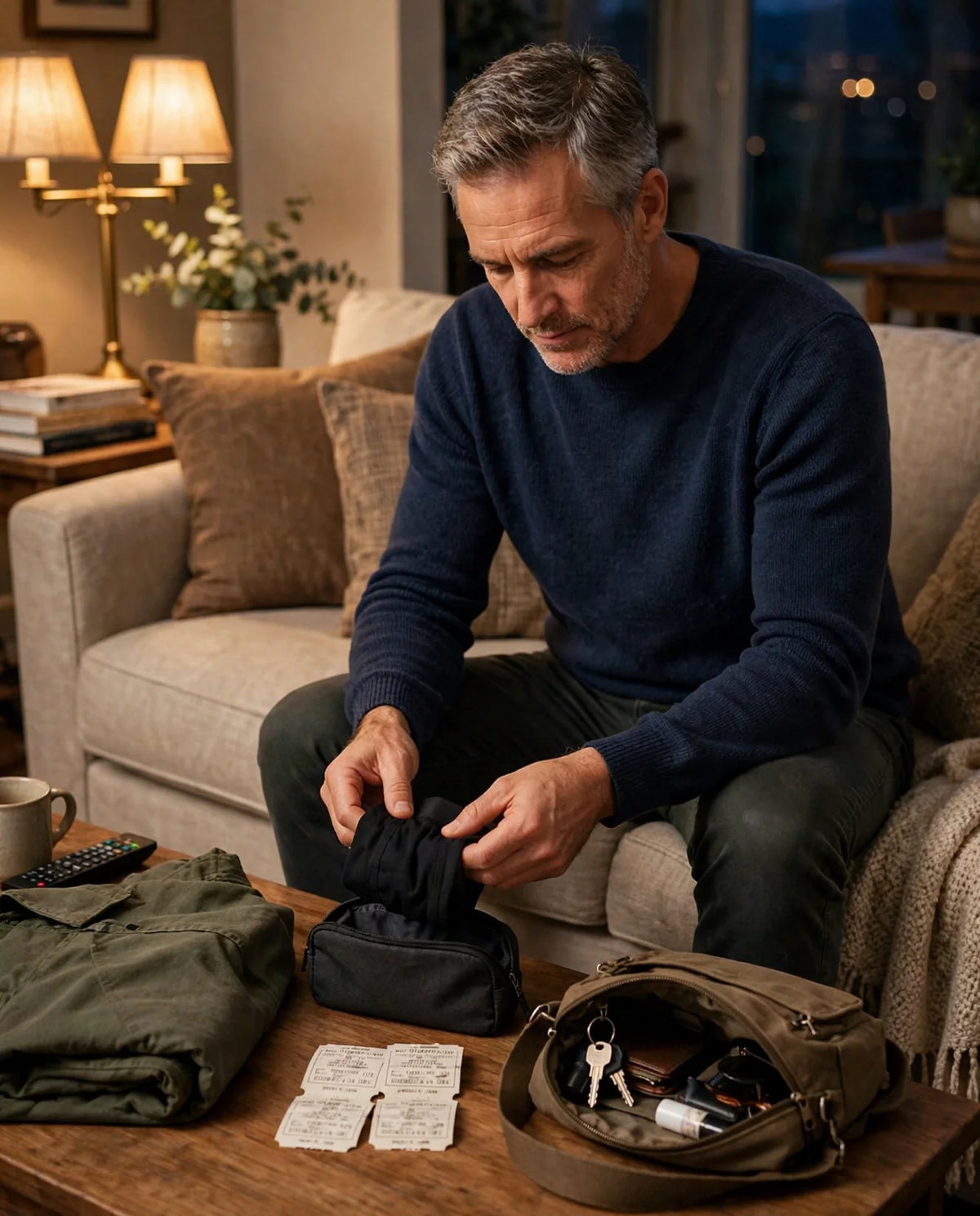
Pack a spare. A waterproof pouch with one spare pair, two or three wipes, and a small plastic bag for anything damp takes up less room than your phone. Drop it in your bag and forget about it — knowing it's there does half the work.
Check the runtime before you book. A 95-minute comedy and a 2-hour-45-minute epic need different plans — the long one needs a mid-film break built in, not hoped for. And wear darker trousers or a skirt if you can — not because anyone will notice, but because it takes one more "what if" off your mind.
Pick the right seat
Book your seats online. Don't leave it to the box office.
The aisle seat is your best friend. It's the difference between slipping out quietly and climbing over four people who've put their coats and popcorn on every spare inch. If you're going with someone, take the aisle and let them have the inside seat — most people are happy with that trade.
Near the back beats the middle. The back rows are closer to the exit, the light from the aisle is behind you, and nobody's watching you stand up. If the cinema has recliners, grab one near the aisle at the end of a row: you get the comfort and the escape route. Row G, seat 14, aisle, back third — that's the sweet spot in most screens.
Drinks and snacks: what actually matters
You don't have to skip the popcorn. You don't have to skip the drink, either. You just have to shrink them.
Order the small soda, not the large. Sip it through the film instead of finishing it during the trailers. If you usually grab a coffee on the way in, have it an hour before the film, not five minutes before you sit down — that way your bladder has already dealt with it by the time the lights dim. Water is fine; just don't chug a full bottle in the lobby.
Popcorn is fine too, though the salt will make you thirsty — another reason to keep the drink small. And if you know fizzy drinks or coffee tend to set you off, pick still water or a juice instead — a few everyday drinks are known bladder irritants, and the cinema is a bad place to test them.
During the film
Use the trailers. The 20 minutes of ads and previews before the film are the perfect window: use the bathroom when you arrive, then go again right as the last trailer ends. Two trips, empty bladder, film starts.
If you need to go mid-film, go during a slow scene, not the climax. Pick a quiet stretch — a long conversation, a travel montage — and slip out for two minutes. Nobody remembers the person who left during the boring bit.
Don't try to hold it for the last 20 minutes if you're already uncomfortable. A two-minute trip costs you one scene; white-knuckling it costs you the whole ending, because you're not watching the film anymore — you're watching the clock.
If a leak happens anyway
It happens. Here's what actually follows: usually nothing.
A small leak stays in the absorbent layer and never reaches your clothes — that's what it's there for. If it does reach your clothes, dark fabric and the dim cinema light hide a lot, and the credits are your friend: the house lights stay low until the film ends, which gives you time to slip out calmly.
Head to the restroom, change into your spare pair, and drop the used pair in the plastic bag inside your pouch — this step-by-step guide covers changing discreetly in a public restroom if you'd like a refresher.
If leaks are starting to shape which nights out you say yes to — the cinema, dinner out, a concert — that's worth a conversation with your doctor. There are options, and guessing is a poor substitute for knowing. Here's how to bring it up without it feeling like a big deal.
Frequently asked questions
Can I wear incontinence underwear to the movies?
Yes. It looks and feels like regular underwear under your clothes, nobody can tell, and it stays in place through two hours of sitting — which is exactly when a pad is most likely to bunch up. For most people, that's the simplest part of how to manage bladder leaks at the movies: put on a fresh pair before you leave and you're covered for the whole film.
What's the best seat at the cinema if you have bladder leaks?
The aisle seat, near the back of the screen. You can slip out without climbing over anyone, the exit is a few steps away, and nobody's watching you stand up. Book online so you're not stuck in the middle of a row — a middle seat turns a two-minute bathroom trip into a whole production.
Should I stop drinking water before a film?
No — don't dehydrate yourself on purpose, because concentrated urine can irritate the bladder and make urgency worse. Just keep the drink small and finish most of it before the film starts. Sip normally through the day, skip the giant soda at the concession stand, and use the bathroom during the trailers. That's the whole trick to how to manage bladder leaks at the movies without overthinking it.
How do I change incontinence underwear at the cinema?
Bring a spare pair and a few wipes in a small waterproof pouch, and change in the cinema restroom — the accessible stall gives you the most room. Fold the used pair into the pouch's plastic bag and wash it at home. The whole thing takes about two minutes, and it's the same routine you'd use in any public restroom.
What if I need the bathroom in the middle of the film?
Just go. Pick a slow scene, slip out from your aisle seat, and you're back in two minutes. Most films have at least one quiet stretch, and nobody notices a person leaving during it. If you're worried about missing the best scenes, check the runtime beforehand and plan your break for the middle of the second act — that's usually where the story breathes a little.

Teilen:
How to Manage Bladder Leaks at the Dentist: A Practical Guide for Appointments
How to Manage Bladder Leaks at a Theme Park: Queues, Rides, and a Full Day Out