


The short answer: Go to the bathroom right before you leave the house, wear leakproof underwear you trust, and take an aisle seat near the back. That's most of it. The rest is small stuff — what you drink, what you pack, and knowing when you'd slip out if you need to. That's how to manage bladder leaks at church without letting them run the morning.
Church is one of those places where a leak feels ten times worse than it is. It's quiet. People sit close. And services run long — a regular Sunday service runs 60 to 90 minutes, and a holiday service or a wedding can stretch past two hours. That's a long stretch to sit still when your bladder has its own schedule. Plenty of people in the pews around you are dealing with the exact same worry — they've just worked out a routine for it.
Why is sitting through a service so hard on your bladder?
Three things gang up on you at once.
First, the sitting and standing. You sit for most of the service, then stand for a hymn, then kneel, then sit again. Every change in position shifts pressure onto your pelvic floor. If yours is already weak — after childbirth, menopause, or prostate surgery — that shift is often the moment a few drops escape. Standing up after a long sit is a classic trigger. So is the first step down the aisle at the end.
Second, the coffee. Most of us grab a cup before the service. Caffeine and a full bladder are a rough combination, and that 9 a.m. coffee is still doing its work at 10:30, right in the middle of the sermon.
Third, the quiet. When the room goes silent for prayer, every little sensation gets louder in your head. You start listening to your bladder instead of the service, and a tense pelvic floor holds back a leak worse than a relaxed one. Worry, tension, leak, more worry.
None of that means you should stop going. It just means the service needs a plan.
How to manage bladder leaks at church: a plan for Sunday morning
Do the thinking on Saturday night.
The night before. Lay out what you'll wear, and put your leakproof underwear on top of the pile so you're not digging through a drawer at 8 a.m. Pack a small bag: a spare pair, a waterproof pouch for the wet one, and a few tissues. The whole kit fits in a handbag or a jacket pocket. Leave it by the door.
The morning of. Use the bathroom right before you walk out, even if you went twenty minutes earlier. Sip water instead of gulping it, and if you want coffee, have the one cup at breakfast — not a second one in the church hall at 9:45. Arrive a few minutes early, so you can use the restroom and settle in calm instead of sliding in late mid-hymn.
And pick your seat like you mean it. The aisle seat near the back is the best seat in the house for anyone with bladder worries: you can stand up without climbing over three people, and nobody turns around when you slip out. The third pew from the back, aisle end — that's the sweet spot.
What should you wear to church with bladder leaks?
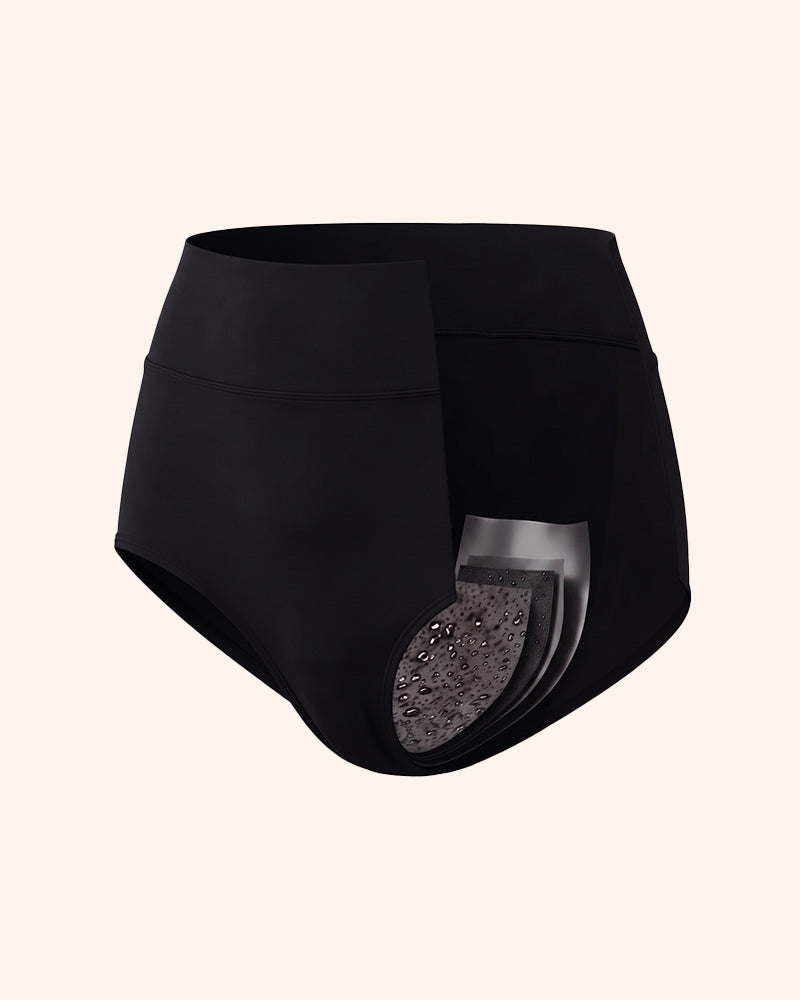
Your underwear choice matters more than anything else you're wearing, because it's the only layer doing actual work.
| Option | Discreet under church clothes | Change time if needed | Best for |
|---|---|---|---|
| Reusable leakproof underwear | Yes — looks and feels like normal underwear | About 2 minutes in a restroom stall | Light to moderate leaks |
| Disposable pads | Yes, under most outfits | About 1 minute | Backup on a heavier day |
| Leakproof underwear + booster pad | Yes, under looser clothes | About 2 minutes | Long services, holidays, weddings |
For most services, leakproof underwear on its own is the simplest choice. It looks like regular underwear under a dress or trousers, it doesn't rustle when you stand for a hymn, and there's no pad shifting around when you kneel. The women's leakproof underwear and men's leakproof underwear both come in black, which disappears under dark clothes. For a two-hour holiday service, a reusable booster pad adds extra absorbency without changing how anything looks from the outside.
One more thing: wear something you've already worn, not a brand-new outfit. A new dress that rides up will have you fidgeting all service — and fidgeting draws exactly the attention you're trying to avoid. Dark colors and looser cuts hide a damp patch if the worst happens. If you're still deciding what to wear with leaks in general, our guide on what to wear with bladder leaks covers fabrics and fits in detail.

Standing, kneeling, singing: the moments that catch people out
It's rarely the sitting that gets you. It's the transitions.
Standing up after a long sit. This is the big one. Pressure shifts, your pelvic floor has to re-engage, and a few drops slip out. If you know this is your weak moment, squeeze your pelvic floor muscles — a quick Kegel hold — a second before you stand. Nobody can see it.
Kneeling. Kneeling presses your abdomen down onto your bladder. If it's a trigger for you, stay seated and bow your head instead. Plenty of people stay seated for bad knees. You're not the odd one out.
Singing. A hymn sung at full voice pushes air down through your diaphragm, and that pressure lands right on your bladder. Go easy on the volume for the first verse and let the choir carry it — or just mouth the words.
What if you need the bathroom mid-service?
Go. That's the whole answer — but the how matters. Wait for a natural moment: a hymn or a reading. Stand up calmly, walk at a normal pace, and don't apologize to anyone. People get up during services all the time — parents with restless kids, older folks with stiff knees. You're background noise, not a scene.
If changing into a spare pair is the plan, our guide on changing in a public restroom walks through the two-minute version: pouch open, old pair in, new pair on, hands washed, done. And if it's a small leak, you might not need to go anywhere at all — a few drops are exactly what leakproof underwear is built to handle.
After the service: the part nobody plans
Once you're out of the building, the tension drops — and the urge often comes back hard. Don't drive forty minutes home without stopping — pop into a café, use the restroom, change if you need to. Rinse the used pair in cold water when you get home; a mesh laundry bag keeps it separate from the rest of your wash.
You go to church for the service, not to sit there doing bladder maths. Get the routine right once, and Sundays go back to being Sundays.
Frequently asked questions
Can you wear incontinence underwear to church?
Yes — and honestly, it's the easiest option for a long service. It looks and feels like regular underwear, handles the small leaks that standing or kneeling can trigger, and nobody can tell you're wearing it. For most people, it's the simplest version of how to manage bladder leaks at church.
How do you sit through a long service with bladder leaks?
Start before you leave the house: empty your bladder right before you go, wear protection you trust, and take an aisle seat near the back. Skip the second coffee, and if the urge builds mid-service, wait for a hymn and walk out calmly. That's the core of how to manage bladder leaks at church — a little prep, then you stop thinking about it.
What if you leak during a church service?
First, breathe. Most leaks are a few drops, and your underwear is built for exactly that. If it's more, wait for a hymn and walk to the restroom at a normal pace. Change into your spare pair, bag the wet one, and come back.
Is it okay to get up during a service to use the bathroom?
Yes. People get up all the time, and nobody keeps a list. Go during a hymn or a reading, not during the silent prayer, and walk like you're fetching a glass of water.
Do bladder leaks get worse when you sing or stand up?
They can. Singing pushes air down through your diaphragm, and standing up after a long sit shifts pressure onto your pelvic floor — both are classic triggers for stress leaks. A quick pelvic floor squeeze before you stand helps, and for hymns, sing softly for the first verse. Our guide on why you leak when you stand up explains what's going on.
Related reading: How to Manage Bladder Leaks at a Wedding · How to Manage Bladder Leaks at a Concert or Sporting Event · How to Manage Bladder Leaks on Public Transport


Teilen:
How to Manage Bladder Leaks in College: Dorms, Classes, and Shared Bathrooms Without the Stress
How to Manage Bladder Leaks at a Funeral: A Practical Guide for a Hard Day