


The short answer: Yes. So, how does incontinence affect mental health? The leaks themselves are often small — it's everything around them that wears you down. The constant scanning for bathrooms. The outfit checks. The invitations you quietly turn down. The 2 a.m. wake-ups that leave you tired and flat the next day. Studies link incontinence with higher rates of anxiety and low mood. The good news? Small, practical steps that make leaks easier to manage tend to lift your mood too.
Here's the part nobody mentions at the doctor's office. A leak isn't just a wet patch. It's a thought that follows you around all day: Did anyone notice? Can they smell it? Is there a mark on the chair? And slowly, without quite noticing, your world gets smaller.

Why does something so common feel so lonely?
Millions of people deal with bladder leaks. Men after prostate surgery. Women after childbirth, or through menopause. People you'd never guess. Yet most of them deal with it alone.
That's the strange part. Leaks are common, but talking about them isn't. So you assume you're the only one checking the chair before you stand up. It doesn't feel like a medical issue — it feels like a personal failing.
Shame doesn't shout. It just edits your plans. You pick the aisle seat at the movies, every time. You keep a spare pair of underwear in your bag and hope nobody ever asks why. None of them feels like a big deal alone. Added up over months, they shrink your life a few sizes.
How does incontinence affect mental health day to day?
It shows up in ordinary moments, not dramatic ones. You're in the checkout line and you feel a sudden urge — your whole body tenses while you count the people ahead of you. You make it. But your heart is still pounding when you reach the car.
Or it's a Tuesday morning. You're getting dressed for work and you stand in front of the closet, picking dark trousers again — not because you like them, but because they'd hide a leak. It's automatic by now — background noise, and background noise is exhausting.
Sleep takes a hit too. Waking up twice a night doesn't just steal your sleep, it steals the next day. You're foggy by 3 p.m., too tired for the walk that usually clears your head.
Then there's the social side. You start saying no — not to everything, just to the things with no easy exit. The three-hour wedding reception. The hiking trip with no bathrooms on the trail. Each no feels reasonable. But after a few months of them, your calendar looks empty — and empty calendars make low moods worse.
What does the shame spiral actually look like?
It usually goes something like this. A leak catches you off guard — in a meeting, on a run, laughing at a joke. You feel embarrassed. So you avoid the situation next time. Avoiding feels safer, so you avoid more. The less you go out, the more time you spend alone with your thoughts — and the leak starts to feel bigger than it is.
Notice what's happening there. The leak didn't get worse. Your world got smaller. That's the spiral: embarrassment leads to avoidance, avoidance leads to isolation, and isolation makes everything feel heavier.
It can strain the people closest to you, too. Maybe you've stopped being intimate with your partner because you're worried about leaking during sex. Maybe you haven't told anyone at all, and carrying a secret every day is its own kind of tired. If any of that sounds familiar, you're not broken — you're just carrying a lot, quietly.
See our guide to feeling more prepared and less anxious in public, and how to talk to your partner about leaks.
Can bladder leaks cause anxiety?
They can feed it, yes. Anxiety loves uncertainty, and leaks are nothing but uncertainty: will it happen today, where, in front of whom? That "what if" hums in the background all day. Some people start checking and rechecking — bathroom locations, spare clothes, the route home — and the checking itself becomes a habit that's hard to switch off.
There's also a two-way street here. Stress can make leaks more likely, and leaks can make stress worse. Our article on stress, anxiety, and bladder leaks breaks down how that loop works — and how to loosen it.
What actually helps when your head is the hardest part?
There's no single fix. But small, boring, repeatable steps tend to work better than grand plans.
Tell one person. Not the whole world — one person. A partner, a close friend, your doctor. Saying it out loud shrinks it. The first time is the hardest.
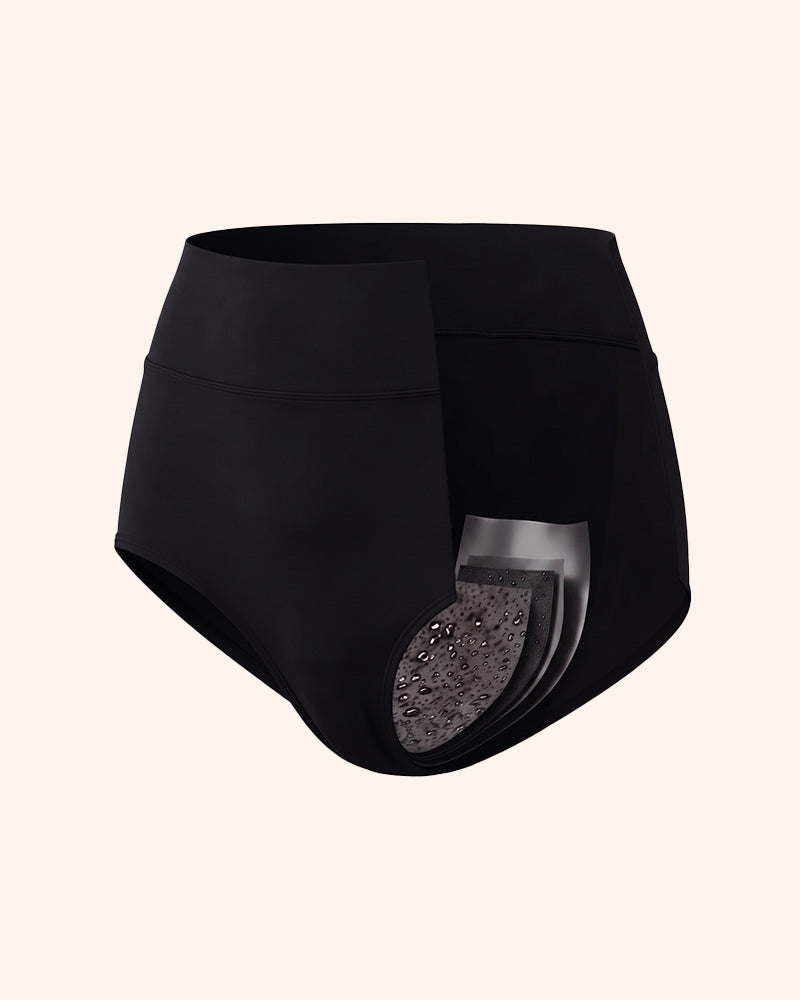
Make leaks boring. The less mental energy a leak costs you, the less room it takes up in your head. That might mean switching to underwear you actually trust — washable leakproof underwear that looks and feels like regular underwear, Our women's leakproof underwear and men's leakproof underwear are built for exactly that: protection you can forget about.
Go anyway — with a plan. Don't wait until you feel confident to go out — confidence usually shows up after you go. Pick the short version first: coffee, not the three-hour dinner. Scope out the bathroom when you arrive. Our restaurant guide has a simple version of this routine that works almost anywhere.
Fix the sleep piece. If night waking is what's dragging you down, start there. Ease off fluids a couple of hours before bed, empty your bladder right before sleep, and skip the late-night scrolling. Why you wake up to pee at night explains the common causes.
Move your body, gently. A 20-minute walk after lunch. Stretching while the kettle boils. Movement lifts mood, and for many people it helps bladder control too. Start small.
Get the right help for the right problem. A doctor can check whether something treatable is behind the leaks, and a pelvic floor physiotherapist can teach you exercises that work for your body. If low mood or anxiety has hung around for more than a couple of weeks, bring that up with a professional too — as the main point of the visit, not a side note. Here's how to know when to see a doctor about bladder leaks.
Do you have to tell anyone?
No. It's your body and your business. But here's what most people find: the secret is heavier than the leak. Telling one safe person doesn't fix your bladder, but it stops you from carrying the whole thing alone.
Try the practical version: "I've been dealing with some bladder leaks, so I keep a spare pair in my bag. It's no big deal, I just wanted you to know." Short. Honest. Done.
If you're supporting someone with leaks, the best thing you can do is act normal about it. "There's a bathroom right down the hall" beats a pep talk every time.
Frequently asked questions
Can bladder leaks cause anxiety?
They can certainly feed it. The unpredictability — not knowing when or where a leak might happen — keeps many people on edge all day. That constant low-level worry is tiring on its own, and it can grow into real anxiety if leaks start changing what you're willing to do.
Is it normal to feel depressed about incontinence?
Yes, and far more common than people admit. Leaks can bring embarrassment, frustration, and a sense of losing control over your own body — all of which can drag your mood down. If low mood lasts more than a couple of weeks, bring it up with a doctor.
How does incontinence affect mental health in older adults?
For older adults, leaks often arrive alongside other changes — retirement, losing a partner, less mobility — so the emotional hit can be bigger than the leak itself. The fix is the same as at any age: protection that works, staying socially connected, and telling a doctor.
Can treating bladder leaks improve your mood?
Often, yes. When leaks become predictable and manageable — the right protection, a routine that works, fewer 2 a.m. wake-ups — most people find their head clears up too.
When should I talk to a doctor about how leaks make me feel?
Sooner than you think. Book an appointment if leaks are changing your daily plans, if you're avoiding social events, or if you've felt low or anxious for more than a couple of weeks. "It's affecting my mood and my daily life" is a perfectly good reason to ask for help.
You don't have to wait until the leaks stop to feel like yourself again. Most people don't get there by fixing everything at once — they get there by fixing one small thing, then another. A product that works. One evening out that turns out fine. Start with the smallest one — that's enough for today.


Teilen:
Why Do I Leak Urine When I Walk? What Your Steps Reveal About Your Bladder
How to Manage Bladder Leaks at a Concert or Sporting Event: A Practical Guide to Enjoying the Show