


The short answer: running water can make you need to pee because your bladder has learned to treat the sound as a cue. It's the same kind of learned link as feeling the urge the second you put your key in the front door. The sound doesn't fill your bladder — it just tells your brain it's time to empty it. Once that link forms, it can fire fast — even when you only went twenty minutes ago.
You're standing at the sink, washing your hands. The tap's been running for ten seconds, and suddenly the urge is there — not a gentle nudge, a real one. Here's what's going on — and what helps when the tap turns traitor.

Why does running water make you need to pee?
Your bladder takes orders from your brain, and your brain loves patterns. Every time you pee, there's sound involved — the tap running while you wash up after, the flush, water hitting the bowl. Do that a few thousand times and your brain files the sound under "time to go." That's classical conditioning — Pavlov's dogs salivating at a bell. The sound becomes a trigger, and your bladder muscle can start contracting before you've made any conscious decision — which is why the urge feels like it comes out of nowhere.
A few things strengthen the link. Years of "just in case" peeing train your bladder to empty at smaller volumes, and a half-full bladder reacts to cues faster. An already sensitive bladder, as with an overactive bladder, is quicker to fire too. If that sounds like you, our guide on how to tell if you have overactive bladder is worth a read. And hand-washing is autopilot time, so the signal gets through loud and clear.
Nothing's wrong with you — your nervous system just did what nervous systems do: it learned.
What other sounds and moments set off the same urge?
Running water is the classic one, but it's far from the only trigger:
- Flushing a toilet — especially in a public restroom, when you're trying very hard not to need one yourself.
- Rain on a window or a roof. A steady patter can do it, which is why a rainy walk sometimes ends with a sudden sprint home.
- Washing dishes or running a shower. Warm water relaxes the pelvic muscles, which is also why a warm bath stirs up the urge. We covered that in why a bath makes you need to pee.
- Your key in the front door. This one's so common it has a name: latchkey incontinence. Your bladder has learned home equals bathroom. Read more in why you leak when you get home.
- Cold air on your skin. Stepping out into a cold morning can push the urge forward.
Is it just in your head?
No — and yes, in the sense that your head is where the learning lives. The urge is physical: the bladder muscle really does contract, and sometimes it wins. Calling it "in your head" makes it sound made-up, and it's not. But the trigger is learned, and learned things can be unlearned. That's why the fixes below work — they retrain the signal instead of fighting your bladder.
One honest note: if the urge comes with pain, burning, blood, or a fever — or if you've suddenly started leaking without any warning at all — skip the self-help and talk to your doctor. Our guide on when to see a doctor about bladder leaks walks through the warning signs.
What to do when the urge hits at the worst moment
The tap is running and the urge just spiked. Here's what works:
1. Stop and stand still. Don't rush toward the bathroom. Rushing tells your brain this is an emergency, and your bladder believes you.
2. Squeeze, don't strain. Do a few quick pelvic floor squeezes, then hold one for ten seconds. This sends a competing signal up to the bladder that can quiet the contraction. If your technique is rusty, our pelvic floor exercises guide covers the basics.
3. Give your brain something else to chew on. Count backwards from 100 by sevens. Anything that takes real concentration works — the urge signal has to compete for attention, and it usually loses.
4. Walk, don't run, when the wave passes. Urges come in waves. They peak and fade, usually within a minute or two. Wait for the fade, then walk calmly. Running and jiggling keys only make it worse.
And break the just-in-case habit. Each just-in-case trip teaches your bladder that half-full is the new full. Ride out the wave when you can.
How to retrain the trigger over a few weeks
Urge suppression gets you through the moment; bladder training changes the pattern. Stretch the gap between trips a little at a time, so your bladder relearns what full feels like.
Start where you are: going every hour? Aim for an hour and fifteen minutes. When the urge hits at the wrong time, use the squeeze-and-distract routine above, then wait five minutes. Next week, try ten. Most people notice a real difference in three to four weeks — enough that the tap stops running their schedule.
A couple of practical tweaks help. Keep a simple note for a week: time of pee, rough amount, what triggered it. You'll spot your own pattern fast — maybe it's always the morning dishes, never the evening ones. Don't cut back on water, either: drinking less concentrates your urine, which irritates the bladder lining and makes urgency worse. And watch the caffeine — try one cup instead of three for a week and see if the tap bothers you less.
Our full bladder training guide has the whole routine.
What helps when you're out and the sound catches you off guard
Retraining takes weeks, and life doesn't pause while you practice. A restroom flush, a lobby fountain, a rain shower mid-walk — triggers show up where you can't control them. That's where a backup plan matters more than willpower.
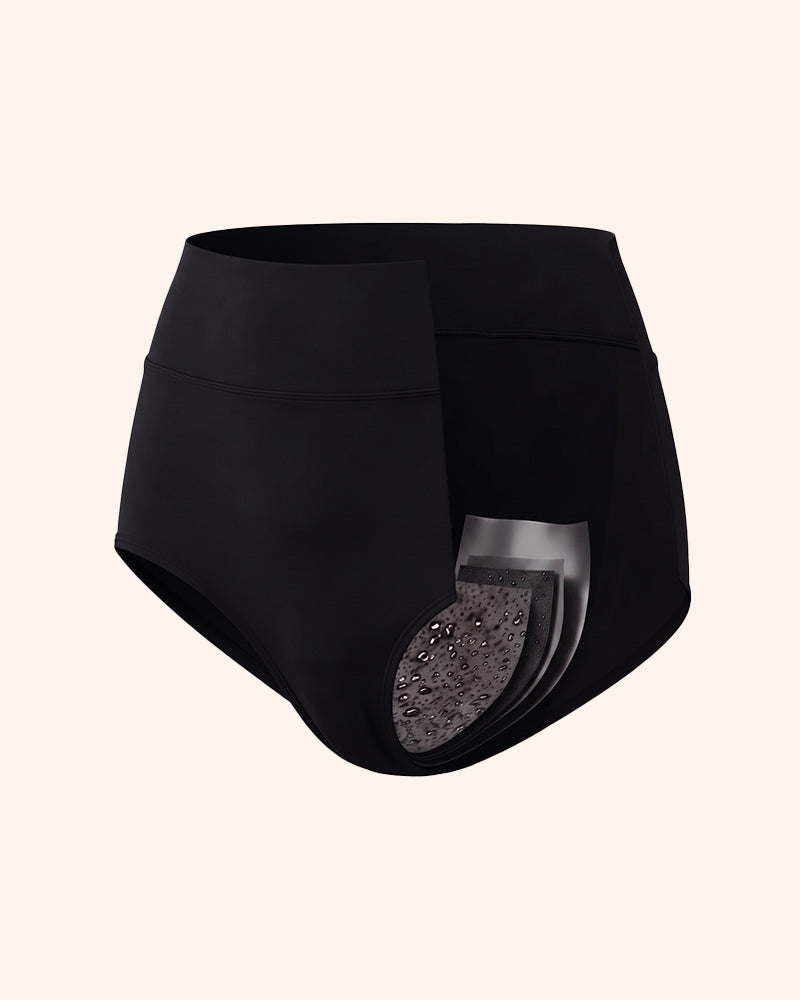
Washable leakproof underwear works as that backup. It looks and feels like regular underwear, absorbs a leak before it reaches your clothes, and buys you time to reach a bathroom calmly. Out for the day? A spare pair tucked in a waterproof carry pouch means a leak stays a non-event instead of a ruined afternoon.
If leaks are your everyday reality, have a look at the women's Stay Discreet underwear or the men's Stay Discreet underwear. Knowing you've got protection on calms your reaction to a trigger — and that alone makes the urge easier to ride out.
FAQ
Why does running water make you need to pee?
Because your brain has paired the sound of running water with peeing, thousands of times over. The sound becomes a learned cue that can trigger a real bladder contraction — the same conditioning that makes your key in the front door set off the urge. It's a normal learned reflex, not a sign that something's broken.
Why do I need to pee when I wash my hands?
Same trigger, smaller stage: the tap runs, your hands are under warm water, and your brain reads the scene as "bathroom time." Try the squeeze-and-distract routine — a few quick pelvic floor squeezes, count backwards from 100 — and the wave usually passes within a minute.
Is it normal to need to pee when you hear rain?
Yes — plenty of people first notice it on rainy days. Rain is just another version of the running-water sound, and if your bladder is already sensitive, it's enough to set off the urge. If it's happening daily and disrupting your life, bladder training and a chat with your doctor are the next steps.
Why do I leak when I hear running water?
When the trigger fires hard and fast, the bladder can contract before your pelvic floor has time to hold it back — especially if those muscles are weak after childbirth or surgery. Strengthening the pelvic floor helps close that gap, and leakproof underwear covers you while you're building that strength.
Can bladder training stop sound-triggered urges?
For most people, yes — or at least it turns them from a sprint to the bathroom into a manageable nudge. Timed voiding plus urge suppression, practiced for three to four weeks, usually weakens the learned link noticeably. Consistency is the trick: a few minutes of delay, practiced daily.
When should I see a doctor about sudden urges?
Book an appointment if urges come with pain or burning, blood in your urine, a fever, or a sudden change in how often you go. Also go if you're leaking daily or the urge is stopping you from leaving the house — there are treatments that help.
Next time the tap runs and your bladder pipes up, you'll know: an old habit, not an emergency. Pause. Squeeze. Count backwards by sevens. The sound doesn't get the last word anymore.


Share:
How to Manage Bladder Leaks on Public Transport: Buses, Trains, and the Subway
Why Do I Leak Urine When I Walk? What Your Steps Reveal About Your Bladder