

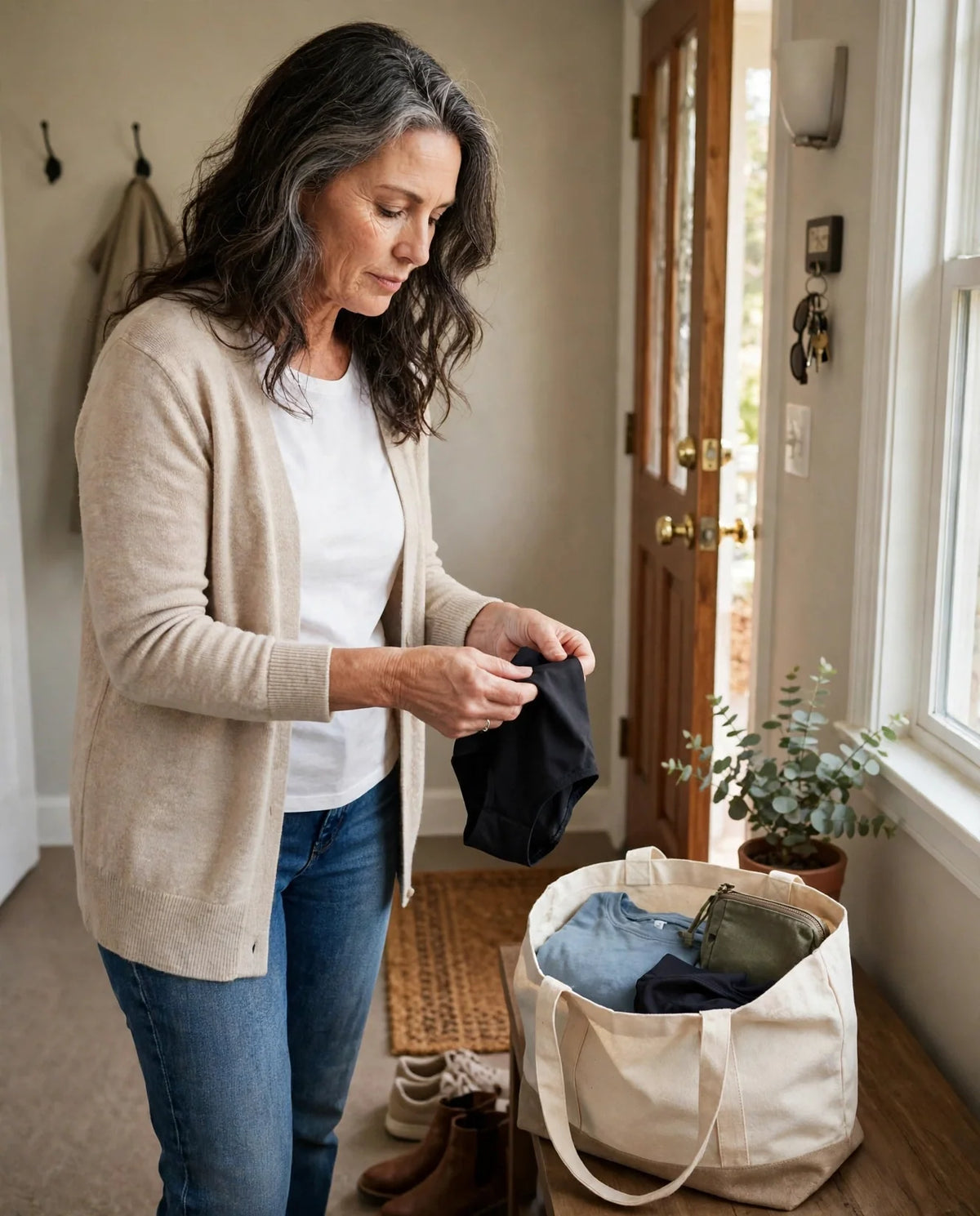
The short answer: Don't freeze, and don't run. Cover the spot with a jacket, bag, or sweater, walk calmly to the nearest restroom, blot — don't rub — the damp area, and change into dry clothes if you have them. Most people around you won't have noticed a thing. What to do if you leak urine through your clothes in public comes down to three moves: cover, get somewhere private, and change.
It usually happens fast. You're in the checkout line, or halfway across a car park, and then you feel it — a warm patch spreading where it shouldn't. Everyone must be staring.
They're almost certainly not. Strangers are wrapped up in their own errands and phones. A damp patch on dark trousers in a busy supermarket is invisible to about 99% of the people around you. The panic makes it feel like a spotlight. It's not.
Still, knowing what to do next helps. Let's walk through it.
What to do if you leak urine through your clothes in public — first, in the moment
Stop moving for a second. Just one second.
If you're mid-stride, slow down. Squeeze your thighs together and press your legs firmly — the same instinct as crossing your legs when you need the toilet. Don't sprint for the door. Running makes leaks worse, and it draws exactly the attention you're trying to avoid.
Take a breath. Most leaks in public are small — a few tablespoons at most, caught by your underwear and showing as a faint patch. That's manageable.
Then pick your route. Not the shortest one — the quietest one. The corridor past the stockroom, the side aisle, the lift instead of the escalator.
How do you get to a bathroom without drawing attention?
Cover first, move second.
A jacket tied around your waist is the classic for a reason. A long cardigan pulled down works. So does holding your tote bag low, in front of the spot. If you're wearing a coat, button it. None of this looks strange. People tie jumpers around their waists all day, every day, for no reason at all.
Walk at a normal pace. The walk that says "I'm heading to the loo" is the same walk that says "I'm heading to the dairy aisle." Nobody's reading your stride.
What do you do once you're in the restroom?
Lock the door. Breathe out — the hard part is over.
Blot the damp patch with toilet paper or a paper towel. Press, don't rub — rubbing spreads it and roughs up the fabric. If the patch is on trousers, blot from the outside first, then check the inside. A few layers of paper pressed firmly for 30 seconds pulls out more than you'd expect.
If you can, rinse the area under the cold tap — hot water sets a stain and can make a smell linger. A quick rinse and a blot dry won't get trousers back to perfect, but it takes the worst of it out. Then hold the fabric under the hand dryer for a minute or two. It won't be bone dry. It'll be good enough.
Change your underwear if you brought a spare. Bag the wet pair in a pouch or plastic bag and wash it when you get home — a cold rinse first, then a normal wash.
| How bad is it? | What to do | Can you stay out? |
|---|---|---|
| Small damp patch, underwear caught most of it | Blot, change underwear, carry on | Yes — nobody will notice |
| Visible patch on trousers or a skirt | Blot, rinse with cold water, dry under the hand dryer, cover with a jacket | Yes, with a cover-up |
| Soaked through to outer clothing | Change into spare clothes if you have them; if not, head home | Best to call it a day |
What if there's no spare change of clothes?
This is the scenario everyone dreads. No spare underwear, no spare trousers, and you're an hour from home.
First, the blot-and-dry routine above still helps — a damp patch you can live with is a lot better than a wet one. Second, layer up. A long top, a cardigan, a jacket tied at the waist — anything that breaks the line of sight. Dark colours hide damp far better than pale ones, so if you're wearing a dark jacket, wear it open over the spot rather than tied around your waist. Both work.
Third, improvise. A chemist or a supermarket sells cheap underwear and leggings. Ten minutes and a few pounds buys you a dry change and a whole different afternoon. It feels silly, buying emergency pants at 11 a.m. on a Tuesday. Do it anyway.
How do you handle it if someone notices?
Honestly? It almost never happens. But let's say it does — someone glances down, or a child points, because children do that.
You have two good options, and both are short. Option one: say nothing, keep walking. Most adults will look away and forget about it in seconds. Option two: a light, plain sentence. "Had a little accident, thanks." Then move on. No long story. No apology tour. A leak happens to millions of people — after childbirth, after prostate surgery, with age, with a cough that caught you off guard. It is not something you have to justify to a stranger.
How can you make next time less stressful?
You can't always stop a leak. You can make it a non-event.
Start with the bag. A small kit turns a crisis into a two-minute pit stop: a spare pair of underwear, a waterproof carry pouch for the wet one, a few tissues, and a spare top if your bag has room. Keep it packed and stop thinking about it. For ideas on what to include, see what to pack in your bag for bladder leaks.
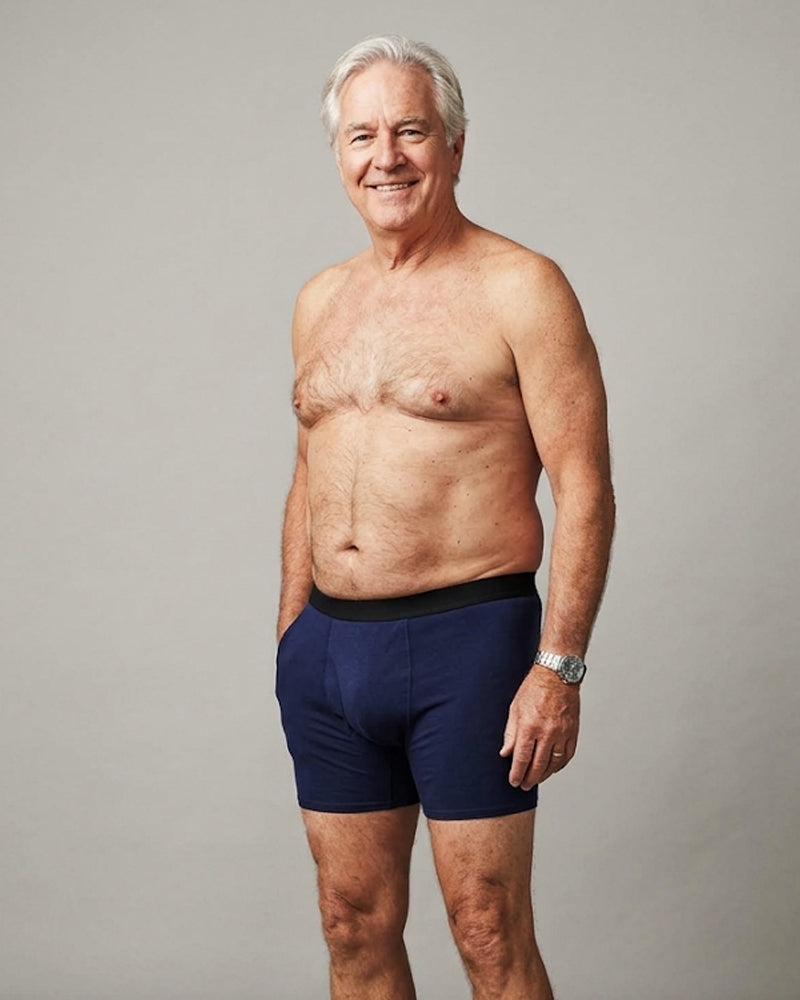
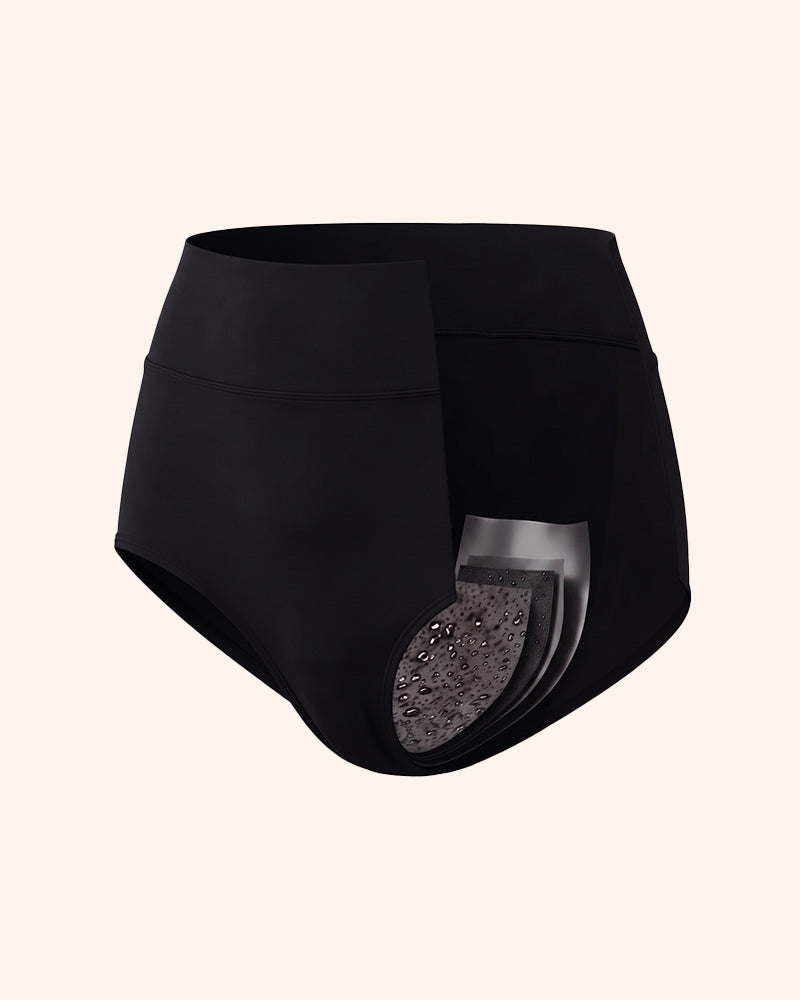
Then look at what you're wearing underneath. Washable leakproof underwear catches small and moderate leaks before they ever reach your clothes — which is the entire problem this article is about. The women's high-waisted style and the men's stay-discreet brief both look and feel like regular underwear, and they buy you time: time to find a restroom, time to change, time to stay calm. If you're not sure which absorbency fits your leaks, this absorbency guide walks through it. And if your underwear has been letting leaks through lately, these common causes and fixes are worth a read.
Also, scout your regular places. Where's the loo in your supermarket? In the shopping centre? Knowing the answer before you need it takes the panic out of the moment. Our guide to feeling more prepared for bladder leaks in public covers the planning side in more detail.
And one last thing, the unglamorous one: wash your spares properly. A mesh laundry bag keeps them in good shape in the machine, and a cold rinse before washing keeps them fresh. Clean, dry spares in your bag are only useful if they're actually clean and dry.

Frequently Asked Questions
What should I do first if I leak urine through my clothes in public?
What to do if you leak urine through your clothes in public is simple: cover the spot, walk calmly to the nearest restroom, blot the damp area, and change your underwear if you have a spare. Don't run — it makes the leak worse and draws attention.
Can people tell if I've leaked through my trousers?
Almost never. A damp patch on dark clothing is hard to spot, and strangers are focused on their own business. Tie a jacket around your waist or carry your bag in front of the spot — both look completely normal.
How do I hide a wet patch on my clothes until I get home?
Blot first, then dry the fabric under a hand dryer for a minute or two. A long top or cardigan, a jacket worn open, or a sweater tied at the waist all cover the area — and dark colours hide damp far better than light ones.
What should I carry in my bag to handle a leak in public?
A spare pair of underwear, a small waterproof pouch for the wet pair, tissues, and a spare top if there's room. Washable leakproof underwear is worth considering too — it catches leaks before they reach your clothes. If you want a full checklist, see our guide to changing incontinence underwear in a public restroom.
Does leakproof underwear stop leaks from reaching your clothes?
For light and moderate leaks, yes — that's exactly what it's built for. The absorbent layer traps moisture inside the underwear instead of letting it soak through to trousers or a skirt. It won't hold a full bladder emptying, so pick the absorbency that matches your leaks and change as soon as you can.
So: cover, walk, blot, change. Four moves, two minutes in a restroom, and you're back to your day. The leak was a moment. It doesn't get to be the whole story.

Share:
How to Manage Bladder Leaks in Hospital: What to Pack and What to Expect
How to Manage Bladder Leaks in a Wheelchair: Practical Tips for Everyday Outings