

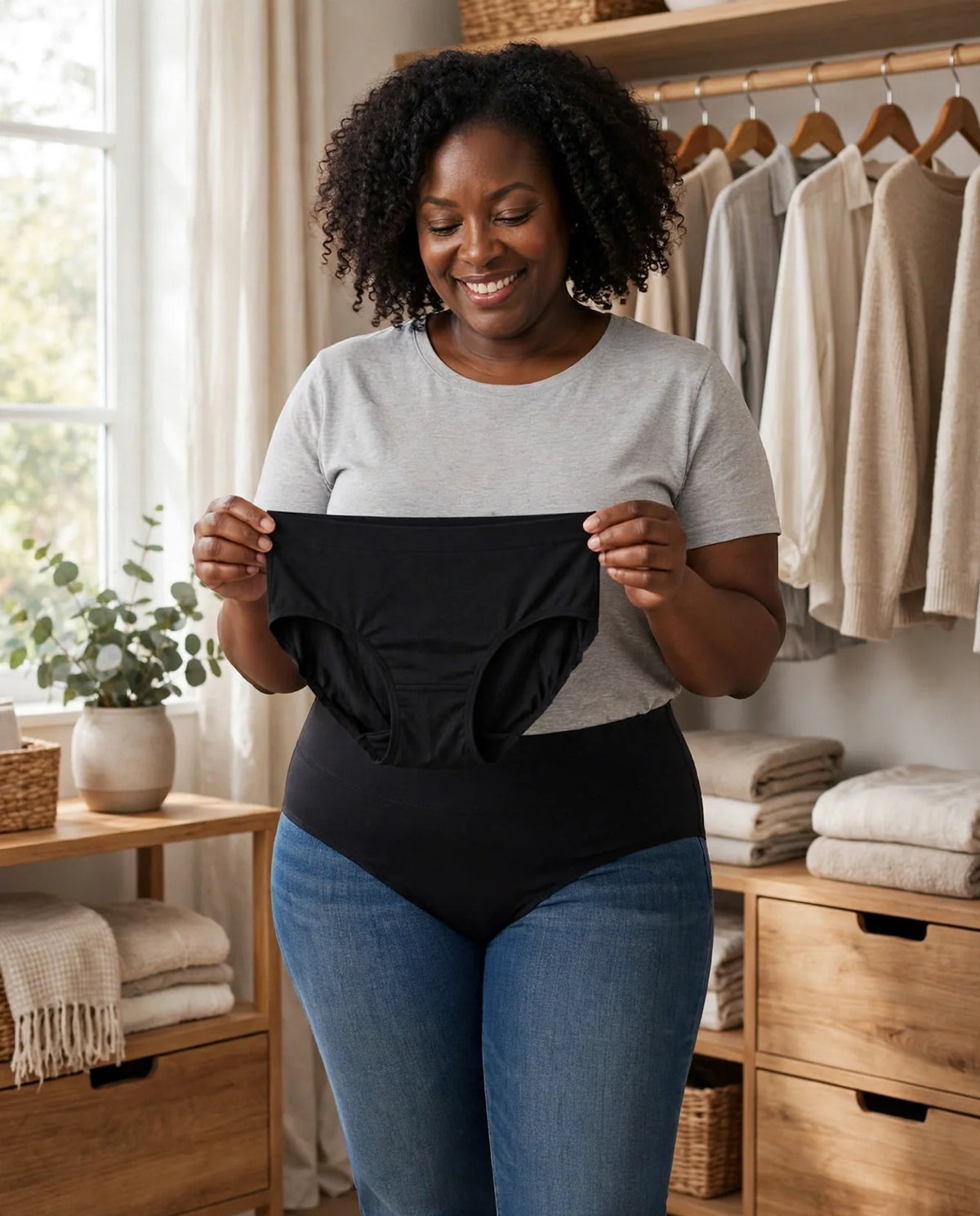
The short answer: Take your waist and hip measurements, compare them with the size chart, and choose the size that matches your larger measurement. The right pair should feel like regular underwear: leg openings snug with no gaps, a waistband that lies flat without digging in, and an absorbent panel that stays centered as you move. If you're wondering what size incontinence underwear should I get and you fall between two sizes, size up for comfort — unless the leg openings gape, in which case the smaller size wins.

Size matters more for leakproof underwear than for the regular kind. With ordinary underwear, a slightly loose pair is just a little less flattering. With incontinence underwear, a loose leg opening is a leak path: liquid follows gravity and finds the gap. A pair that's too tight brings its own problems — red marks, a rolling waistband, and elastic that creeps out of place. Getting the size right is the single biggest thing you can do to make reusable protection work as designed.
Why Fit Decides Whether Leakproof Underwear Works
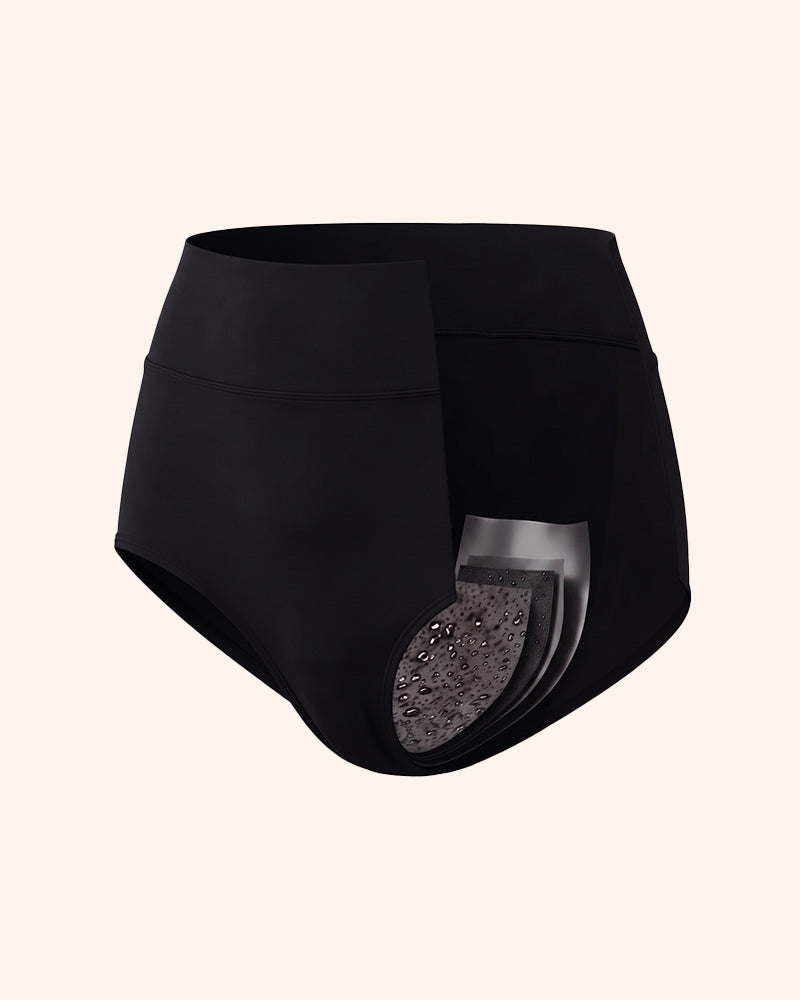
Leakproof underwear is a system — soft top layer, absorbent core, waterproof barrier — and it only works when it sits where it's supposed to. Too loose, and leaks escape through gaps before the absorbent core gets involved. Too tight, and the waistband digs in, rolls down, and irritates skin — skin irritation is one of the most common complaints when the size is off.
What Size Incontinence Underwear Should I Get? Start With Two Measurements
Forget your dress or trouser size for a moment — those numbers vary wildly between clothing brands and say almost nothing about underwear fit. You need two body measurements:
- Waist: Around your natural waistline — the narrowest part of your torso, usually just above the belly button. Keep the tape level and relaxed; don't suck in your stomach.
- Hips: Around the fullest part of your hips and bottom. Stand with your feet together and keep the tape level all the way around.
Use a soft tape over bare skin or thin underwear, not over jeans. Compare both numbers with that product's size chart — charts differ between makers, so never assume small, medium, and large mean the same thing everywhere.
Re-measure every six to twelve months, and after any significant weight change, childbirth, or surgery recovery. If you're stocking a drawer of reusable pairs, measuring before a bigger order saves you from owning five pairs of the wrong size.
How Should Incontinence Underwear Fit? The 5-Point Check
With a pair on, run through this one-minute checklist:
- Leg openings: The elastic should make full contact with your skin all the way around, with no gaps — check while sitting, standing up, and taking a few steps.
- Waistband: It should lie flat. The classic "two-finger test" works: two fingers slide underneath comfortably, but not your whole hand.
- Coverage: The absorbent panel should span front to back, covering where leaks actually happen for your body.
- No bunching: Fabric shouldn't gather or ride up when you walk — bunching creates channels liquid can travel through.
- Comfort check: After five minutes, you should mostly forget you're wearing them.
Too Small vs. Too Big: Signs You're Wearing the Wrong Size
| Sign | Likely too small | Likely too big |
|---|---|---|
| Red marks or itching after wearing | Yes — elastic is digging in | Rarely |
| Leaks at the leg openings | Possible — elastic stretched past its limit | Yes — gaps let liquid escape |
| Waistband rolls or folds down | Yes — fabric is under tension | Yes — excess fabric has nowhere to go |
| Absorbent panel shifts when you move | Unlikely | Yes — the garment slides around |
| Riding up or constant adjusting | Yes — not enough fabric to cover | Yes — too much fabric to stay put |
If a correctly rated product still leaks, an oversized fit — gaps at the leg openings — is the first thing to suspect.
Between Sizes? Here's How to Decide
- Hips much larger than waist? Size by your hip measurement — hip fit controls the leg openings, and leg openings control leaks.
- Light, occasional leaks? You can lean toward the snugger size if it passes the five-point check without red marks — and match the right absorbency level too.
- Heavier or overnight protection? Lean toward the larger size for more coverage and all-night comfort.
- Any red marks after an hour? It's not your size, whatever the chart says. Comfort is what makes you actually wear the protection consistently.
Plus-Size Sizing Tips
Fit frustration is one of the most common complaints among plus-size shoppers — and it's usually a sizing problem, not a quality problem:
- Measure, don't estimate from dress size. Vanity sizing is notoriously inconsistent; your tape measure doesn't flatter or lie.
- Look for extended, clearly labeled size ranges. A brand that lists detailed hip and waist ranges up to higher sizes has actually graded its patterns for those bodies.
- Favor high-waisted cuts. A higher rise spreads the waistband over a larger area — less digging, less rolling, more security when sitting. High-waisted styles like this one are popular for exactly this reason.
- Give a new size a full-day trial before judging. Wear the pair around the house — sit, stand, climb stairs — since mirrors miss how underwear behaves in motion.
Men's Sizing Notes
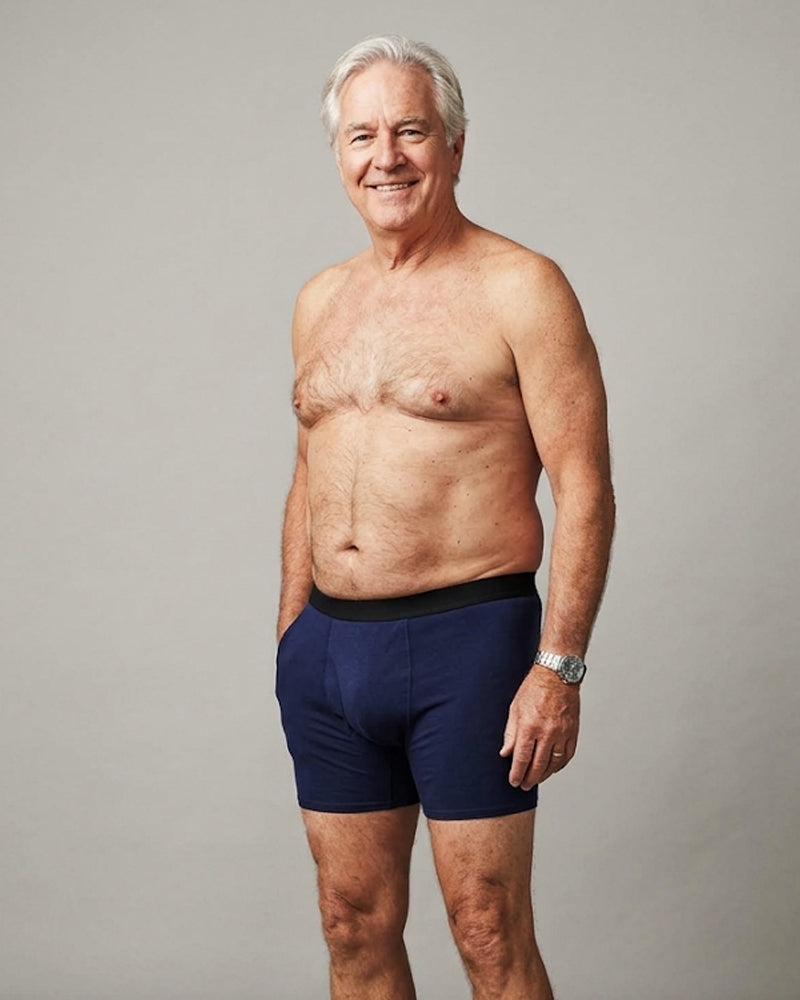
For men, start with your actual waist measurement — not your trouser size, which often runs 2–3 inches small. Two more pointers:
- Boxer-brief vs. brief cuts fit differently. Boxer briefs rely on leg fit; briefs rely on pouch and waistband. Measure for the cut you're buying — boxer-brief styles and briefs with a removable pad each have their own charts.
- Front coverage matters for dribble. If the pouch rides too low or too high, the size or cut is wrong — a booster pad can bridge small coverage gaps while you dial in the fit.
Mistakes to Avoid
- Sizing down "for extra security." The most common mistake — stretched elastic seals worse, not better, and the discomfort means the pair ends up unworn in a drawer.
- Assuming sizes match across brands. A medium in one brand can be a large in another. Check the chart for the product in front of you.
- Judging fit straight out of the package. Wash new pairs once before the fit test — fabrics settle after the first wash.
Find Your Fit
The right size turns leakproof underwear from a compromise into something you barely think about. Start with your measurements, run the five-point fit check, and don't settle for "close enough." Explore the range: women's high-waisted Stay Discreet underwear, men's Stay Discreet boxer briefs, and men's briefs with a removable absorbent pad — each product page includes a detailed size chart. A mesh laundry bag keeps pairs in good shape wash after wash, and a waterproof carry pouch handles spares discreetly when you're out.
Related Reading
- How to Choose Incontinence Underwear: Absorbency, Fit, Comfort, and Everyday Use
- Light vs Moderate Absorbency Underwear: How to Choose the Right Protection for Bladder Leaks
- Can People Tell You're Wearing Incontinence Underwear? Tips for Staying Discreet
- How to Wash and Care for Reusable Bladder Leak Underwear
Frequently Asked Questions
What size incontinence underwear should I get?
Measure your waist and hips, compare both numbers with the product's size chart, and choose the size that fits your larger measurement. Then confirm: snug leg openings with no gaps, a flat waistband, and a panel that stays centered. That combination is what makes the size "right" — not the letter on the label.
I'm between two sizes — what size incontinence underwear should I get?
Size up for comfort or heavier protection. Size down only if the larger size's leg openings gape — gaping legs cause leaks, which defeats the purpose. When in doubt, order one of each and keep the winner.
How should incontinence underwear fit?
Like well-fitting regular underwear with a bit more structure: leg openings sealing gently against the skin, a flat waistband (two fingers fit underneath, not a whole hand), a panel covering you front to back, and nothing bunching, riding up, or leaving red marks.
Should incontinence underwear be tight or loose?
Neither — snug. Tight elastic digs in and irritates skin; loose fabric gaps at the legs and lets leaks escape. If you must err one way, slightly snug beats slightly loose.
What happens if incontinence underwear is too big?
Most commonly, leaks at the leg openings — liquid escapes through the gaps before the absorbent core can catch it. You may also notice the panel shifting and fabric bunching under clothes.
Do reusable incontinence underwear shrink after washing?
Quality pairs may settle slightly after the first wash — which is why it's smart to wash once before judging the fit. After that, cold or warm water and air-drying keep the size stable; hot water and high heat cause real shrinkage.

Share:
How to Talk to Your Doctor About Incontinence: A Practical Guide to Your First Appointment
What Are Bladder Irritants? Common Foods and Drinks That Can Make Leaks Worse