

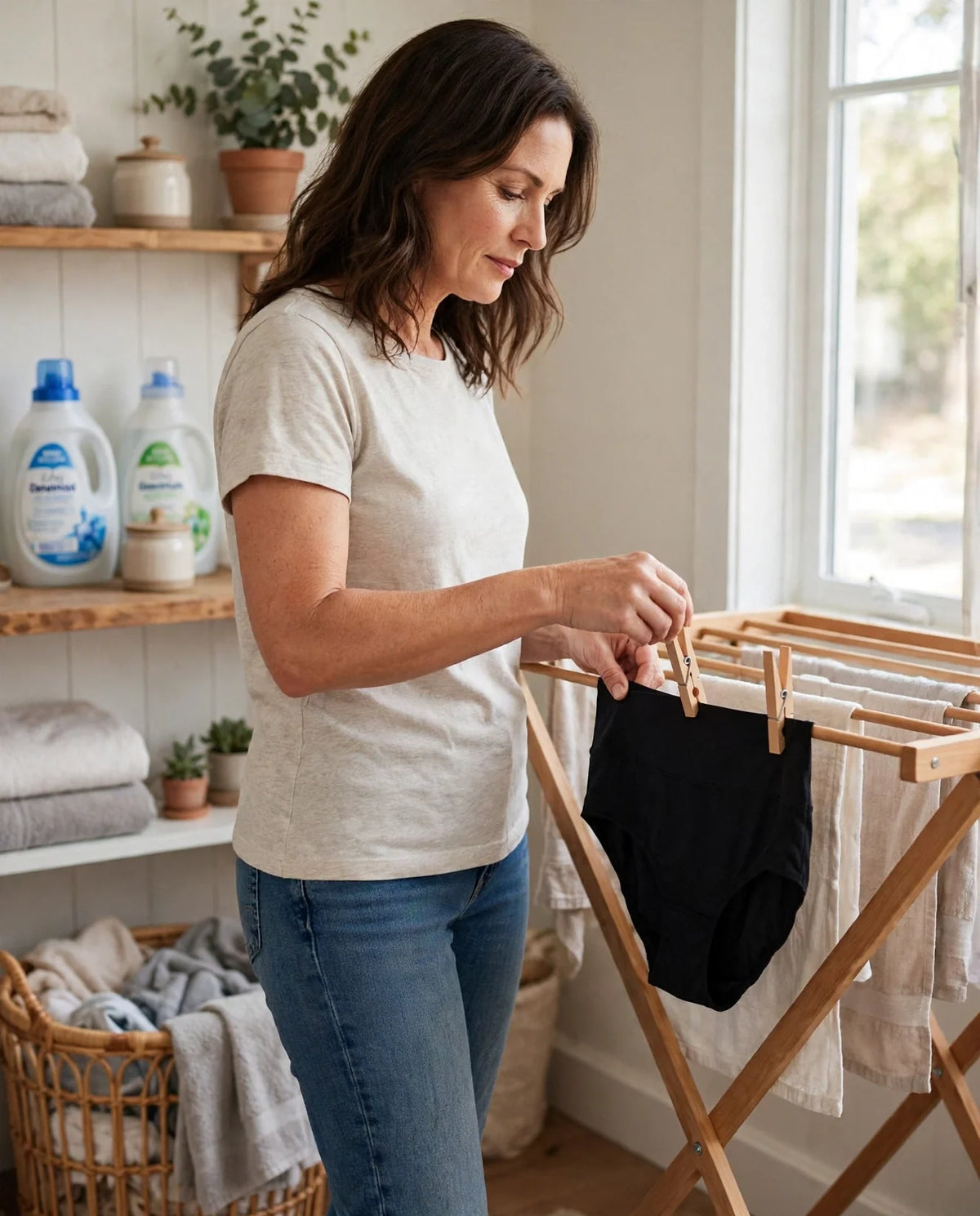
The short answer: can you put incontinence underwear in the dryer? Not on heat — no. High heat is the quickest way to wear out the waterproof layer and the elastic, and those are the two things that make leakproof underwear actually leakproof. If you're in a rush, a no-heat tumble cycle won't hurt. Otherwise, hang them up and let air do the work.

It's Tuesday night, close to 11 p.m. You've just pulled the third load of laundry this week out of the washer, and your favorite pair is in there, still damp. The dryer would have them ready in 40 minutes. The drying rack would take until morning. We've all stood in front of that machine doing the math. Here's the honest breakdown so you can decide without guessing.
Why does heat cause problems for leakproof underwear?
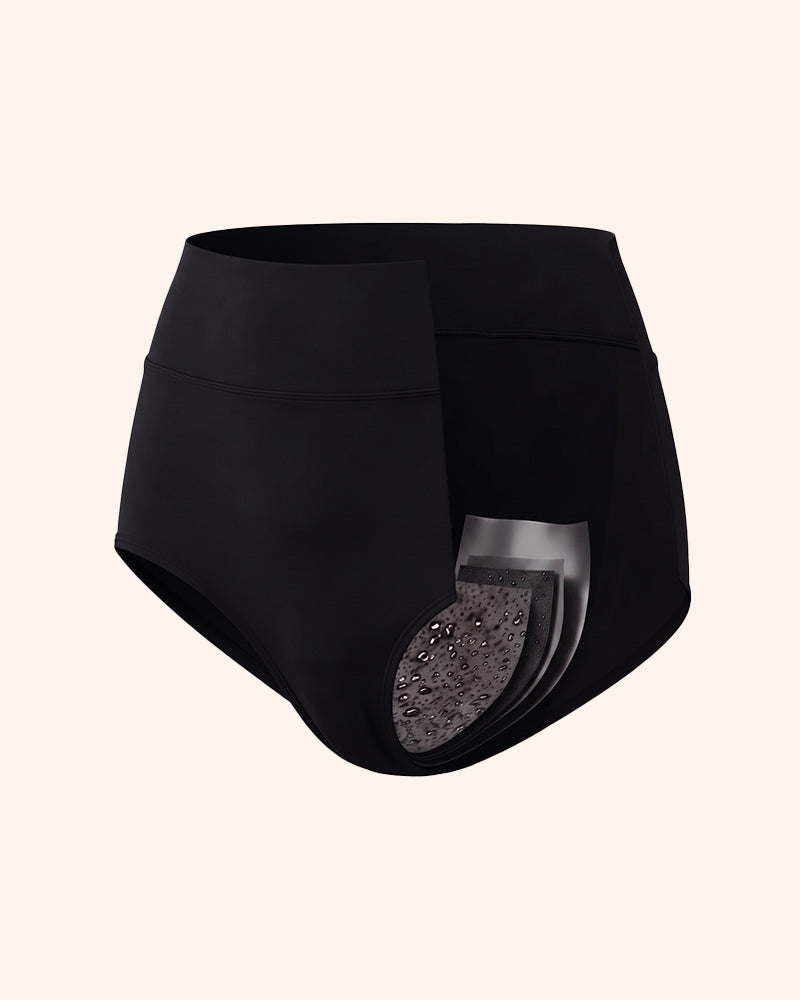
Regular cotton underwear can take a hot dryer cycle without much drama. Leakproof underwear is built differently — it has layers, and each layer reacts to heat in its own way:
- The absorbent core. This is the thirsty middle layer that holds liquid. Repeated high heat compresses and thins these fibers over time, so the pair holds a little less with each overheated cycle.
- The waterproof barrier. A thin laminated membrane keeps moisture from soaking through to your clothes. Heat is its worst enemy — sustained high temperatures can make it stiff and crackly, or cause it to separate from the fabric around it.
- The elastic and outer fabric. Waistbands and leg openings rely on elastic to stay snug. Heat dries elastic out, and once it goes slack, you get gaps — and gaps are where leaks escape.
One hot cycle won't destroy a pair. The damage is cumulative, like sun on a car dashboard. It shows up gradually, which is why people don't connect the dots until a trusted pair starts leaking.
What does heat damage actually look like?
If your pairs have been hitting the dryer on medium or high for a while, here's what to check for:
- Leg openings or the waistband feel loose and don't spring back when you stretch them.
- The gusset (the absorbent panel) feels stiff or makes a faint crackling sound when you bend it.
- A pair that used to hold through the night now leaks in situations it used to handle fine.
- The outer fabric pills or looks worn out way earlier than you'd expect.
Notice a couple of these at once? Heat is the likely suspect — especially if your pairs are aging faster than they should.
Can you put incontinence underwear in the dryer on any setting?
Not all dryer settings are equal. Here's the full rundown:
| Setting | Heat level | What it does to the layers | Verdict |
|---|---|---|---|
| Hang dry / drying rack | None | Nothing harmed; takes 6–12 hours depending on airflow | Best choice |
| Tumble dry, no heat ("air fluff") | None | Safe; softens fabric and speeds things up a bit | Good backup |
| Low heat | Gentle warmth | Mostly safe; fine for the occasional rushed load | Acceptable sometimes |
| Medium / high heat | Hot | Breaks down the waterproof barrier and dries out elastic over time | Avoid |
| Dryer sheets or fabric softener | Coating | Coats the absorbent fibers so they repel instead of soaking up liquid | Never |
That last row surprises people. Dryer sheets leave a waxy coating on fabric — great for static, terrible for anything designed to absorb. The same goes for liquid fabric softener in the wash. Skip both, every time. If odors are the worry, our guide on keeping reusable pairs fresh covers what actually works.
How to dry them faster without the dryer
Hang drying sounds slow until you learn the tricks. A pair that's been spun properly and hung in moving air dries far quicker than you'd think:
- Run an extra spin cycle. Before the wash ends, add a second spin. Less water in means less drying time out — sometimes by hours.
- Roll them in a dry towel and press. Lay the pair flat on a bath towel, roll it up tight, and stand on it for 30 seconds. You'll be amazed how much water the towel pulls out.
- Hang them inside-out. The absorbent core faces the air this way instead of being trapped against the outer fabric. Drying time drops noticeably.
- Give them airflow, not heat. Near an open window, under a ceiling fan, or in front of a regular fan beats a still, humid bathroom every time. Don't drape them over a radiator or heater — that's just a dryer with extra steps.
What if a pair already went through a hot cycle?
Don't panic, and don't throw them out. One accidental hot cycle — the classic "my partner tossed everything in on high" situation — rarely ruins a pair outright. Here's how to check whether real damage happened:
- The stretch test. Pull the waistband and leg openings gently. They should snap back crisply. If they stay stretched or feel gummy, the elastic took a hit.
- The bend test. Fold the gusset back and forth. It should feel soft and quiet. Crackling or stiffness means the waterproof layer got cooked.
- The wear test. Wear the pair at home on a day you can change easily — not on the morning of a long meeting. If it performs like it used to, you're fine.
If it fails the stretch test but still absorbs okay, demote it to backup status — light days at home, not travel days. And for the full routine that keeps pairs in rotation longer, see our wash and care guide.
Shared laundry rooms, dorms, and laundromats
Here's where it gets tricky. If you share machines — a dorm basement, an apartment laundry room, a laundromat on a road trip — you can't always control the settings, and the dryers often run hot by default.
- Wash your pairs in a mesh laundry bag so they don't get lost or snagged in a communal machine.
- Pull them out after the wash and hang them in your own space. A folding rack fits in a dorm corner.
- If you must use the shared dryer, pick the lowest heat setting and pull them out while still slightly damp to finish air-drying.
- Traveling? A waterproof carry pouch holds a damp pair discreetly until you're somewhere you can hang it up — no plastic-bag rustling in a hotel bathroom.
FAQ
Can you tumble dry incontinence pants on low?
Yes, occasionally. Low heat now and then won't kill a pair, though hang drying is still better for the long run. Make it the exception — for the mornings you're running late — not the default.
Does the dryer ruin waterproof underwear for good?
Repeated high-heat drying, yes, eventually. The waterproof membrane degrades a little each time, and once it cracks or delaminates, that pair won't be reliably leakproof anymore. The damage doesn't reverse, so prevention is the whole game.
Can I use dryer sheets with leakproof underwear?
Don't. Dryer sheets and fabric softener coat the absorbent fibers with a residue that repels liquid — the exact opposite of what you bought the underwear for. If static is the issue, the no-heat tumble cycle handles it without chemicals.
How do I dry reusable incontinence underwear fast without heat?
The fastest heat-free method: extra spin cycle in the washer, roll the pair in a dry towel and press hard, then hang inside-out in front of a fan. Most pairs are wearable within a few hours this way, even in winter.
My underwear went through one hot dryer cycle — is it ruined?
Almost certainly not. Do the stretch test on the elastic and the bend test on the gusset. If both feel normal, the pair is fine — just switch to hang drying going forward so the damage doesn't stack up.
Skip the hot dryer and they'll keep doing their job for a long, long time.

Share:
Can You Use Period Underwear for Bladder Leaks? How It Compares to Incontinence Underwear
Do You Need Different Incontinence Underwear for Day and Night? How to Choose