

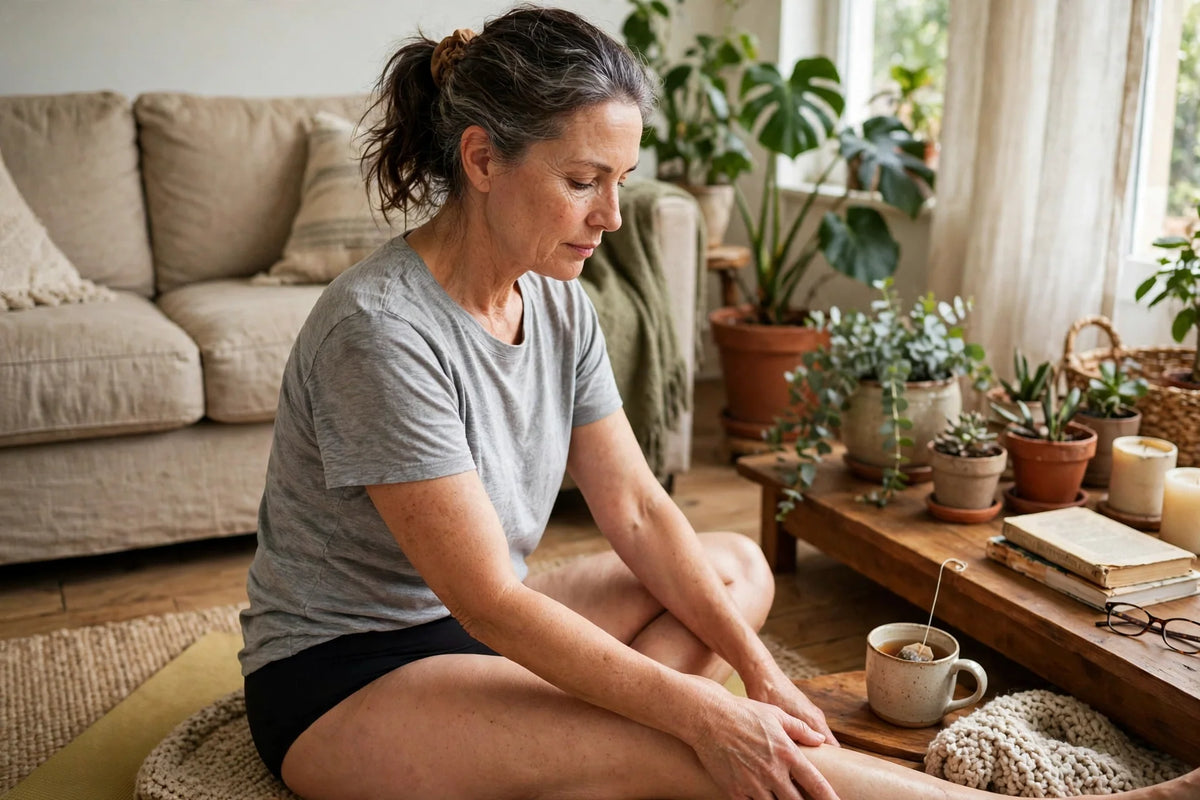
The short answer to "can yoga help with bladder leaks": yes — gentle yoga can help, not by magic, and not overnight, but by training the same muscles and habits that keep you dry. If you've ever skipped a class because you were afraid of leaking mid-pose, you're not alone. And you don't have to sit on the sidelines.
Picture this: it's 7 a.m., your mat is out next to the coffee table, and you're wondering whether the next 20 minutes will help or embarrass you. Yoga won't replace medical care for a serious bladder problem. But for many people with stress or urge leaks, it tackles three things at once: a weak or uncoordinated pelvic floor, a body that holds its breath under pressure, and the habit of rushing to the bathroom at the first twinge.

Can Yoga Help With Bladder Leaks?
Short version: it can, if you pick the right kind and give it a few weeks. Yoga trains you to breathe out as you move, instead of holding your breath and bearing down. Every time you strain — lifting a laundry basket, hauling a grandchild onto your hip, pushing through a hard pose — pressure shoots down onto your pelvic floor. Exhaling on effort spreads it out. Small change. It adds up.
Yoga also teaches you where your pelvic floor actually is. Plenty of people squeeze their glutes or thighs and call it a pelvic floor exercise. In a slow class, a teacher cueing a gentle lift from the base of the pelvis gives you time to find the right muscles — and to learn the difference between a gentle lift and a white-knuckle clench. That awareness carries into daily life: you start noticing when you brace or clench without meaning to.
Why Would Stretching and Breathing Change Anything Down There?
Three reasons, and none of them require you to be flexible.
First, coordination. Staying dry isn't just about strength. It's about timing. Your pelvic floor needs to switch on a split second before you cough, laugh, or step off a curb. Slow, breath-linked movement rehearses exactly that: engage gently, move, release fully. The release matters as much as the squeeze — a pelvic floor that's always clenched gets tired, and a tired muscle leaks. If you've ever wondered whether yours is weak or just overworked, our guide to pelvic floor exercises for bladder leaks walks through the difference.
Second, pressure management. Deep belly breathing drops the pressure inside your abdomen instead of stacking it on your bladder. Try it right now: breathe in, let your belly soften, breathe out slowly through pursed lips. That long exhale is the same tool you'd use stepping off a bus or standing up from a low chair.
Third, urge control. Urge leaks feed on panic: the bladder signals, your brain shouts "now," and you sprint. Yoga's slow pace retrains that loop — you practice noticing a sensation without instantly obeying it, the same skill behind bladder training.
Which Style of Yoga Is Best for Bladder Leaks?
Not all yoga is equal here. A sweaty, fast-paced class with lots of jumping and deep backbends can make leaks worse, at least at first. A slow class usually won't.
| Style | Pace | Leak risk | Good starting point? |
|---|---|---|---|
| Hatha / gentle yoga | Slow, held poses | Low | Yes |
| Restorative yoga | Very slow, fully supported | Very low | Yes |
| Yin yoga | Slow, long holds | Low, but skip deep stretches that strain | Yes |
| Vinyasa / power yoga | Fast, flowing, heated rooms | Higher — jumps, planks, and heat add pressure | Later |
| Hot yoga | Fast, in a heated room | Higher — sweat, urgency, and fatigue pile up | Later |
If a class description mentions "core blast" or "power flow," save it for later. Look for words like gentle, slow, beginners, or restorative.
5 Gentle Poses to Try at Home
You need a mat, a cushion, and about 15 minutes. Go to the bathroom first. If leakproof underwear helps you relax enough to actually practice, wear it.
1. Diaphragmatic breathing, lying down. Knees bent, feet flat, one hand on your belly. Breathe in for four counts, out for six. Five rounds. Boring? A little. This is the foundation everything else sits on.
2. Bridge pose, with a block. On your back, knees bent, lift your hips just a few inches — not sky-high. Slide a block or firm cushion under your sacrum and rest there. The gentle lift wakes up the glutes and pelvic floor without the strain of holding yourself up.
3. Happy baby, knees wide. On your back, hold the outsides of your feet and let your knees fall open. Rock slowly side to side. This stretches the inner thighs and gives a tight pelvic floor room to let go. If grabbing your feet is too much, loop a towel behind each thigh.
4. Cat-cow, on all fours. Inhale, drop your belly and lift your head. Exhale, round your back and gently lift your pelvic floor. The rhythm is the point: move with your breath, don't race it. Ten rounds, slow.
5. Child's pose, with a cushion. Knees wide, cushion under your chest, forehead down. Stay two or three minutes. This is your reset button. End here whenever a session feels like too much.
What to Skip or Change
A few common habits work against a leaky bladder. Deep squats held for minutes can overload a weak pelvic floor, as can long planks and endless crunches. Aggressive "core" cues — "pull everything in tight!" — usually mean holding your breath and bearing down. If a cue makes you clench and gasp, it's not helping.
Jumping transitions are another one. Hopping from front to back looks impressive, but it spikes pressure fast — exactly what triggers stress leaks. Step instead.
How to Practice Without Worrying About Leaks
Put your mat near the door for the first few classes. Tell the teacher quietly: "I'm working on pelvic floor stuff, I may need to slip out." Teachers hear this weekly.
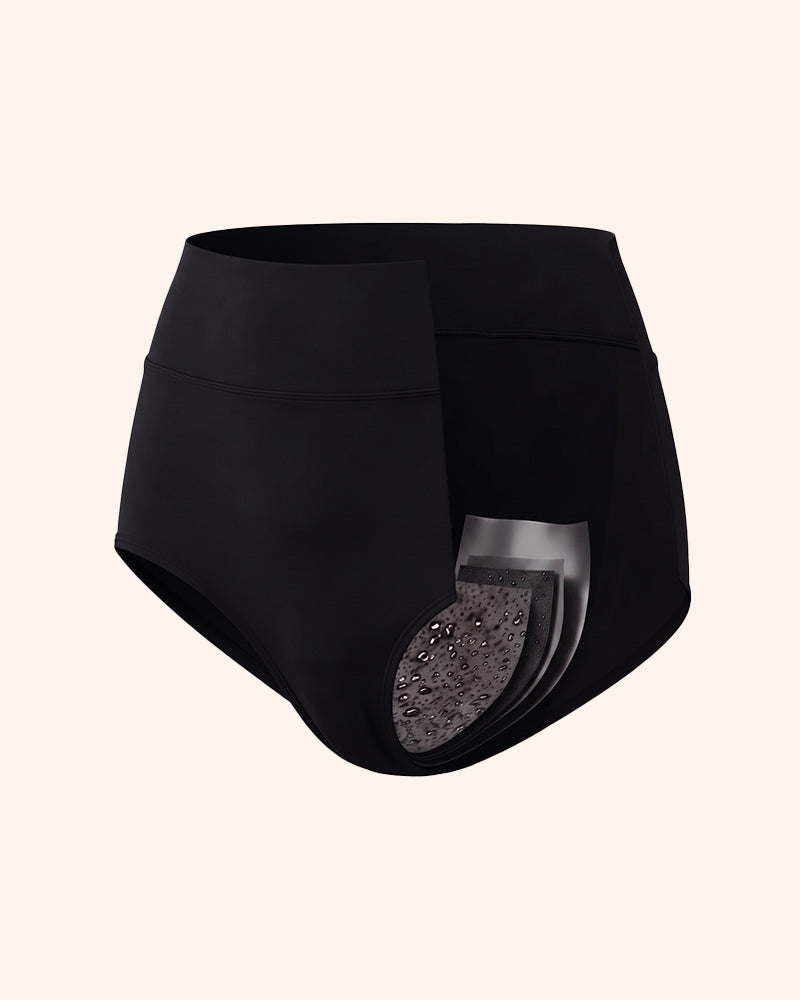
Wear backup you can forget about. Washable leakproof underwear under your leggings turns a small leak into a private, two-second event instead of a reason to quit. Our women's leakproof underwear is cut like regular high-waist underwear, so it won't bunch under yoga pants. A waterproof carry pouch hides a spare pair in your studio bag; a washable laundry bag handles the used pair on the way home.
How Long Before You Notice Anything?
Give it six to eight weeks of two or three short sessions a week. Some people notice better urge control in two weeks — fewer frantic dashes, more warning time. Strength changes take longer. If nothing has shifted after two months, your pelvic floor may be overactive rather than weak, or something else (a prolapse, a medication, an infection) may be driving the leaks. That's worth a check, not another video. Our guide on when to see a doctor about bladder leaks lists the red flags.
Yoga pairs well with, not instead of, other basics: a few minutes of targeted pelvic floor work, sensible fluid habits, and not straining on the toilet. If you're weighing yoga against Kegels, our Kegel guide covers when Kegels help and when they can backfire. For the exercise side, see why leaks happen during exercise.
FAQ
Can yoga help with bladder leaks on its own?
For mild leaks, it can make a real dent — fewer episodes, more warning time. For moderate or long-standing leaks, think of yoga as one tool in the kit, alongside pelvic floor training and, if needed, medical treatment. Anyone promising a "cure" from yoga alone is selling something.
What are the best yoga poses for pelvic floor strength?
Bridge, cat-cow, and supported gentle squats top the list: they pair breath with a light pelvic floor lift. Hip-openers like happy baby help a tight pelvic floor relax — and a muscle that can fully relax can contract better too.
Does yoga make incontinence worse?
The wrong kind can, temporarily. Fast flows, deep squats, heavy core work, and breath-holding raise pressure on the bladder; gentle, slow yoga rarely does. If one pose reliably triggers leaks, modify or drop it.
Can yoga help with bladder leaks from overactive bladder?
It can. Slow breathing and urge-pausing practice train the exact skill overactive bladder steals from you: noticing an urge without sprinting. Pair it with bladder training and timed bathroom trips for the best shot.
How often should I do yoga for bladder leaks?
Two or three times a week, 15 to 30 minutes, beats one heroic 90-minute session. Even ten minutes of breathing and two poses on a busy day keeps the habit alive.
Can I do yoga while wearing incontinence underwear?
Absolutely. Washable leakproof underwear is made for everyday movement, including exercise — see can you wear incontinence underwear every day. Pick a snug pair that won't roll down mid-pose.
Roll out the mat, go easy, breathe out when it gets hard.


Share:
Should I See a Urologist or Urogynecologist for Bladder Leaks? Who to Book First
Does Botox Help Overactive Bladder? What to Know Before You Ask Your Doctor