


The short answer: Can a tight pelvic floor cause bladder leaks? Yes — a pelvic floor that stays clenched can leak, not because it's too weak, but because it never fully lets go. Muscles that can't relax can't coordinate, so your bladder gets mixed signals: urgency out of nowhere, a dribble after you thought you were done, or a leak when you cough despite months of Kegels.
If that sounds familiar, you're not imagining it. And the fix might be the opposite of what you've been told: squeezing only helps when weakness is the problem. When tension is the problem, more squeezing just adds to the pile.

Can a tight pelvic floor cause bladder leaks — and why does it happen?
Think of your pelvic floor as a hammock of muscles. It holds things up — but it also has to drop and open every time you pee. A healthy one moves both ways. A tight one gets stuck halfway up.
When those muscles stay switched on, three things go sideways. First, the bladder can't empty all the way — you finish, stand up, and a few drops follow. Second, constant tension irritates the bladder, which feels like urgency: that sudden "I need to go right now" hit on your third bathroom trip before lunch. Third, a muscle that never rests gets tired, and tired muscles don't hold well. So you leak when you cough, laugh, or lift a laundry basket.
Why does it get stuck? Stress is a big one — many people brace their pelvic floor the way they clench their jaw, without noticing. Holding your pee for hours, hovering over public toilets, chronic constipation, and years of overdoing Kegels can all teach those muscles to stay on guard. So can pain: after childbirth or surgery, the body guards the area like a sprained ankle. The guarding starts as protection. Then it becomes a habit.
What does a tight pelvic floor feel like?
It's not always obvious. You might not feel "tight" at all — just annoyed that your bladder runs your day. The signs:
- Urgency from nowhere. Fine one minute, desperate the next.
- Never-quite-empty. You go, you wait, you go again — still not empty.
- Dribbling after you pee. A few drops land after you've zipped up.
- Leaks despite Kegels. You've squeezed faithfully for weeks and nothing's changed.
- Pelvic pressure or a heavy ache by the end of the day, especially after a long meeting or drive.
- Pain with tampons, exams, or sex — or a deep ache low in the belly.
One or two of these could mean lots of things. A cluster — especially if Kegels didn't help — is worth a closer look.
Tight or weak? How to tell the difference
Here's the tricky part: a tight pelvic floor and a weak one can cause the same leaks. The difference is what your muscles do the rest of the time.
| Tight (hypertonic) | Weak (hypotonic) | |
|---|---|---|
| At rest | Muscles stay switched on, hard to fully let go | Muscles feel loose, hard to switch on at all |
| Typical leaks | Urgency leaks, dribbling after peeing | Leaks with coughing, sneezing, lifting |
| Emptying | Slow start, stop-start flow, never feels empty | Usually empties fine |
| Pain | Common — pelvic ache, pain with sex or tampons | Less common |
| Kegels | Often make it worse | Usually help |
Most people aren't purely one or the other — tight in some muscles, weak in others. That's why guessing from a list only gets you so far. A pelvic floor physiotherapist can tell in one visit which pattern you're dealing with. If you've been squeezing for months with nothing to show for it, that exam is the fastest next step.
Why Kegels can make a tight pelvic floor worse
This one surprises people. Kegels aren't bad — they're just the wrong tool when tension is the issue. Picture a fist clenched for hours. Would you fix it by clenching harder?
That's what set after set of squeezes does to a tight pelvic floor: shorter, tighter, more tired. Urgency can spike, and leaks can get worse. And because everyone says Kegels are the answer, you assume you're not doing enough — so you do more.
That doesn't mean never do them again — it means order matters: release first, strengthen second. Once the muscles can relax, a few well-done Kegels can help. For the fuller picture, this guide on Kegels for bladder leaks walks through when they help and when they don't, and this one covers pelvic floor exercises more broadly.
What actually helps a tight pelvic floor?
Relaxing a muscle you've clenched for years takes practice, not willpower. Here's what therapists reach for first:
Learn to let go on purpose. A reverse Kegel is the opposite of a squeeze: instead of lifting, gently bear down and let the floor drop, like you're starting to pee — then stop. Ten slow ones, once or twice a day, lying down with your knees bent. Most people feel nothing at first — that's normal.
Breathe into your belly. Hand on your stomach. In for four, belly rises — your pelvic floor drops a little with every inhale. Out for six. Five minutes, twice a day, beats an hour of random squeezing. Try it in bed before you get up. Nobody can tell.
Stop hovering. Hovering over a public toilet keeps the pelvic floor switched on — exactly the habit you're trying to break. Sit fully, feet flat, lean forward a touch, and give yourself 30 unhurried seconds. A folded square of toilet paper on the seat works.
Stretch the neighbors. Tight hips and a stiff lower back feed a tight pelvic floor. A few minutes of easy stretches — happy baby, a deep squat holding the counter, child's pose before bed — loosens the whole area. Keep it gentle; if a stretch hurts, back off.
Don't hold your pee all day. Waiting until you're bursting trains the bladder to panic and the floor to brace. Aim for every 2 to 3 hours. Don't "just in case" pee every 30 minutes either, or the bladder learns to signal too early. If urgency runs your life, bladder training can stretch the gaps back out.
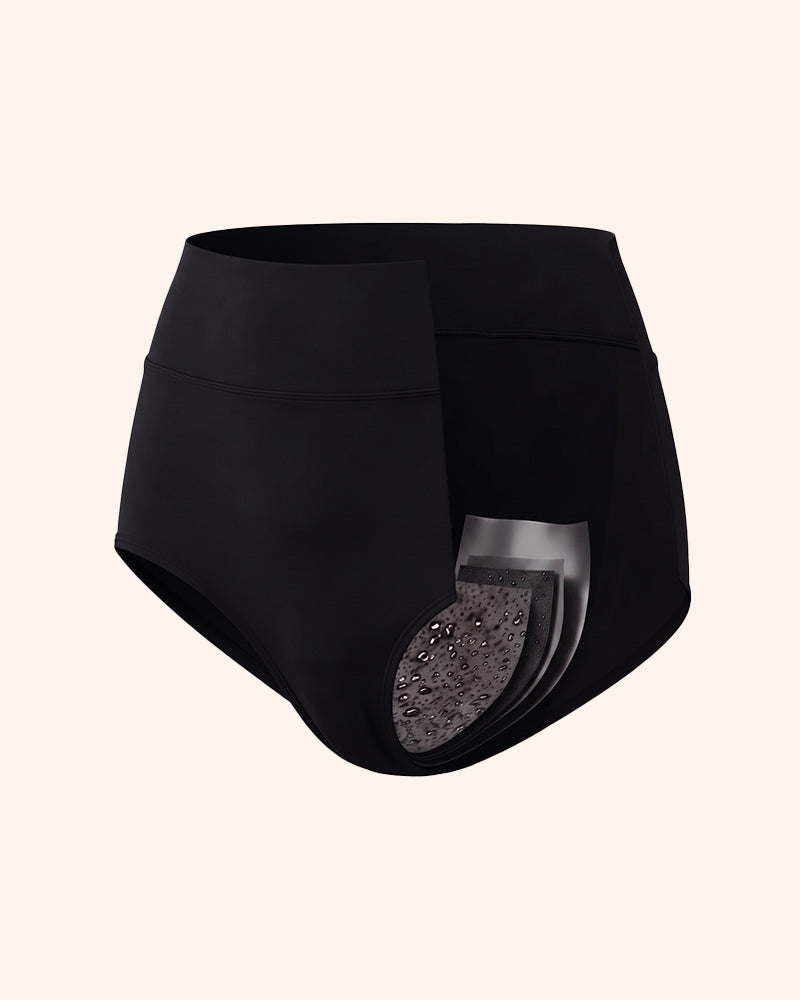
While you're working on it, give yourself backup. Retraining takes weeks, and leaks don't pause while you practice. Washable leakproof underwear — Rooces' women's Stay Discreet briefs or men's Stay Discreet boxer briefs — catches the dribbles so you can get on with your day. A safety net, not a verdict.
When to get checked
Most tight pelvic floors improve with a few weeks of steady relaxation work. Some things deserve a professional look sooner:
- You can't start peeing, or you retain urine.
- Blood in your urine, burning that won't quit, or a fever.
- Pain during sex, with tampons, or while sitting keeps getting worse.
- Nothing has shifted after a month of consistent practice.
A pelvic floor physiotherapist is the right first call — one session can tell whether your floor needs relaxing or strengthening. If you want to know what that first appointment looks like, here's a plain-English walkthrough. And if anxiety is in the mix too, the two feed each other — this piece on stress and bladder leaks explains why.
Frequently asked questions
How do you relax a tight pelvic floor?
Start with reverse Kegels — a gentle bear-down and release, ten slow reps lying down — plus diaphragmatic breathing, five minutes twice a day. Add easy hip stretches, sit fully on the toilet, and stop holding your pee for hours. One session with a pelvic floor physiotherapist can set you straight.
Can a tight pelvic floor cause bladder leaks even if I do Kegels every day?
Yes — and that's the frustrating part. Squeezing a muscle that's already stuck tight just makes it tighter and more tired, which can worsen urgency and leaking. If Kegels haven't helped after a few weeks, pause them and focus on release work first.
What does a tight pelvic floor feel like?
Often it's not a feeling of tightness at all — urgency out of nowhere, a bladder that never feels empty, dribbling after you pee, leaks despite Kegels, and a low pelvic ache by day's end.
How can you tell if your pelvic floor is too tight or too weak?
Look at the pattern: tight floors bring urgency, incomplete emptying, and pain, and Kegels make things worse; weak floors bring leaks with coughing or lifting, and Kegels help. Many people have a mix of both. If you're asking can a tight pelvic floor cause bladder leaks, the answer is yes — but the fix depends on your pattern.
Do reverse Kegels help bladder leaks?
They can, when tension is part of the cause. Reverse Kegels teach the pelvic floor to drop and release, which lets the bladder empty properly and calms the urgency signals behind leaks. Give them a few weeks of daily practice — for a tight floor they're often the missing piece regular Kegels never were.


Share:
Can Other People Smell Your Bladder Leaks? The Honest Answer and What Actually Helps
How to Manage Bladder Leaks on Public Transport: Buses, Trains, and the Subway