


The short answer: any leak you didn't plan counts as incontinence — there's no official number of drops that flips a switch. At what point is it officially incontinence? The honest answer is: when it keeps happening, and when it starts changing what you do. One damp spot after a huge sneeze on a bad cold day is one thing. Leaking most mornings when you get out of bed, or skipping your walk because the nearest bathroom is a ten-minute loop back, is another.
Picture it. Tuesday, you're in the passenger seat, your friend tells a joke at a red light, you laugh — and feel it. Just a little. You spend the rest of the drive wondering if that was "a thing" or just a weird Tuesday. That wondering is the most common part. Most people sit on the question for months before they google it.
Does one leak mean I have incontinence?
Technically, yes. Incontinence just means urine comes out when you don't want it to. There's no test you pass or fail, no certificate. But one leak doesn't mean you need treatment, or that it'll get worse, or that your body is broken. Think of it like a cough. One cough isn't a diagnosis. A cough every morning for three weeks is a pattern worth a look.
Here's the part nobody tells you: doctors don't carry a threshold in their heads, either. They don't say "three leaks a week, congratulations, you're officially incontinent." They ask four things — how often, how much, what sets it off, and how much it bothers you. The answers shape what happens next, not a score.
At what point is it officially incontinence — and who decides?
The "official" part usually happens the day you bring it up with a clinician and they write down a pattern: stress, urge, mixed, or overflow. That note is what guides next steps. Nothing about your body changes in that appointment. What changes is that someone with training has named the pattern and can tell you which fixes fit it.
Some people leak once a month and it wrecks a work meeting, so it matters. Others leak a few drops when they jump rope and shrug it off. Both are incontinence, technically. Only one of them is a problem worth treating right now. You get to be the judge of that second part.
If you're still unsure, figuring out whether your leaks are stress or urge type is a useful first step — the two behave differently, and the fixes differ too.
One-off leak vs. a pattern worth acting on
| One-off leak | A pattern worth acting on | |
|---|---|---|
| How often | Once, or a couple of times a year | Weekly, or most days |
| Triggers | A cold, a huge laugh, a bladder so full you couldn't reach a bathroom in time | Everyday things: standing up, walking to the kitchen, a small cough |
| What it changes | Nothing — you change, move on | You plan around it: a pad in the bag, the bathroom mapped, drinks cut before outings |
| What to do | Note it, watch for a repeat | Track it for two weeks, then talk to a doctor |
Why the label matters less than the pattern
People get stuck on the word. "Incontinence" sounds like a verdict, like something that belongs to much older people in a different chapter of life. It isn't a verdict. It's a description, the way "headache" is a description.
And waiting for the word to feel official is how months slip by. That's the real cost — not the label, but the delay. Small fixes work best early: pelvic floor work, timed bathroom trips, cutting back the third coffee of the morning. By the time someone has rearranged their whole day around the nearest toilet, the habit is harder to unwind than the leak itself.
What to track for two weeks
If the leaks are regular enough to notice, write them down. A simple bladder diary takes about two minutes a day: the time, what you'd drunk, what you were doing, how much leaked — a drop, a damp patch, a full change of clothes — and whether you made it in time.
Two weeks of notes beats a year of guessing. A doctor can read that page in about ninety seconds, and it turns "sometimes I leak" into something they can actually work with. Bring it to the appointment. Seriously. People who bring notes get better answers than people who try to remember on the spot.
What helps while you figure it out
You don't have to wait for a diagnosis to make your days easier. A few things that help right away:
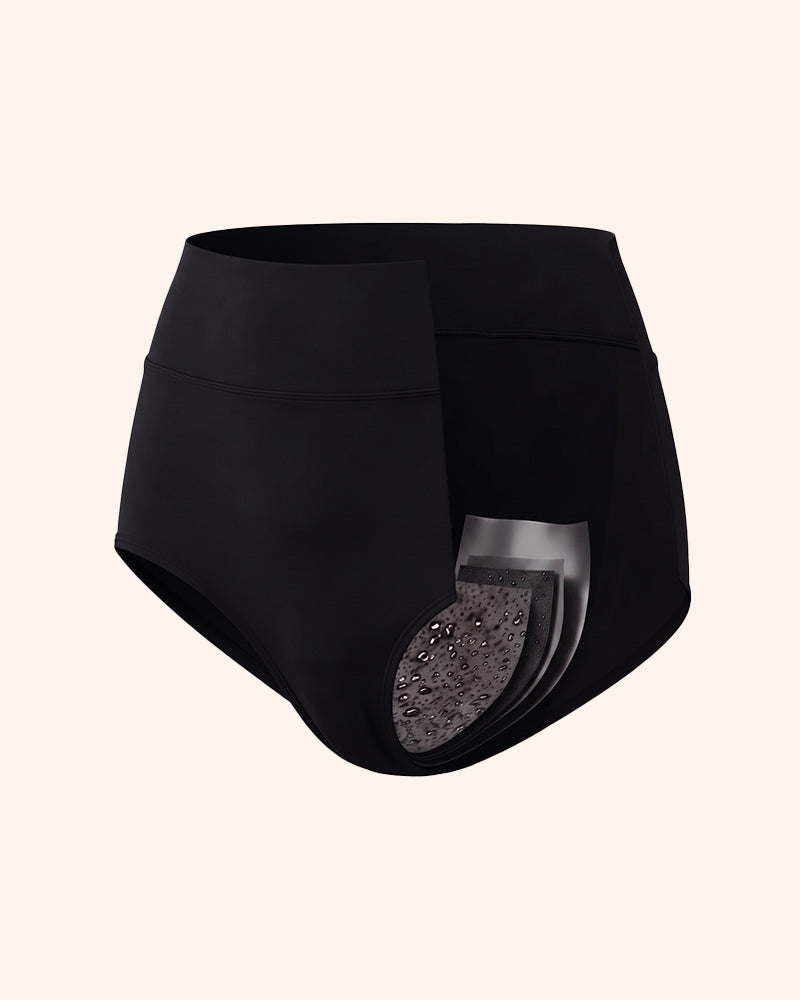
- Wear backup, not bulk. Washable leakproof underwear handles light to moderate leaks and looks like regular underwear — no rustle, no outline under jeans. The women's high-waisted style and the men's boxer brief style both come in absorbency levels, so you pick the one that matches your leaks, not someone else's.
- Add a pad on long days. A reusable absorbent pad slips into your underwear for extra cover on a travel day or a long shift, then goes in the wash with everything else.
- Empty your bladder before you leave the house. Obvious, easy to forget. Make it part of the keys-wallet-phone check.
- Don't "just in case" pee every twenty minutes. It trains your bladder to send the signal earlier and earlier. If you're heading out for an hour, once before you go is enough.
- Keep a spare pair where you actually need it. Glovebox, desk drawer, gym bag. The spare you never use is still doing its job — it's the reason you stopped worrying.

If you're weighing whether to see a doctor, the warning signs that mean "book the appointment" are worth a read. And if the leaks are new since having a baby, the postpartum recovery timeline gives a realistic sense of what fades on its own and what doesn't.
Questions people ask next
Is it incontinence if I only leak when I sneeze?
Yes — that's stress incontinence, leaks caused by pressure on the bladder from a cough, sneeze, laugh, or lift. It counts even if it only happens with a cold. If it shows up most weeks, pelvic floor exercises and the right absorbency level usually make the biggest difference.
At what point should I see a doctor about bladder leaks?
Book an appointment when leaks happen weekly or more, when they wake you at night, when they come with pain, blood, fever, or trouble starting to pee, or when they stop you doing things you enjoy. You don't need to wait until it's severe. "It happens most days and I'm tired of planning around it" is a perfectly good reason to go.
Can you have incontinence and not know it?
Yes, and it happens more than you'd think. Small leaks hide easily — a damp patch you blame on sweat, a heavy-flow day where you can't tell what's what. If your underwear is damp at the end of the day and you can't explain why, a two-week diary usually clears it up fast.
Does leaking once a month count as incontinence?
Technically, yes. Practically, it's a watch-and-note situation. One leak a month that you can tie to a trigger — a cold, a huge laugh, a bladder you held too long — doesn't need treatment. But write down when it happens. At what point is it officially incontinence in a way that needs action? When once a month quietly becomes once a week. The diary is how you'll know.
At what point is it officially incontinence after having a baby?
Leaks in the first weeks after birth are common — the pelvic floor is still recovering, and most new parents leak when they cough or lift the car seat. It usually fades over the first few months. If it's still happening most days after about three months, or it's getting worse instead of better, that's the point to bring it up with your doctor rather than waiting it out.


Share:
How to Manage Bladder Leaks at a Restaurant: A Practical Guide to Dining Out With Confidence
How to Manage Bladder Leaks While Driving: A Practical Guide for Commutes and Road Trips